

PCI DSS Segmentation testing is a very important security evaluation procedure that an organization should carry out to safeguard the cardholder information and ensure that it fulfills the requirements of the payment card industry. Since the cyber threats are also evolving, payment card businesses should take the necessary measures to protect their cardholder data environment (CDE) and isolate it from the rest of the business networks.
Segmentations on networks have become a necessary initiative in organizations hoping to narrow down their PCI DSS windows of compliance, while at the same time improving the complete protection of the system. Nevertheless, it is not enough to just have segmentation controls in place. It is necessary to test and verify these controls frequently so that they protect against breaches of unauthorized access to sensitive cardholder data.
What Is PCI DSS Segmentation Testing?
PCI DSS segmentation testing is a niche security assessment that tests the efficiency of network segmentation controls utilized to isolate the cardholder data environment from other network segments. Such a testing procedure makes sure that there are appropriately established segmentation boundaries that will not be broken by hackers looking to get access to sensitive data on payment cards.
The main pillar of segmentation testing is verification of the inability of out-of-scope systems to communicate with and hence affect the security of systems within the CDE. According to the PCI DSS requirements, organizations should verify that the implemented segmentation controls are functioning as they are supposed to and are protecting cardholder data adequately.
PCI DSS segmentation testing involves both automated and manual testing techniques to evaluate:
- Network firewall configurations and rule sets
- Access control lists and routing protocols
- Virtual network configurations and hypervisor security
- Physical network isolation mechanisms
- Authentication and authorization controls
- Monitoring and logging capabilities
This testing should be thorough to reveal vulnerabilities or misconfigurations that may permit unauthorized access to the network. This incorporates testing internally as well as externally in an attempt to exercise wide attack scenarios.
Why Is Segmentation Testing Required?
The reasons that PCI DSS segmentation testing requirements exist are due to the fact that network segmentation can only be effective when it is properly implemented as well as tested continually. The PCI Security Standards Council acknowledges that segmentation controls may break in the long run, either due to a configuration change, system updates, or human error.
Regulatory Compliance Requirements
PCI DSS Requirement 11.3.4 specifically mandates that organizations using network segmentation to reduce PCI DSS scope must perform penetration testing of segmentation controls at least annually. Service providers must conduct these tests every six months. This requirement ensures that segmentation boundaries remain effective throughout the compliance period.
The testing should ensure that segmentation controls sufficiently isolate the CDE from out-of-scope networks and systems. If the error in the segmentation is determined by the segmentation testing, then the organizations have to cover up these gaps to allow their PCI DSS assessment to be comprehensive.
Security Risk Mitigation
In addition to requirements, PCI DSS network segmentation best practices cover frequent testing to discover and correct security vulnerabilities before they are exploited. The typical patterns of attack entail exploitation of out-of-scope systems and later using such to access the CDE.
Segmentation testing helps organizations:
- Identify misconfigured firewall rules or access controls
- Discover unauthorized network connections or services
- Validate that monitoring systems can detect intrusion attempts
- Ensure that incident response procedures are effective
- Maintain visibility into network traffic and access patterns
Need expert segmentation testing? Reach out to our team now.
The PCI DSS Segmentation Testing Process
The PCI DSS segmentation testing process has a well-defined process for thorough assessment of all the segmentation controls. Such a process must be done by professional security technicians in the field of network security and PCI DSS compliance requirements.
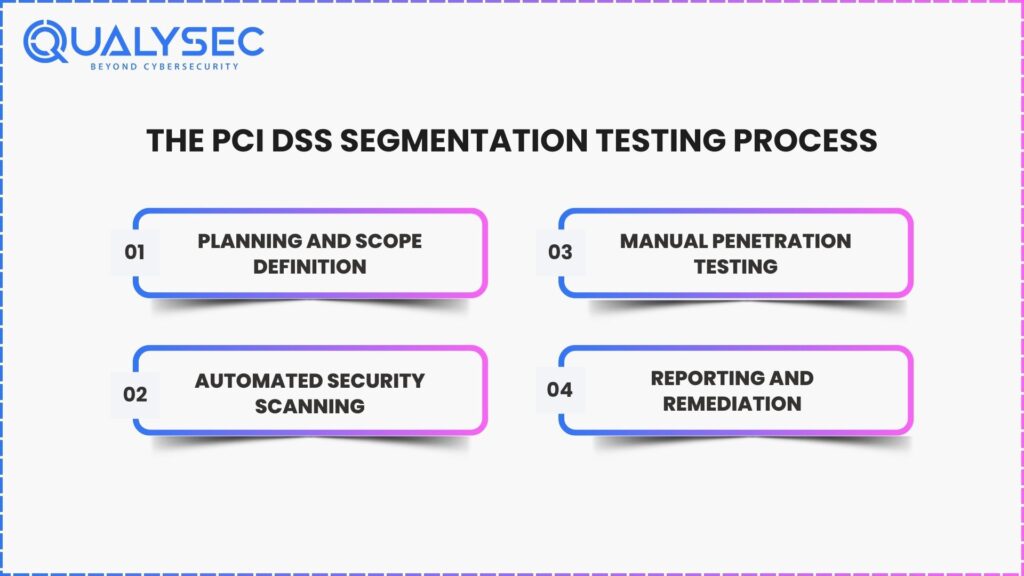
Phase 1: Planning and Scope Definition
This planning and scope of the testing process are the first aspect of the process. Organizations should single out all segment controls to test, such as network firewalls, access control systems, and monitoring tools. The footprint that is involved should include all routes between the out-of-scope networks and the CDE.
Key activities during this phase include:
- Documenting network topology and segmentation architecture
- Identifying all segmentation controls and their configurations
- Defining testing objectives and success criteria
- Establishing testing timelines and resource requirements
- Coordinating with network operations teams to minimize disruption
Phase 2: Automated Security Scanning
Automated scanning tools are used to identify potential vulnerabilities in segmentation controls. These tools can quickly assess large network environments and identify common misconfigurations or security weaknesses.
PCI DSS network security testing tools typically include:
- Network vulnerability scanners
- Configuration assessment tools
- Network mapping and discovery utilities
- Log analysis and monitoring systems
- Compliance scanning solutions
Phase 3: Manual Penetration Testing
PCI compliance penetration testing involves manual testing techniques to validate segmentation effectiveness. Skilled security testers attempt to bypass segmentation controls using various attack methods and tools.
This phase includes:
- Network reconnaissance and enumeration
- Firewall rule testing and bypass attempts
- Privilege escalation and lateral movement testing
- Application-level security testing
- Social engineering and phishing simulations
- Physical security assessments, where applicable
Phase 4: Reporting and Remediation
The last stage entails recording of test outcomes and collaborating with the organization to fix any detected weaknesses. The testing report must simply state the entire findings, its risk ratings, and remediation suggestions.
| Testing Phase | Duration | Key Activities | Deliverables |
| Planning | 1-2 weeks | Scope definition, resource allocation | Test plan, scope document |
| Automated Scanning | 3-5 days | Vulnerability scanning, configuration review | Scan results, initial findings |
| Manual Testing | 1-2 weeks | Penetration testing, bypass attempts | Detailed test results |
| Reporting | 3-5 days | Analysis, documentation, recommendations | Final security report |
Compliance & Business Benefits
Regular PCI DSS segmentation testing has many compliance and business advantages that are not restricted to achieving the minimum of regulatory compliance. Companies that undertake thorough checks on segmentation testing tend to perform better and remain secure, or somewhere between the status quo and enhanced operational functionality.
Compliance Benefits
Consistent segmentation testing assists enterprises in ensuring that it is permanently in compliance with the Payment Card Industry Data Security Standard (PCI DSS). This preventive measure lowers the possibility of failure in checking and assessments carried out in the form of formal audits.
PCI DSS audit preparation is significantly simplified when organizations have current segmentation test results available. Assessors can quickly verify that segmentation controls are effective, reducing the time and cost associated with compliance validation.
Key compliance benefits include:
- Reduced PCI DSS assessment scope and complexity
- Lower compliance costs and resource requirements
- Improved assessor confidence in security controls
- Faster audit completion and certification processes
- Enhanced documentation for compliance reporting
Business Benefits
In addition to compliance, segmentation testing has the concrete business value surrounding the minimization of security risks and the development of operational efficiency. When controls are well-designed and implemented in the segmentation. The number of security incidents and data breaches occurs in the organization decreases.
The financial incentive is decreased premiums on cyber insurance, lowered incident response expenses, and the minimization of business interruption caused by security occurrences. Effective segmentation also allows many organizations to embark on other business opportunities that demand good data protection capabilities.
Schedule a Free Consultation with our PCI DSS experts to learn how segmentation testing can benefit your organization’s security and compliance posture.
Common Mistakes to Avoid in Segmentation Testing
There are some deadly errors made by organizations in executing PCI DSS segmentation testing, which can compromise the effectiveness of the protection devices. Awareness of these common pitfalls leads to the possibility of ensuring that attempts to stretch testing can be successful and provide businesses with credible and valuable feedback.
Insufficient Testing Scope
Among the most widespread errors is the confinement of the range of tests only to the evident ways of the network. Attackers tend to take up unstable paths to get around segmentation controls, such as:
- Management interfaces and out-of-band networks
- Shared services like directory servers and backup systems
- Virtual network configurations and hypervisor connections
- Wireless networks and mobile device connections
- Third-party remote access solutions
Inadequate Documentation
Poor documentation makes it difficult to verify that all segmentation controls have been tested effectively. Organizations should maintain detailed records of their network topology, segmentation architecture, and testing procedures.
Timing and Frequency Issues
Many organizations only perform segmentation testing annually, immediately before their PCI DSS assessment. This approach misses security issues that may develop throughout the year due to system changes or configuration drift.
PCI DSS network segmentation best practices recommend more frequent testing, especially after significant network changes or security incidents. Quarterly testing provides better assurance that segmentation controls remain effective.
Lack of Qualified Personnel
Segmentation testing includes a specific set of knowledge about network security, PCI DSS requirements, and types of tests. Those organizations that make efforts to carry it out with low-quality training staff are likely to overlook some critical weaknesses or misread the test findings.
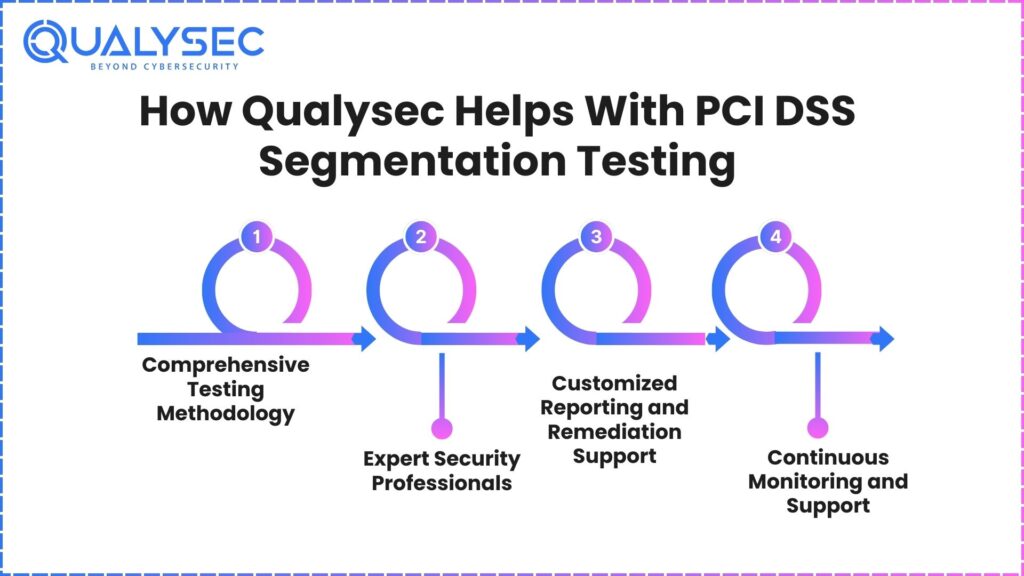
How Qualysec Helps With PCI DSS Segmentation Testing
Qualysec stands out as a unique cybersecurity risk assessment provider, offering comprehensive PCI DSS segmentation testing services that combine advanced technical expertise with deep regulatory knowledge. Our approach to segmentation testing goes beyond basic compliance requirements to provide organizations with actionable insights that enhance their overall security posture.
Comprehensive Testing Methodology
Qualysec employs a rigorous testing methodology that covers all aspects of network segmentation, from automated vulnerability scanning to advanced manual penetration testing. Our team uses industry-leading tools and techniques to identify potential security weaknesses that could compromise cardholder data protection.
Our PCI compliance penetration testing services include:
- Advanced network reconnaissance and mapping
- Firewall rule analysis and bypass testing
- Virtual network security assessment
- Application-layer security testing
- Social engineering and phishing simulations
- Detailed risk analysis and remediation planning
Expert Security Professionals
Our team comprises experts who have security certifications and many years of experience in PCI DSS compliance and network security testing. All the teammates have corresponding certifications in the industry and engage in their continuing education to keep abreast of novelties in threats and testing methodologies.
The professionals of Qualysec are not only aware of the intricacies of the PCI DSS requirements; they are also capable of offering any insights into these requirements, as well as security best practices. This technological capability, plus regulatory experience, means that our testing services combine short-term compliance goals and long-term security targets.
Discover the leaders in PCI DSS security. Check out our expert guide on Top PCI DSS Penetration Testing Vendors.
Customized Reporting and Remediation Support
We also use detailed reports of the tests that fully capture all the findings, risk evaluation, and suggested remediation activities. Our reports not only assist the technical teams in installing security enhancements but also assist the executive management in making strategic decisions concerning the security investments.
Qualysec helps customers to simplify the PCI DSS audit preparation through its well-documented processes and the ability to support the client throughout the remediation process. To prevent similar problems, we collaborate with client teams to make sure that any vulnerabilities that have been identified are addressed accordingly and that the respective segmentation controls will be working in the long run.
Continuous Monitoring and Support
In addition to initial testing, Qualysec also provides monitoring and support services to allow organizations to remain effective in terms of segmentation controls. With our constant monitoring strategy, we would detect any configuration modifications or security breaches that might have occurred that would interfere with segmentation success.
Make a Free Consultation with Qualysec Now to learn how our comprehensive segmentation testing services can enhance your organization’s PCI DSS compliance and overall security posture.
Conclusion
PCI DSS segmentation testing is a necessary aspect of a good payment card security program. Companies processing cardholder data need to have strong segmentation controls and need to ensure that the same controls are working with the help of periodic professional security testing services.
Positive segmentation testing is useful in many ways, and there are far more than just compliance reasons. Companies that have tested controls on segmentation have fewer security risks, less expenditure on compliance, and better coordinated effectiveness of operations. All these advantages demonstrate that segmentation testing can be a wise investment in terms of a long-term business and customer relationship.
Learn how to achieve PCI DSS Compliance in Cloud Environments– start securing your payment and cardholder data today.
Nevertheless, segmentation testing is effective only with special knowledge and an extensive approach. Companies are advised to collaborate with the security professionals who are qualified and those who possess a zone of expertise in terms of knowing how to perform the PCI DSS and the complicated testing methods.
Moreover, the developments in the sphere of cybersecurity will probably make the requirements for PCI DSS segmentation testing increasingly strict and thorough. Organizations that develop robust testing programmes now will easily prepare to comply with the changing regulations and new security threats in the future.

FAQ
1. Why is segmentation testing required for PCI compliance?
Organizations using network segmentation to reduce compliance scope must validate their segmentation controls through penetration testing, as mandated by PCI DSS Requirement 11.3.4. This ensures that segmentation boundaries effectively prevent unauthorized access to cardholder data. Without proper testing, segmentation controls may fail due to misconfigurations or changes, potentially exposing sensitive payment card information to security threats.
2. How often should PCI DSS segmentation testing be performed?
Most organizations must perform PCI DSS segmentation testing at least annually, while service providers must conduct testing every six months. However, best practices recommend more frequent testing, especially after significant network changes, security incidents, or system upgrades. Quarterly testing provides better assurance that segmentation controls remain effective throughout the compliance period and helps identify issues before attackers can exploit them.
3. What is the difference between segmentation testing and penetration testing?
Segmentation testing is a specialized type of penetration testing that focuses specifically on validating network segmentation controls and boundaries. While general penetration testing may cover various security vulnerabilities across an entire network. Segmentation testing specifically attempts to bypass controls that separate the cardholder data environment from other network segments. PCI compliance penetration testing for segmentation requires specialized knowledge of network architecture and PCI DSS requirements to ensure comprehensive validation of isolation controls.