

“
Qualysec did a great job identifying vulnerabilities in our web and cloud applications and gave us clear steps to fix them. They stuck to deadlines, handled re-tests, and supported well.
Kenny Kim
Product Manager

Ensure the security of your automotive devices with Qualysec’s specialized penetration testing. We identify vulnerabilities, guide remediation efforts, and ensure your systems meet industry standards for cybersecurity and compliance.
















DEFINITION
Protect Your Automotive Systems from Cyber Attacks
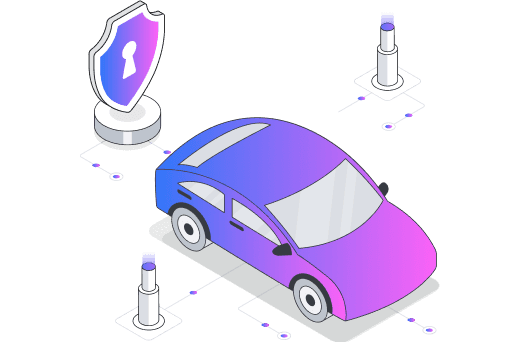
Automotive device penetration testing simulates real-world cyberattacks to identify vulnerabilities in vehicle systems, including infotainment, communication interfaces, and connected features. Our testing ensures secure communication between vehicle components and external systems, preventing unauthorized access, data breaches, and vehicle control risks. Qualysec’s thorough assessment helps safeguard your vehicles’ critical systems, ensuring safety, privacy, and compliance with industry regulations.
Vulnerabilities
We conduct extensive manual penetration testing to identify critical vulnerabilities in automotive systems.
Process
At Qualysec, we ensure the security of your automotive devices through a robust testing process designed to detect security weaknesses and provide solutions for remediation.

We collaborate closely with you to outline the test boundaries to identify critical assets and potential risk areas. This tailored approach ensures a focused and effective assessment.

Head Of Business Development
“Connect with Swagat, Your trusted penetration testing advisor. Secure your assets. Reach out Today!”
Testimonials
Read what our clients say about our services. See how Qualysec has helped several businesses to keep their digital assets safe!
Qualysec did a great job identifying vulnerabilities in our web and cloud applications and gave us clear steps to fix them. They stuck to deadlines, handled re-tests, and supported well.
Product Manager
Key Benefits
Our automotive penetration testing services protect your vehicles from cyber threats, offering the following benefits
Detect and mitigate security flaws before they are exploited by malicious actors.
Ensure your automotive devices meet industry standards and regulatory requirements, including GDPR, HIPAA, and more.
Safeguard sensitive user data and prevent breaches.
Protect against disruptions caused by potential automotive device vulnerabilities.
Avoid the financial losses associated with breaches, device downtime, or reputational damage.
Securing your automotive devices reassures users that vehicle data, passenger safety, and critical digital interactions are safe.
Other Types
We offer various approaches based on your ecosystem's specific needs.

We simulate an external attacker with no inside knowledge. This method tests your Automotive device’s real-world defenses against unknown threats.

Our team works with full access to your Automotive device’s firmware, hardware schematics, APIs, and source code. This in-depth approach uncovers hidden vulnerabilities and logic flaws.

We blend both approaches, using limited internal information. This balanced method provides comprehensive security insights while mimicking a semi-informed attacker.
Free Downloads
Access our free resource collection to empower your business with the knowledge to strengthen your security posture and maintain a secure lead.
Discover potential vulnerabilities in IoT devices with a sample report detailing common risks and remediation strategies.

Learn about our systematic approach to IoT security testing and get insights into our inspection and analysis processes.
Get a comprehensive overview of our assessment strategies and the tools we use to uncover IoT vulnerabilities.




PRICING
Our Penetration Testing Service Pricing Could Save You Millions!
Process To Start Assessment
Take the following steps to secure your healthcare devices against potential attacks with Qualysec
Reach out to us and our friendly team will listen to your concerns and understand your unique security needs. Whether you prefer a call, email, or chat, we're ready to start your journey towards a more secure automotive device.
We send you a simple pre-assessment form to fill up with the appropriate information. This helps us understand your device's architecture, current security measures, and specific concerns.
After we review our findings from the pre-assessment and outline our proposed approach, we discuss security strategy and answer any questions you may have through either online or face-to-face meetings.
We sign an NDA to protect your sensitive information and finalize the service agreement. This ensures clear expectations and a smooth partnership from the start.
We provide our clients with a checklist of everything we need to begin testing, such as access credentials and documentation. Our team assists and ensures a smooth start to your device's security enhancement journey.
Get a Quote
Don't let vulnerabilities compromise your Automotive Devices. Our expert team will identify weaknesses and provide effective solutions to enhance your security.

Total No. Of Vulnerabilities

Years in Business

Assessment Completed

Trusted Clients

Countries Served
FAQ
Get quick answers to common questions about Automotive device security testing, its benefits, frequency, costs, and more.
Yes, ISO/SAE 21434 and UNECE WP.29 R155 are the primary regulatory frameworks governing automotive cybersecurity globally. UNECE WP.29 R155 requires vehicle manufacturers to implement a certified Cyber Security Management System (CSMS) and demonstrate that vehicles have been assessed against a TARA-aligned threat model. Qualysec's automotive penetration test produces evidence directly usable in CSMS documentation. Qualysec also assists with supply chain cybersecurity assessments required for Tier 1 supplier compliance under both frameworks.
It depends on the scope. ECU-level testing of individual electronic control units, telematics unit firmware analysis, and backend API testing can be conducted without a physical vehicle using ECU benches and provided firmware images. Full vehicle-level testing including CAN bus injection across multiple domains, keyless entry relay attack testing, TPMS radio frequency testing, and OBD-II port exploitation requires a physical vehicle or a hardware-in-the-loop test rig. Qualysec scopes each engagement to match the available test environment and the regulatory evidence requirements of the client.
TARA stands for Threat Analysis and Risk Assessment, the core risk assessment methodology required by ISO/SAE 21434. It identifies vehicle assets, defines threat scenarios, assesses attack feasibility and impact, and assigns risk ratings that drive security control selection. Qualysec's penetration test validates the TARA by attempting to exploit the highest-risk attack paths identified in the threat model. Qualysec can also assist in conducting or reviewing the TARA prior to testing.
Qualysec tests all major vehicle system categories depending on scope: powertrain and chassis ECUs via CAN bus injection, infotainment and connectivity systems via Bluetooth, Wi-Fi, and USB interface testing, telematics control units via cellular API and firmware analysis, body control modules via LIN bus testing, ADAS and safety ECUs via CAN injection and sensor spoofing, keyless entry and PEPS systems via RF protocol testing, TPMS sensors via radio frequency spoofing, and OTA update pipeline from backend server to ECU acceptance. Scope is agreed based on the client's TARA, vehicle architecture, and regulatory evidence requirements.
A vulnerability assessment identifies known vulnerabilities in automotive components through automated scanning and manual review, producing a risk-rated inventory of issues. Automotive penetration testing goes further by actively exploiting discovered vulnerabilities to demonstrate real-world attack paths across vehicle domains. In automotive security, this distinction matters because many theoretical vulnerabilities require chaining multiple weaknesses across domain boundaries, for example from the infotainment domain through a gateway ECU to the powertrain domain, which only manual penetration testing can validate.
An automotive penetration test at Qualysec takes two to six weeks depending on the scope. A focused ECU-level firmware and API assessment runs faster than a full vehicle-level engagement covering in-vehicle networks, wireless interfaces, backend systems, and OTA pipeline simultaneously. The final report is delivered within five business days of testing completion and includes severity-rated findings mapped to ISO/SAE 21434 attack categories, proof-of-concept exploitation evidence, remediation guidance, and a compliance mapping section.
Automotive penetration testing cost depends on the scope of systems tested, whether physical vehicle access is required, the number of ECUs in scope, regulatory frameworks the report must address, and whether TARA review or supply chain assessment is included. Qualysec provides a fixed-price scoped quote after an initial technical call covering vehicle architecture, testing objectives, and regulatory evidence requirements. All deliverables including the re-test and CSMS-formatted report are included in the base cost.