
The EU CRA is changing the way cybersecurity evolves in Europe, creating strict security-by-design requirements for all digital products. This means that to achieve EU CRA compliance, businesses must integrate cybersecurity into the entire product lifecycle. Therefore, manufacturers, vendors, and software publishers will all be affected by this new regulation.
Failure to comply with this regulation will have significant financial and operational consequences. For this reason, businesses now must fully understand the Cyber Resilience Act (CRA). In this guide, we will outline the requirements of the Cyber Resilience Act (CRA), including the implementation timeline and a list of compliance activities.
What Is the EU Cyber Resilience Act?
The Cyber Resilience Act (CRA) is the first of its kind and will establish minimum security requirements for all digital products sold within the European Union. The goal of the CRA is to reduce the incidence of systemic cyber risk in the EU. It complements broader EU cybersecurity regulations such as the NIS2 Directive.
Through the legislation, we will be holding manufacturers and service providers accountable for all aspects of their respective supply chains. The CRA Cyber Resilience Act also supports the EU regulatory initiative to develop a framework for digital trust by establishing standards for securing digital products within the EU.
Scope of the CRA: Products with Digital Elements (PDEs)
Digital products or product types are relatively new, so there is a lot of potential for confusion as to how to interpret and apply the Digital Product Regulations to them. Digital Product Categories are used to classify and provide consumers with a better understanding of how to use digital products.
Software Products
Software may include operating systems, applications, middleware, software development kits, and application programming interfaces. This, marketed as either “open-source software” or “proprietary software,” falls under the Digital Product Regulation. Read also Software Security Assessment.
Hardware Products with Embedded Software
An Internet of Things device is defined as any type of electronic device that connects to the Internet. Most IoT devices include a communications interface and embedded software (FW). The developers use the embedded software (i.e., firmware) to allow for the operation of the device itself as well as to provide for the interface between the device and the Internet.
Network-enabled Devices
If the device connects to a network (public or private) to perform one or more functions, it qualifies as a digital product. Examples of network-connected devices may include computers (workstations and laptops), software, network switches (including routers), printers, and many others.
Ensure your network-enabled devices comply with the EU Cyber Resilience Act through expert-led network penetration testing.
CRA Risk Categories: Class I & Class II Products
The CRA (Cyber Risk Act) in the European Union (EU) has created a risk-based product classification system. The classification of products is based on the level of risk that could arise due to a security breach of that product. This system allows for equal distribution of cybersecurity controls based on the industry in which the product will be used.
Products with a higher level of risk are subject to more rigorous requirements to complete an evaluation. The classifications also have a direct impact on the extent to which products must be certified to meet the CRA EU.
Class I Products: Significantly Important Products
Class I products have a moderate level of cybersecurity. Examples of Class I products would include password managers or tools that can monitor a computer network. Generally, you may assess your own products in Class I. The Secure Development Process documentation is required for Class I products.
Class II Products: The Highest Cyber Risk (Cyber Risk II Products)
Class II products represent a systemic risk of very high cyber risk. They would typically include items like firewalls, identity systems, and secure gateways. Compliance with a Third-Party Conformity Assessment is required for all Class II products. For Class II products, the supplier is required to continually monitor their products for vulnerabilities.
Explore more about What Is a Third-Party Risk Assessment? Contact us today for a complete security assessment and safeguard your digital assets.

Mandatory CRA Security Requirements in Europe
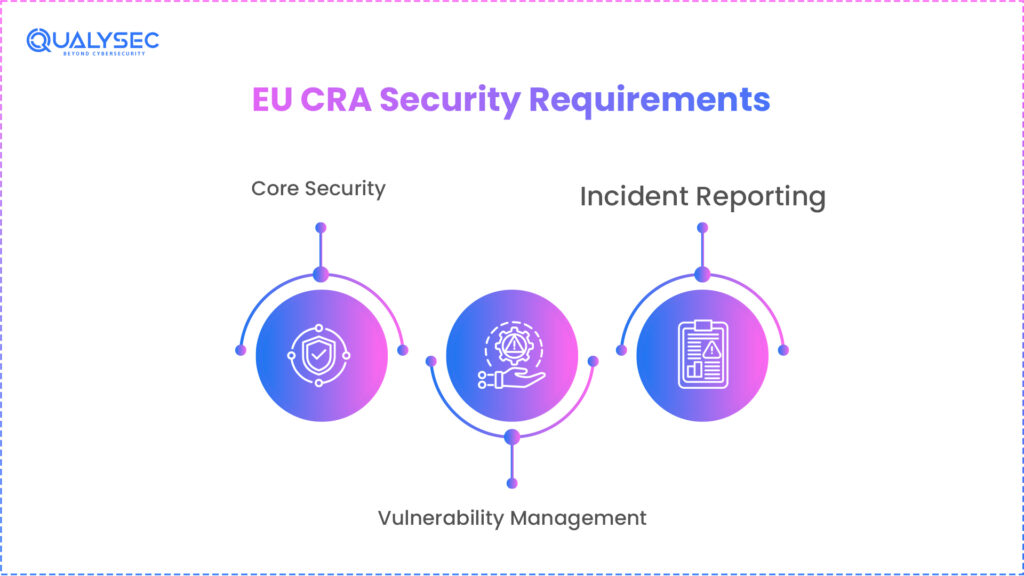
The EU CRA Directive outlines the need for secure-by-design and secure-by-default approaches when creating connected devices. All devices created by manufacturers, from development through decommissioning, need to integrate cybersecurity into their design process.
Manufacturers can no longer rely on a reactive approach to security. Instead, security must be built in from the start and managed with proactive risk management as per the EU’s CRA Framework. As a result, compliance with the CRA Directive requires a combination of both technical and organisational controls.
Core Security
Core security obligations define the fundamental requirements that companies should observe to maintain software and systems security throughout their entire life. We recommend doing threat modeling in the early development phase so that the team can discover potential attack paths before design completion. The bad coding weaknesses should be minimized by ensuring that the rules of secure coding is applied at all times. The necessary vulnerability tests contribute to the detection of issues prior to the launch of the product. Traceability, accountability, and audit-readiness are achieved by keeping detailed design records. All those tasks are useful to establish a proactive security position, reduce the risks at the initial stage, and comply with regulatory and industry security requirements.
Vulnerability Management
Vulnerability management entails the process of locating, monitoring, and repairing security vulnerabilities in a methodical manner. To be responsible by letting stakeholders know as well as preventing misuse, organisations must issue Coordinated Vulnerability Disclosures (CVDs). Patches containing security fixes are important to update to reduce vulnerability to established threats. It is easier to keep a central database of known flaws and provide more visibility, as well as prioritize the most urgent fixes. Continuous risk assessment evaluates the probability of a weakness being exploited and the harm it would cause. This is a continuous process that enables organisations to respond rapidly, reduce the attack surface, and fortify systems.
Incident Reporting
Incident reporting ensures that people are aware and able to respond at short notice when security threats are at work. Firms should report the vulnerability that is being actively used within stipulated timeframes to prevent massive loss. They should also inform the national authorities, who would assist in organising defences. Increased transparency will ensure that companies are able to elucidate that they have clearly clarified what has occurred, the magnitude of the issue, and to whom the issue concerns. Such measures increase accountability, create trust, enable faster problem resolution in the entire ecosystem, and ensure that they address the incidents promptly and in a responsible manner.
CRA Conformity Assessment Requirements
Compliance with EU CRA is demonstrated through compliance tests, which evaluate whether a product is compliant with the cyber rules. The level of risk associated with the product determines how the assessors conduct the assessment; the riskier the product is, the more strictly they check it. Any entity should undertake assessments according to the EU CRA certification regulations in order to make them transparent, open, and legally binding in Europe.
Comprehensive technical documentation is a major factor in the conformity process. Companies should maintain documentation on product design, threat modeling, vulnerability treatment, and security controls. Audit preparation is not an isolated effort; it is a continuous activity to which all individuals who work on the product, test security, and ensure that it remains compliant contribute. Good documentation allows you to provide evidence at a moment of need, i.e., audit, inspection, or regulatory inspection.
Assessment Models
Self-Assessment
The CRA only permits self-assessment of products with a low risk of danger. The companies should self-audit. They should have good internal security measures, good coding practices, and documented testing procedures. The company should develop and store complete technical documentation, such as risk checks and security verification. They should also be prepared to demonstrate to regulators that the product satisfies all the CRA regulations.
Third-Party Assessment
Class II products that are riskier need to undergo third-party evaluation. The review is done by an approved Notified Body, which verifies the evidence provided to it. The review typically examines penetration test reports, vulnerability scans, and security documents. Once the Notified Body verifies that it has met all the CRA rules, it issues a conformity certificate that allows selling the product in the EU.
Download our complete sample pentest report to ensure your compliance with EU CRA security requirements.
Non-Compliance Penalties Under the CRA
The CRA EU implements rigorous enforcement systems. Fines and penalties are on par with those of GDPR. Regulatory Authorities may now act decisively. If a company does not comply, its ability to sell products in the EU could be suspended indefinitely. The reputational effect will often be significant.
Financial Penalties
- Fines up to fifteen million euros (€15 million)
- Fines based on two and a half per cent (2.5%) of total revenue worldwide.
- Increased penalties for repeat offenders.
- Scaling of fines based on the severity of risk.
Market Restrictions
- Product withdrawal from the EU.
- Prohibition on sales.
- Revocation of any necessary certifications.
- Directly impacts the continuity of your business.
Why Enterprises Are Struggling to Keep Up
Compliance with CRA necessitates both operational and cultural transformations. It is similar to DORA compliance requirements for critical EU entities. A substantial number of organisations today do not have the maturity necessary to properly protect information. Older products were created without being specifically designed to meet the regulations. Resource shortages in personnel with the Right Skills also add to the challenges of implementing necessary changes for CRA EU compliance. In addition, the timeline for many companies is seen as aggressive.
Issues with Older Architectures
Older-generation systems do not include secure design elements. Retrofitting secure design to existing systems is also extremely complicated. Many systems are not fully documented. The accumulation of “technical debt” has created increased levels of risk to companies that utilize these systems.
Resource Constraints
Cybersecurity budgets generally show only a small portion of what most organisations need. The availability of professionals with the appropriate skill sets is extremely limited. The amount of work required to comply with the CRA is generally underestimated. The lack of a central toolset creates additional challenges for companies moving to CRA compliance.
How Penetration Testing Can Assist in Achieving CRA Compliance
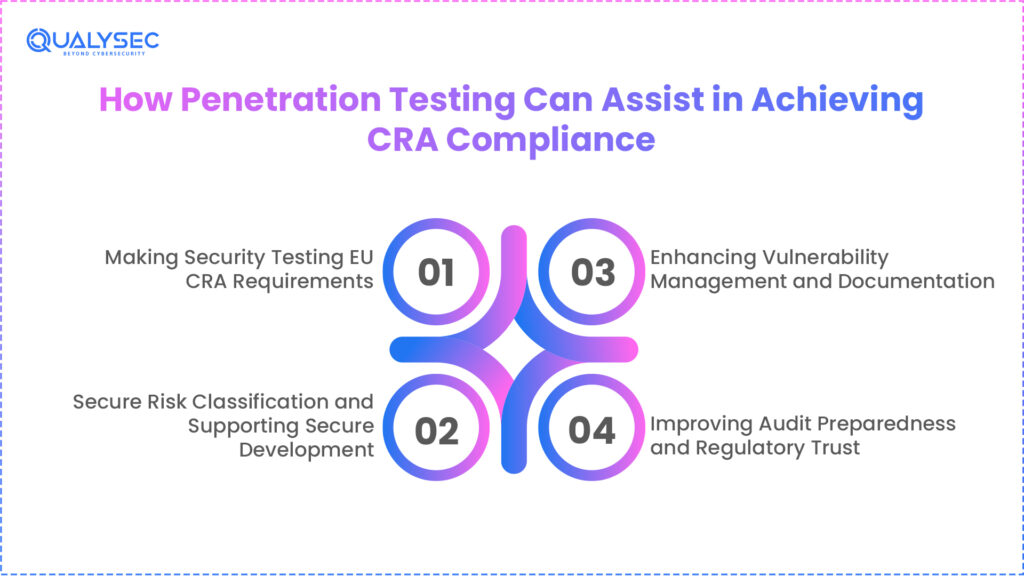
Meeting CRA Requirements with Security Testing
Penetration testing assists CRA compliance by verifying whether the security controls of a product can withstand actual attacks. The CRA is based on proactive risk management, prevention of weaknesses, and maintaining security throughout the entire product life. Penetration tests help with these objectives as they establish the vulnerabilities even before the product is launched in the market. By simulating attackers, companies get to understand how their systems may fail and whether the existing controls are adequate.
Secure Risk Classification and Supporting Secure Development
According to EU CRA compliance rules, manufacturers should use secure coding practices, and they should rate products based on the level of risk. Real evidence that coding rules, access controls, and defenses are effective is provided by penetration tests. In high-risk products, these test results are normally required to undergo third-party testing by the Notified Bodies. They demonstrate that they identify known attack vectors, assist in assigning the appropriate risk rating, and reduce the probability of failing to comply with the rules.
Enhancing Vulnerability Management and Documentation
One of the CRA requirements is good vulnerability management. Penetration testing is stronger as it discovers defects present and obscured. The outcomes are used to maintain a list of known issues, risk assessment, and documentation of required fixes. The team also details the test reports and adds them to the technical paperwork required when checking CRA. The reports provide irrefutable evidence of security testing, bugs being fixed, and progress underway.
Improving Audit Preparedness and Regulatory Trust
Conducting penetration tests can frequently keep audit evidence current, traceable, and sound. It demonstrates the commitment of the maker to continuous security and transparency. Penetration testing is a crucial component of remaining compliant with EU CRA because it allows companies to reduce regulatory risk by demonstrating and remediating weaknesses before they occur, preventing incidents by detecting and preventing them early, and gaining the confidence of authorities, customers, and Notified Bodies.
Partnering with a CREST-accredited cybersecurity company like Qualysec provides additional assurance that testing is performed in accordance with internationally recognized security standards.
CRA Compliance Checklist for European Businesses
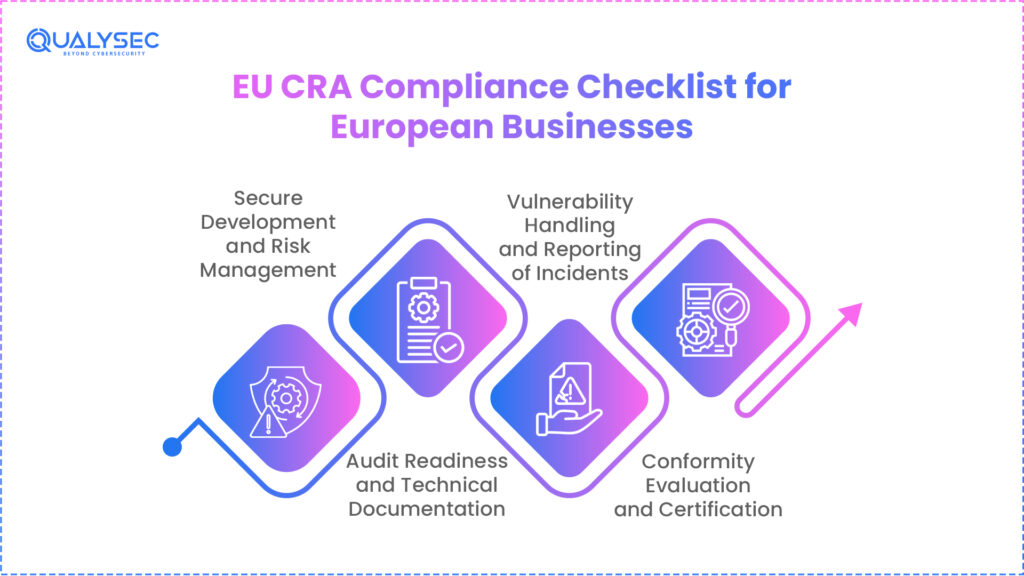
Between CRA Scope and Applicability
The Cyber Resilience Act checklist covers manufacturers, importers, and distributors of digital products entering the European market, is subject to the act. The first point that businesses should identify is determining whether their products are within the scope of the CRA and the classification of the risk they pose. This involves the determination of the presence of digital components in the product and the impact the intended use, connectivity, and possible implications may have on the compliance requirements. Applicability can be defined clearly, and this will help organisations to determine the right regulatory compliance requirements at the very beginning.
Secure Development and Risk Management
Compliance with CRA demands that security be incorporated throughout the lifecycle of the product. Organisations should use secure development practices, an early threat model, and practice secure coding standards in organisations. Cybersecurity risk management processes should precede and follow product release to mitigate security risks. Periodic vulnerability check-ups and continuous penetration testing are used to confirm the usefulness of security controls and minimize risk from new threats.
Audit Readiness and Technical Documentation
Keeping technical documentation is one of the fundamental EU CRA requirements. Businesses should record decisions about the design, security arrangements, vulnerability handling procedures, and testing outcomes. This record should be current and easily accessible to prove compliance during audits or regulatory checks. Ongoing audit preparedness is an assurance that organisations are able to react effectively to conformity audits and regulatory investigations.
Vulnerability Handling and Reporting of Incidents
Organisations should implement well-defined mechanisms for detecting, monitoring, and addressing vulnerabilities. This involves keeping a log of known vulnerabilities, the release of security patches in time, and the release of coordinated vulnerability publicity where necessary. Organisations should submit notices of actively exploited vulnerabilities within specific periods to notify the concerned authorities in each country, ensuring transparency and a quick response. Learn about vulnerability assessment.
Conformity Evaluation and Certification
Depending on the risk of the product, relevant conformity assessments require businesses to undergo them. Less risky products can be based on self-assessment, whereas higher-risk products have to be assessed by an EU-recognized Notified Body. In case of successful validation, we will provide the certificate of conformity, and the company can place the product on the EU market lawfully and will prove compliance with Cyber Resilience Act requirements.
Discover real-world success stories of businesses achieving CRA compliance. Read our detailed case studies.

How Qualysec Helps You Achieve EU CRA Compliance
Qualysec provides organisations with technical expertise and accuracy in navigating the CRA compliance landscape. The services of Qualysec align with the Cyber Resilience Act CRA standard.
Qualysec performs product-oriented penetration tests to identify vulnerabilities and prepare for EU Compliance Verification. Every assessment includes an assessment of vulnerabilities related to the EU CRA framework. With Actionable Remediation Guidance, Qualysec allows for timely compliance delivery.
Additionally, Qualysec assists in the completion of audit documents needed for verifying compliance with the EU CRA framework, allowing organisations to maintain compliance throughout the product lifecycle.
Conclusion
The EU CRA is a considerable change in how we regulate Cybersecurity within the EU. The CRA holds the Digital Product Ecosystem accountable as a whole.
Cybersecurity cannot be an afterthought anymore. Those who comply earlier will gain an edge in competitiveness and customer trust. Thus, companies must supply all necessary resources to ensure that they meet their obligations under EU CRA compliance.
A key aspect of long-term compliance with the CRA will be providing formal technical validation of Cyber Resilience Act compliance testing today by preparing to comply with the CRA in the future.
Ensure your European business is fully CRA-compliant. Schedule a meeting with our specialists to discuss your checklist, uncover potential risks, and get practical solutions to achieve compliance quickly and efficiently.
FAQ’s
1. What is the EU CRA?
The Cyber Resilience Act, or CRA, is an EU regulation that imposes requirements related to the Cybersecurity of digital products and services. By establishing a Cybersecurity Framework, it creates a uniform level of cybersecurity for all digital products and services that are sold in the EU.
2. What is the CRA in security?
In terms of security, the CRA provides a general framework for the management of vulnerabilities in the development and administration of digital products, from design to decommissioning.
3. Has the EU Cyber Resilience Act been passed?
Yes. The relevant authorities published the EU Cyber Resilience Act on 20 February 2022 and will implement it in stages in all EU member states from 2025.
4. What is EUCC?
EUCC means the European Union Cybersecurity Certification Scheme. The EUCC provides a basis for assigning levels of assurance that ICT Products and Services will comply with the EU Cybersecurity Regulation.
5. What is the role of CRA?
Through the CRA, EU Member States can share knowledge of cybersecurity risks across the EU Digital Ecosystem. Manufacturers and Software Providers are accountable through the CRA.
6. What is a CRA audit?
The purpose of an Audit of CRA audit is to assess a manufacturer’s compliance with CRA Security Requirements for a given product. Audits examine technical controls, documentation, and Vulnerability Management Processes.
7. What is CRA risk assessment?
A CRA Risk Assessment identifies Cybersecurity Risks for Digital Products. Through CRA Risk Assessments, manufacturers can objectively assess the vulnerability of a product to threats by evaluating exploitability, impact, and identifying gaps in compliance with the CRA Directive.