






Did you know that over 70% of all data breaches start at the endpoint? Every endpoint from employee laptops and smartphones to IoT gadgets and cloud-connected systems, is a possible entryway for cybercriminals. Once the initial line of defense, conventional antivirus systems just cannot keep pace with the changing and focused attacks of today. That is when Endpoint Security as a Service (ESS) enters. ESS offers companies a more intelligent, more adaptable, and more affordable approach to safeguard their endpoints from sophisticated cyberattacks delivered via the cloud.
This blog will define ESS and examine its characteristics and advantages. It also discusses why companies are rapidly transitioning to cloud-based endpoint security to enhance their security posture and streamline endpoint security administration.
What is Endpoint Security as a Service (ESS)?
Cyber threats are shielded against all kinds of devices- laptops, desktops, smartphones, tablets, and even servers by endpoint security management as a service, a cloud-delivered security strategy. ESS leverages cloud endpoint security capabilities to provide real-time visibility, quicker response to attacks, and endpoint virus protection powered by artificial intelligence and automation, rather than conventional on-premises solutions.
Key characteristics of ESS include:
- Centralized Management: Centralized management lowers complexity and accelerates response times since one dashboard enables IT teams to handle, watch, and secure thousands of endpoints.
- AI & ML Threat Detection: Through behavioral analysis conducted by artificial intelligence and machine learning, sophisticated algorithms can identify even zero-day malware and ransomware before they infect the network.
- Scalability: Whether you’re a small company or a global giant, ESS develops organically with your needs, thereby protecting devices worldwide and across various groups.
- Compliance Support: Built-in reporting systems help businesses to stay in compliance with laws, including GDPR, HIPAA, and ISO 27001, by lowering endpoint security inspections.
Benefits of Endpoint Security as a Service
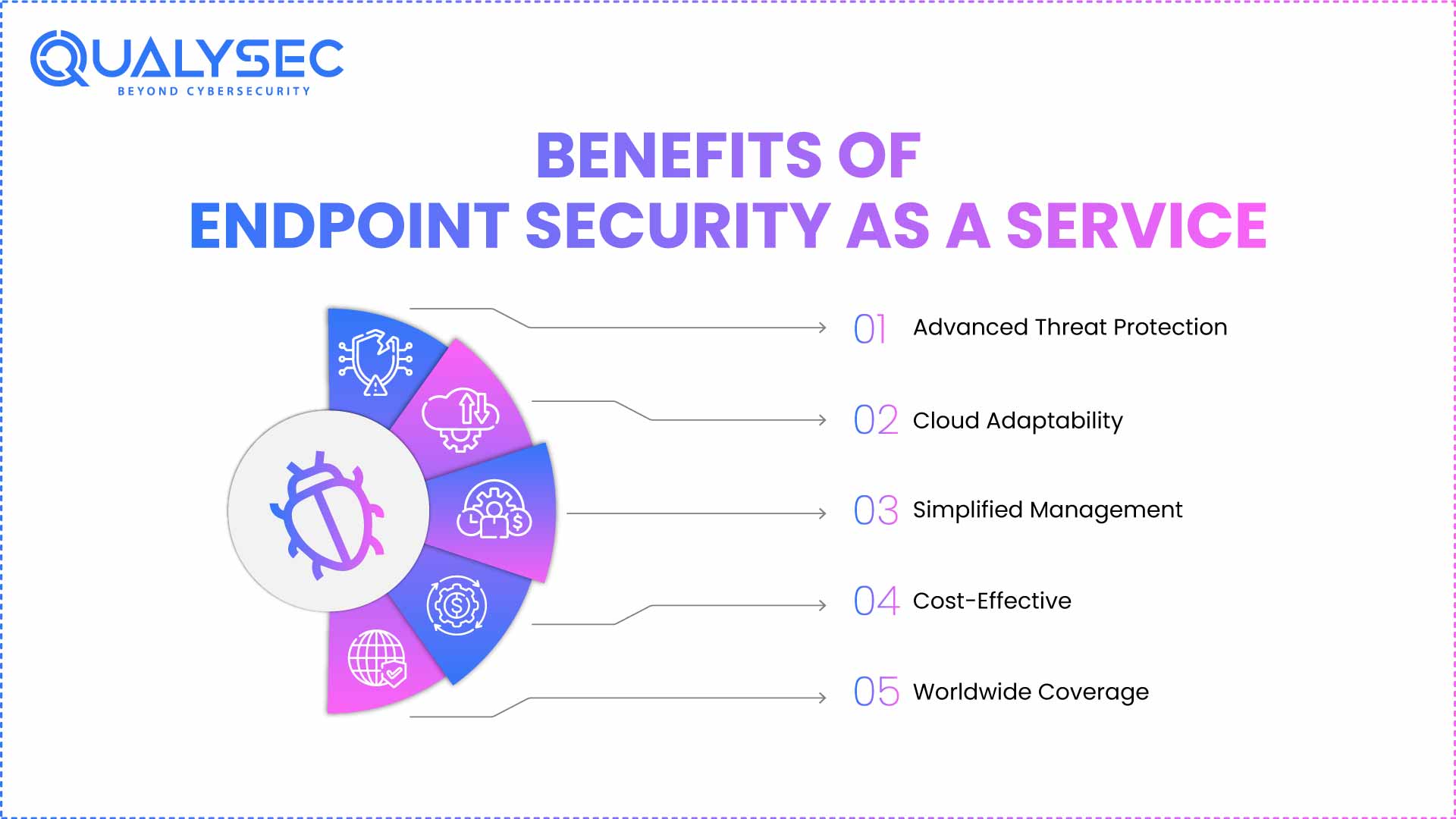
Owing to the unrivalled benefits ESS offers, businesses all around are quickly moving toward endpoint security services. Let’s look closely at each of these advantages:
1. Advanced Threat Protection
ESS identifies previously unknown attacks by analyzing patterns and behavior continuously, rather than merely blocking known viruses. It guarantees that every gadget is always monitored and protected against insider threats, phishing attempts, ransomware, and malware.
2. Cloud Adaptability
Unlike conventional devices that rely on extensive infrastructure, cloud-based endpoint protection eliminates the need for costly servers and human upgrades. ESS suits hybrid and remote-first businesses since security automatically scales as fresh devices and users are added.
3. Simplified Management
Handling endpoint security manually across several locations or nations can overwhelm IT departments. ESS guarantees no device is left unprotected, lowers complexity, saves critical time, and offers centrally managed dashboards and automatic patching.
4. Cost-Effective
Subscription-based pricing structures allow one to predict and afford ESS. Companies still get enterprise-grade endpoint protection but save on upfront infrastructure expenditures, software licenses, and maintenance overhead.
5. Worldwide Coverage
In a world where employees connect from anywhere, ESS guarantees a safe connection across locations. Whether your staff is dispersed across several continents or situated in one office, it offers consistent protection by integrating flawlessly with tools like Azure and AWS endpoint security.

Features of Cloud Endpoint Security
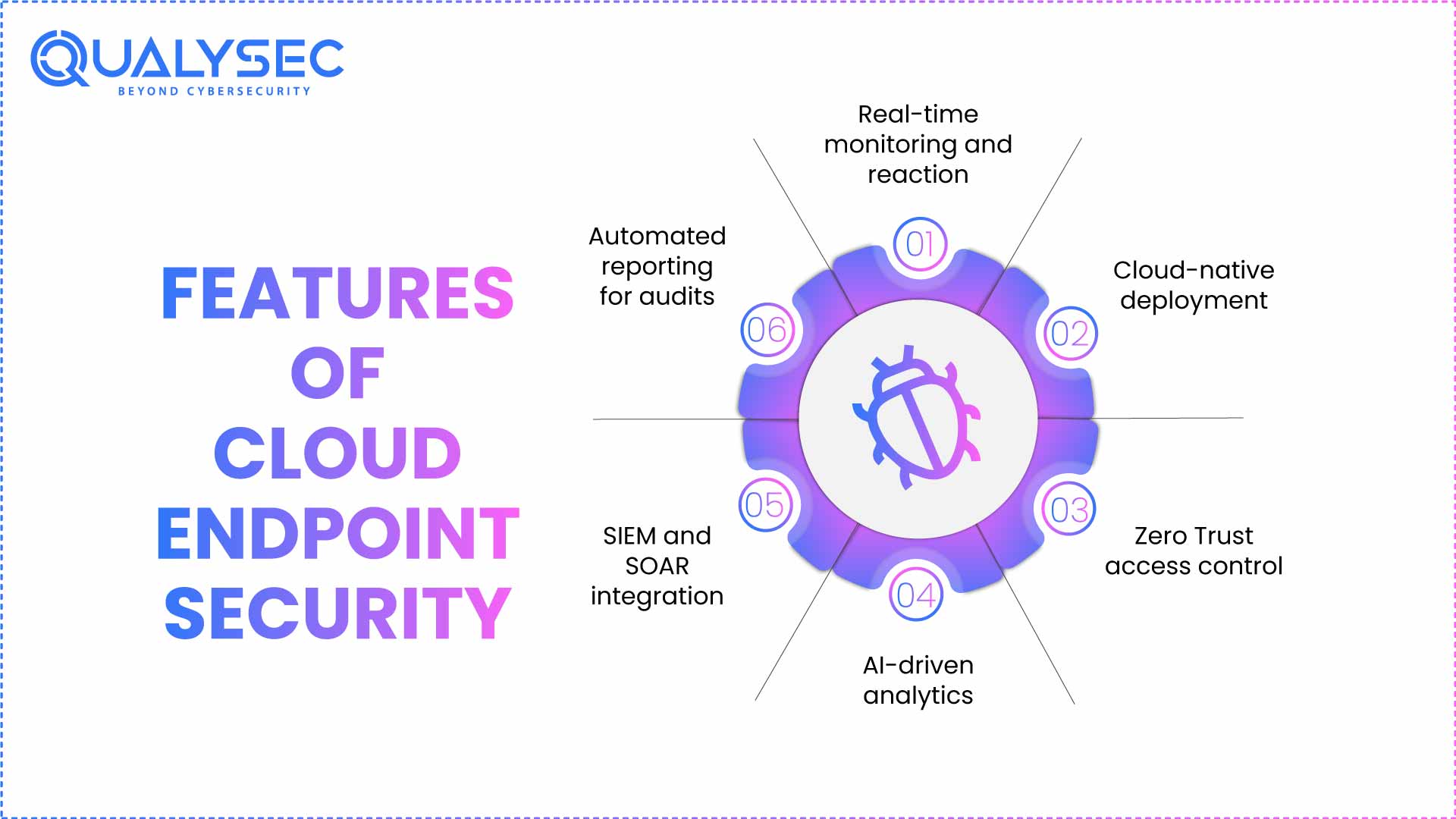
Modern endpoint protection services provide advanced capabilities beyond those of conventional antivirus, including:
1. Real-time monitoring and reaction
Constant scanning and alarming help to solve dangers before they worsen.
2. Cloud-native deployment
No heavy equipment in a cloud-native approach; deployment is quick, scalable, and accessible anywhere.
3. Zero Trust access control
Prevents unapproved users or compromised devices from traversing inside networks via zero-trust access control.
4. AI-driven analytics
AI-driven analysis identifies unusual activity patterns that indicate sophisticated, ongoing attacks or insider threats.
5. SIEM and SOAR integration
Combining endpoint security with more general security ecosystems for combined visibility, SIEM, and SOAR integration also
6. Automated reporting for audits
Automated reporting helps to simplify regulatory requirements and audits by producing compliance-ready documents.
These characteristics produce an intelligent and reactive barrier across the whole IT system as well as safe endpoints.
Endpoint Security vs. Endpoint Protection
Although the terms are sometimes used interchangeably, one major distinction exists:
- Endpoint Protection Service: Primarily protecting against unauthorized access, malware, and viruses, it assists in safeguarding your systems. It’s a more constricted approach, like locking your door.
- Endpoint Security as a Service: Beyond basic protection, endpoint security as a service incorporates cloud-native monitoring, endpoint security audit, threat intelligence, and real-time reaction. It’s more akin to having a full home security system—locks, sensors, cameras, and a monitoring crew.
Since organizations relying solely on endpoint protection solutions may overlook the broader perspective of safeguarding endpoints against today’s sophisticated and persistent threats, this variation is crucial.
Schedule a free consultation with Qualysec today and see how ESS fits your business needs!
Why Global Businesses Need Endpoint Security as a Service
Cybercriminals show no preference. Exposed endpoints are frequently the weakest link in your security chain, whether you are a small business or a global corporation. ESS is now a need rather than a luxury since it guarantees:
- Remote Workforce Protection: Protect employees working from coffee shops, coworking spaces, or their homes.
- BYOD Environments: Protect personal devices used in companies without degrading security in BYOD environments.
- Compliance in Regulated Industries: Financial, healthcare, and SaaS businesses have to meet exacting audit requirements; ESS simplifies the procedure in regulated sectors.
- Cloud Security Alignment: Seamlessly connects with other cloud services, including AWS endpoint security, to provide data and apps that stay safe across distributed environments.
How Can Qualysec Help with Endpoint Security as a Service?
We at Qualysec focus on more than simply offering endpoint security assessments. We offer a comprehensive range of solutions designed to inspire businesses’ trust in their endpoint defenses.
- Endpoint Penetration Testing: To identify vulnerabilities overlooked by automated scanners, our specialists simulate real-world attacks on equipment.
- Cloud Endpoint Security Validation: Validate your cloud settings against misuse, including your AWS endpoint security.
- Continuous Monitoring: Regular monitoring helps you stay ahead of new threats through active detection and response.
- Compliance Support: In accordance with GDPR, HIPAA, PCI DSS, and ISO 27001, compile customized reports to get ready for an audit.
- Retesting & Assurance: Following post-fix implementation, we retest systems to confirm risk eradication, employing assurances.
What sets Qualysec apart is open communication, evidence-based reporting, and assured retesting. You get peace of mind that your risks are handled, not only a vulnerability list.
Book a free consultation with Qualysec today and take the first step toward building a resilient endpoint defense!
Conclusion
Endpoint Security as a Service (ESS) is a comprehensive, cloud-native approach to securing the devices powering modern companies, rather than just another layer of protection. ESS guarantees that businesses can tackle global security concerns head-on by offering cloud-based endpoint protection, simplified audits, and constant monitoring.
To help companies close security vulnerabilities and remain resilient against evolving threats, Qualysec leverages expertise in endpoint security audits, penetration testing, and cloud integration.
Talk with our experts today, download a free sample report, or schedule a consultation to see how ESS can safeguard your business!
FAQs
1. What is endpoint security as a service?
Fighting cyberattacks on PCs, laptops, cellphones, and servers, this cloud-based endpoint protection approach offers centralized visibility and compliance-ready reporting.
2. How does Endpoint Security as a Service work?
ESS responds to threats immediately by identifying suspicious behavior and verifying endpoints through cloud-native systems. Together, real-time monitoring and AI-driven detection protect devices all over the world.
3. What are the benefits of using Endpoint Security as a Service?
It automates updates, simplifies compliance audits, lowers expenditures, improves ransomware defense, and scales across worldwide teams. Fewer layers of complexity allow businesses to be safer.
4. What is the difference between endpoint protection and endpoint security?
Antivirus and malware defense are the main concerns of endpoint protection. Broader capabilities of endpoint security management as a service include integration with cloud platforms, compliance assurance, and ongoing monitoring.
5. Which businesses can benefit from Endpoint Security as a Service?
Remote-first companies, sectors under control like finance or healthcare, and those employing cloud endpoint security systems like AWS, Azure, or Google Cloud profit most.
6. How much does Endpoint Security as a Service cost?
The scale and vendor determine pricing. Most ESS vendors charge subscription-based rates; hence, it is more economical than conventional on-premises solutions but provides enterprise-grade protection.