

Cybersecurity threats have increased drastically; IBM says that over 4,000+ cyberattacks occur daily globally, and data breach costs average $4.88 million per incident. These attacks are driven by AI-powered attacks, automation, and advanced evasion techniques. Traditional security systems in 2026 are struggling to keep up with this scale and speed, which makes AI cybersecurity essential for modern companies. AI cybersecurity providers use machine learning, behavioural analytics, and automation to detect anomalies, prevent cyberattacks, and respond to threats in real time across cloud, endpoint, and identity
This guide has the list of the Top 10 AI Cybersecurity Companies in the USA for 2026, which was created by evaluating 10+ leading vendors based on AI capability, compliance standards, and enterprise adoption. It helps organizations reduce risk, improve response time, and choose trusted security partners in an increasingly AI-driven threat landscape.
What is AI Cybersecurity?
AI cybersecurity involves securing AI models, AI-powered applications, business logic, the AI lifecycle, and model and intelligent systems against emerging cyber threats and vulnerabilities. Unlike traditional security approaches, AI security focuses on identifying risks such as prompt injection, model manipulation, adversarial attacks, insecure APIs, data poisoning, and sensitive data leakage.
Why is AI Cybersecurity more important than ever in 2026?
The National Cyber Security Centre (UK) recently cautioned, “AI will almost certainly drive up the number and severity of cyber attacks in the next two years. Gartner also projects that by 2027, 50% of accounts will be exposed to an attack in less time than it takes for a machine to exploit them, thanks to the use of AI agents. In fact, just recently, Anthropic documented the first large-scale cyberattack executed mostly without human intervention.
- Attackers are continuously and automatically scanning systems for vulnerabilities using AI to find exploit opportunities.
- With generative AI, phishing emails can be more personalized and contextually relevant, making them harder to detect and defend.
- Traditional signature-based security tools are not capable of recognizing new threats, unknown threats, or fast-changing threats.
- Today’s malware relies on polymorphic methods that are driven by AI and always alter their structure, which makes them harder to detect.
- Cloud and remote work have drastically expanded the attack surface for organizations. Today, with the expansion of the cloud and remote working, organizations have a much larger attack surface.
- Cyberattacks are now quicker and more efficient at executing and spreading, giving security teams very little time to respond.
- The cost and impact of breaches have risen because AI can scale attacks automatically. Breaches are now more costly and disruptive because AI can automatically scale attacks.
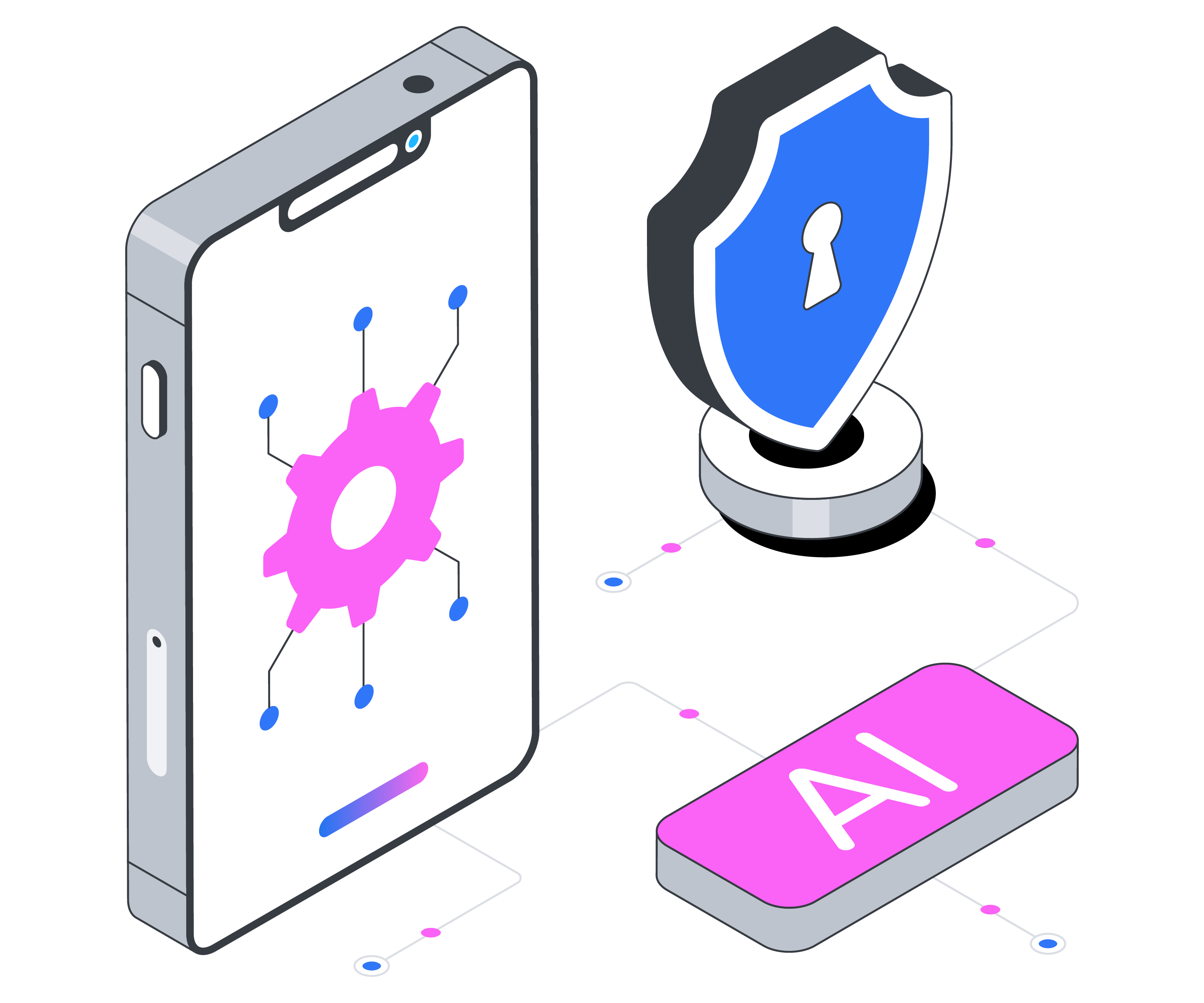
5 Steps to Choose the Right AI Cybersecurity Company
Choosing a cybersecurity company for your business is an important decision that will impact your entire business. Therefore, before selecting any AI security partner:
- Evaluate your risk profile: Identify where your information is stored. AI models need to be different for an endpoint-heavy remote workforce versus a cloud-first infrastructure or a complex hybrid environment.
- Check Certifications: Check whether the company has relevant certifications, such as CREST, ISO 13485, SOC 2, ISO 27001, PCI-DSS, or HIPAA.
- Assess response time: Determine whether the AI simply identifies anomalies for your team’s review (detection) or automatically identifies infected endpoints and blocks IPs in real time (automated response).
- Managed vs. DIY: Check whether you have the in-house expertise to operate an independent platform or need a Managed Detection and Response (MDR) model.
- Compute Total Cost of Ownership (TCO): Consider more than the initial licensing price. Consider the costs of computing resources, implementation time requirements, and training needs.
Top 10 AI Cybersecurity Companies in the USA (2026)

1. Qualysec Technologies
Qualysec Technologies is a CREST-accredited global cybersecurity company that has been delivering AI security testing services and vulnerability assessment services to businesses across finance, healthcare, government, and tech since 2020.
Certifications: CREST, ISO 13485, CEH (Certified Ethical Hacker), OSCP, ISO 27001-aligned testing methodologies, compliance support for PCI-DSS, SOC 2, HIPAA, GDPR, and FDA 510(k)
Services
You can approach them for:
- AI/ML application penetration testing
- API security testing
- Cloud penetration testing
- Source code review and vulnerability assessment
- Web application penetration testing (for AI-powered web applications)
Why does Qualysec stand out in 2026?
Speciality: AI-powered penetration testing, AI/LLM security assessments, and human-led offensive security testing.
Unlike many traditional pentesting firms that rely heavily on periodic manual assessments or automated scanners, Qualysec promotes a hybrid Human + AI testing model. The company combines certified ethical hackers with AI-driven security tools to provide deeper vulnerability discovery across multiple applications, cloud environments, APIs, and AI systems.
2. CrowdStrike
CrowdStrike is one of the most widely recognised names in cybersecurity, serving over 29,000 customers, including more than half of the Fortune 1000 companies. Its cloud-native Falcon platform uses AI and machine learning to deliver endpoint protection, threat intelligence, and incident response from a single unified agent.
Certifications: FedRAMP Authorized, SOC 2 Type II, ISO 27001, PCI-DSS compliant, StateRAMP
Services
You can approach them for:
- Cortex XDR for unified endpoint, network, and cloud analytics
- AI-powered SIEM and security operations
- Cloud-native application protection (CNAPP via Prisma Cloud)
- AI security posture management
- Automated incident response and threat hunting
Why should you choose CrowdStrike in 2026?
Speciality: AI-powered endpoint protection, extended detection and response (XDR), threat intelligence, and autonomous SOC operations.
CrowdStrike is among the first cybersecurity vendors to build a comprehensive security framework for AI agents, generative AI applications, and autonomous systems. Its cloud-native Falcon platform unifies endpoint, identity, cloud, data, and AI security within a single ecosystem.
3. Palo Alto Networks
Palo Alto Networks is one of the largest cybersecurity companies in the world. It has been serving over 80,000 clients across its three main platforms covering network security, cloud security, and AI-driven threat operations.
Certifications: FedRAMP High, ISO 27001, SOC 2 Type II, PCI-DSS, HIPAA-ready, DoD Impact Level 2 and 4
You can approach them for:
- Next-generation firewall (NGFW) and network security
- AI-powered SIEM and security operations
- Cloud-native application protection (CNAPP via Prisma Cloud)
- AI security posture management
- Automated incident response and threat hunting
What makes them special in 2026?
Speciality: AI-powered Security Operations (SOC), Extended Detection and Response (XDR), Cloud Security, Zero Trust, and AI Application Security.
Palo Alto Networks combines AI-powered SOC operations, XDR, cloud security, identity protection, and AI application security into a single ecosystem. Its Cortex platform automatically correlates data across networks, endpoints, cloud workloads, and security logs, enabling faster threat detection and response.
4. SentinelOne
SentinelOne built its reputation on autonomous threat response: the Singularity platform can detect and contain attacks without waiting for a human analyst to intervene, which dramatically compresses dwell time. Listed on the NYSE, the company serves thousands of companies globally with a cloud-native architecture that operates at scale.
Certifications: SOC 2 Type II, ISO 27001, FedRAMP authorized, PCI-DSS compliant, HIPAA-ready, Gartner Magic Quadrant Leader for Endpoint Protection (six consecutive years)
Services
You can approach them for:
- Autonomous endpoint detection, prevention, and response
- Purple AI Athena for AI-driven threat investigation
- AI-powered SIEM and security data lake
- Cloud workload security and CNAPP
- AI agent security for monitoring and controlling agentic workflows
Why do they stand out in 2026?
Speciality: AI-driven autonomous security operations, endpoint protection, XDR, and AI-SIEM platforms.
Unlike traditional cybersecurity vendors that rely heavily on manual SOC workflows and rule-based detection, SentinelOne focuses on full AI-driven autonomy. The company uses Purple AI Athena, which can automatically investigate threats and correlate data across SIEMs. Teams that want to minimise manual SOC workload will find SentinelOne particularly appealing.
5. Darktrace
Darktrace is a cybersecurity company that uses AI to protect businesses from cyber threats.
is an AI cybersecurity company that pioneered the use of unsupervised machine learning in security, building a system that learns what normal looks like for each organization and flags deviations in real time.
Certifications: ISO 27001, SOC 2 Type II, GDPR compliant, FedRAMP In Process, CE+ certified
You can approach them for:
- Self-learning AI for network traffic analysis and anomaly detection
- ActiveAI Security Platform for real-time threat response
- Email security with AI-powered phishing and impersonation detection
- Cloud and SaaS security monitoring
- OT and ICS security for industrial environments
- Autonomous response (Antigena) to neutralize threats in seconds
- Insider threat detection
Why should you choose Darktrace in 2026?
Speciality: AI-powered behavioral anomaly detection, self-learning cybersecurity, and autonomous response (ActiveAI Security Platform).
Unlike traditional cybersecurity companies that depend on known threat signatures or rule-based detection, Darktrace uses self-learning AI to establish a behavioural baseline for every user, device, and system. This baseline allows the security team to detect previously unseen or zero-day attacks by identifying subtle deviations from normal activity in real time. The company is highly valuable in high-risk environments, especially manufacturing and financial services.
6. Fortinet
Fortinet is a California-based cybersecurity company that is known for building an integrated security platform called the Fortinet Security Fabric, which connects and automates protection across networks, endpoints, cloud environments, and applications.
Certifications: Common Criteria EAL4+, FIPS 140-2, FedRAMP High, ISO 27001, PCI-DSS, SOC 2 Type II, HIPAA
Services:
You can approach them for:
- AI-powered next-generation firewalls (NGFW)
- FortiAI for real-time threat intelligence and automated response
- Secure SD-WAN with integrated security
- Zero Trust Network Access (ZTNA)
- Endpoint protection and EDR
Why make them different in 2026?
Speciality: AI-driven network security, unified Security Fabric architecture, and generative AI-powered SOC automation (FortiAI).
Fortinet stands out in 2026 because it is not just selling security tools but is building a tightly connected security-and-networking system called “Security Fabric” that operates as one platform. It integrates protection across the entire digital attack surface from network edge to cloud and operational technology environments within a single integrated platform. Their FortiAI assistant uses generative AI to help analysts investigate incidents, generate runbooks, and automate remediation without writing a single line of code.
7. Microsoft Security
Microsoft’s security division has grown into one of the largest cybersecurity businesses in the world. It provides tools and services that help detect cyberattacks, prevent data breaches, and secure cloud systems, emails, and networks across businesses of all sizes.
Certifications: FedRAMP High, ISO 27001, SOC 1 and SOC 2 Type II, PCI-DSS, HIPAA, DoD IL4 and IL5
Services:
You can approach them for:
- Microsoft Sentinel (cloud-native SIEM and SOAR with AI)
- Microsoft Defender XDR for cross-domain threat detection
- Copilot for Security (generative AI security assistant)
- Microsoft Entra for identity and access management
- Microsoft Defender for Cloud for multicloud security posture
Why do they stand out in 2026?
Speciality: AI-powered security operations (Security Copilot), cloud-native threat intelligence, and integrated security across Microsoft 365, Azure, and endpoint ecosystems. Summarize alerts and generate actionable response steps. Built on Microsoft’s global security ecosystem, it benefits from telemetry across billions of endpoints, email systems, cloud workloads, and identity signals, giving it one of the largest threat intelligence foundations in the industry.
8. Vectra AI
Vectra AI specialises in AI-powered network detection and response (NDR), which focuses specifically on identifying attacker behaviour inside the network after an initial breach rather than only at the perimeter. The company’s platform is built on the belief that preventing every attack is impossible and that the speed of detection and response after entry determines the outcome.
Certifications: SOC 2 Type II, ISO 27001, GDPR compliant, FedRAMP Authorized
Services
- You can approach them for:
AI-driven network detection and response (NDR) - Identity threat detection across Active Directory and cloud identities
- Hybrid and multi-cloud attack surface monitoring
- Integrated detection across network, identity, cloud, and endpoint
- Attack signal intelligence to reduce alert fatigue
Why do they stand out in 2026?
Speciality: AI-driven attack detection, Attack Signal Intelligence, and hybrid cloud threat correlation across network, identity, and SaaS environments.
Unlike traditional security tools that generate high volumes of alerts and false positives, Vectra AI focuses on distilling security telemetry into high-fidelity “attack signals” using its Attack Signal Intelligence technology. This enables SOC teams to quickly identify real threats. It correlates behaviours across multiple attack surfaces instead of reviewing isolated alerts.
9. Zscaler
Zscaler is a cloud security company that provides advanced cybersecurity solutions that help businesses securely operate in a cloud-first world. Its platform simplifies network security, enhances threat protection, and ensures seamless connectivity for a distributed workforce.
Certifications: FedRAMP High, ISO 27001, SOC 2 Type II, PCI-DSS, HIPAA, CSA STAR Level 2
Services
You can approach them for:
- Zero Trust Network Access (ZTNA) for remote and hybrid workforces
- AI-powered Cloud Proxy and Secure Web Gateway
- Data Loss Prevention (DLP) with AI-based content inspection
- Cloud Access Security Broker (CASB)
- AI-driven Threat Intelligence and Sandboxing
What makes them special in 2026?
Speciality: Zero Trust Network Access (ZTNA), Secure Access Service Edge (SASE), cloud security, and secure access for users, applications, and workloads.
Zscaler’s entire platform was designed around a zero-trust architecture rather than the traditional network perimeter model, which makes it suitable for hybrid workforces and cloud-first environments. Its security cloud applies AI-driven analytics to automate policy enforcement, to identify anomalous activity, and improve threat detection across encrypted traffic.
10. Armis
Armis is a San Francisco-based cybersecurity company founded in 2015 that focuses on asset intelligence and security, particularly for unmanaged and IoT devices that traditional security tools cannot reach. The Armis Centrix platform uses AI to discover, classify, and continuously monitor every connected device across an organisation’s environment without requiring any agents.
Certifications: SOC 2 Type II, ISO 27001, GDPR compliant, FedRAMP In Process
Services
You can approach them for:
- AI-powered asset intelligence across managed and unmanaged devices
- Vulnerability prioritization for the full device estate
- Threat detection for operational technology (OT) networks
- Critical infrastructure protection for industrial systems
- Agentless IoT and OT device discovery and security
Why should you choose them in 2026?
Speciality: Agentless asset visibility and security for IoT, OT, medical devices, and unmanaged endpoints across security environments.
Armis is built for a security environment where installing security agents is not feasible, including healthcare systems, industrial control systems, and smart infrastructure. Their AI continuously maps device behaviour against a global database to detect anomalies without disrupting operations. This allows security teams to have real-time visibility into the system and get risk-based insights across unmanaged and legacy devices that were previously used.
Comparison Table
|
Company |
Industry Served |
Compliance Mapping |
|
Qualysec |
Healthcare, Financial Services, SaaS, Technology, Government |
PCI-DSS, NIST AI RMF, SOC 2, HIPAA, HITRUST, ISO 27001, EU AI ACT, GDPR, FDA 510(k) |
|
CrowdStrike |
Corporate Companies, Financial Services, Healthcare, Government, Retail |
FedRAMP, SOC 2 Type II, PCI-DSS, HIPAA, ISO 27001 |
|
Palo Alto Networks |
Corporate Companies, Government, Financial Services, Healthcare, Manufacturing |
FedRAMP High, SOC 2 Type I/II, PCI-DSS, HIPAA, ISO 27001, DoD IL2/4 |
|
SentinelOne |
Corporate Companies, Healthcare, Financial Services, Education, Government |
SOC 2 Type II, FedRAMP, ISO 27001, PCI-DSS, HIPAA, GDPR |
|
Darktrace |
Manufacturing, Infrastructure, Financial Services, Healthcare, Retail |
ISO 27001, SOC 2 Type II, GDPR, CE+, FedRAMP (in progress) |
|
Fortinet |
Manufacturing, Energy, Utilities, Telecommunications, Mid-Market Corporate Companies |
Common Criteria EAL4+, FIPS 140-2, FedRAMP High, PCI-DSS, SOC 2 Type II, HIPAA, ISO 27001 |
|
Microsoft Security |
Corporate Companies, Government, Healthcare, Financial Services, Education |
FedRAMP High, SOC 1 & 2, PCI-DSS, HIPAA, ISO 27001, DoD IL4/5, GDPR |
|
Vectra AI |
Corporate Companies, Financial Services, Healthcare, Government, Technology |
SOC 2 Type II, ISO 27001, GDPR, FedRAMP Authorized |
|
Zscaler |
Corporate Companies, Financial Services, Healthcare, Government, Retail |
FedRAMP High, SOC 2 Type II, ISO 27001, PCI-DSS, HIPAA, CSA STAR Level 2, GDPR |
|
Armis |
Healthcare, Manufacturing, Critical Infrastructure, Energy, Industrial Operations |
SOC 2 Type II, ISO 27001, GDPR, FedRAMP in process, NERC CIP |
Conclusion
This new reality in cybersecurity is driven by the emergence of AI. AI has given rise to a new reality in cybersecurity for both defenders and attackers. As cybercriminals are relying on AI to automate their reconnaissance, craft more realistic phishing attempts, and create stealthier malware, security vendors are turning to the same technology to speed up threat detection, enhance investigation workflows, and shorten response time. An ever-present challenge is changing how organizations conduct cyber defence.
The companies featured in this list demonstrate that there is no single approach to cybersecurity success. Some specialize in proactive security validation via AI penetration testing, others in endpoint protection, cloud security, network visibility, identity protection, or critical infrastructure security.
Organizations that have robust security measures and the appropriate cybersecurity partner will be well-equipped to continue operating with resilience, remaining secure and confident in their ability to tackle the digital challenges of 2026 and beyond.
Ready to Identify Your Security Risks? Book a call with our expert.
FAQs
1. Who is the leader in AI cybersecurity?
In 2026, Qualysec Technologies has become the leading AI cybersecurity company among top AI cybersecurity companies, offering complete AI-based security solutions and leading in spotting and responding to cyber threats.
2. What are AI Cybersecurity Solutions?
AI cybersecurity solutions automate the processes of identifying threats, handling risks, and taking action, thanks to AI and machine learning tools, and this allows them to respond more quickly and safely than ordinary approaches.
3. Why do we need AI Cybersecurity?
Defending against all the different and advanced cyberattacks is too complex and time-consuming for manual methods. AI cybersecurity services provide automatic defenses that change with new threats, so risks are lowered, and attacks have less impact.
4. How do AI Cybersecurity Companies improve threat detection and response?
Thanks to machine learning and behavioral analysis, AI cyber security companies react to threats fast, solve problems smoothly, and keep improving their security.
5. Which industries benefit the most from AI-driven cybersecurity solutions?
Quick and confident data protection is needed by the financial, healthcare, government, and energy industries, which is why AI cybersecurity is most important to them.
6. What features should you look for in an AI Cybersecurity Platform?
The security system should use automation, review usage of data, allow you to connect different systems, scale with your requirements, continuously advance, keep everything clear to you, and guarantee you comply with regulations.
7. Can small companies use AI cybersecurity tools?
A lot of top AI cybersecurity companies offer adaptable services that can protect small and medium-sized companies with enterprise-level protection without them needing large teams of IT specialists.