

Websites and web applications are the soul of every business today. In the Philippines, from e-commerce platforms to online banking and government portals, almost everything is being run with web apps. But digital expansion eventually brings digital danger. Web Application Penetration Testing (WAPT) is essentially a disciplined and sanctioned hackathon. Rather than looking for an actual hacker to target your system, professional testers simulate real-world attacks in an organized and ethical manner. The aim is simple: discover weaknesses before the bad guys do.
For Filipino businesses, it is crucial. “We have grown to be exposed and became the desired prey,” the Department of Information and Communications Technology (DICT) said in a 2023 report, which noted that phishing, SQL injections, and ransomware are also among the techniques favored by hackers. With more Filipinos doing their shopping, banking, and working online, the threat of website hacking is greater than ever.
In this article, we delve into the principal web application vulnerabilities, the approach of WAPT, and how businesses in the Philippines can outsmart hackers with the help of certified partners like Qualysec. Web app pentesting is a simulated attack on a web application to find security flaws.
Web Application Penetration Testing: Insights Into Vulnerabilities
Hackers are like burglars, sniffing around your code and website, looking for an open door. These are some of the most prevalent vulnerabilities in web apps, and a large number of them are covered in the OWASP Top 10. Regular web application penetration testing finds and resolves these problems before hackers can take advantage of them.
- SQL Injection (SQLi): Your application takes untrusted input without validation, and attackers can inject/insert malicious code in your SQL queries. For instance, they could skip a login form and go straight to your database.
- XSS (Cross-Site Scripting): Attackers inject malicious scripts into pages that will be seen by other users. This can capture login information or send users to counterfeit websites.
- Broken Access Control: Users can get into functions or data they shouldn’t — say, a regular customer seeing admin controls.
- Insecure Deserialization: Badly implemented serialization mechanisms can allow attackers to execute remote code on your server.
- Security Misconfigurations: Default settings, unused features, misconfigured cloud storage buckets…Attackers simply love those.
Small and medium businesses in the Philippines usually don’t have dedicated security teams, he added, so these vulnerabilities are doubly dangerous. Some people rely exclusively on off-the-shelf website protections, not understanding that hackers are continually advancing beyond automated defenses. Web application pentesting involves an authorized hacking attempt to test a website’s defenses.
The Five-Phase Web Application Penetration Testing (WAPT) Methodology in Philippines
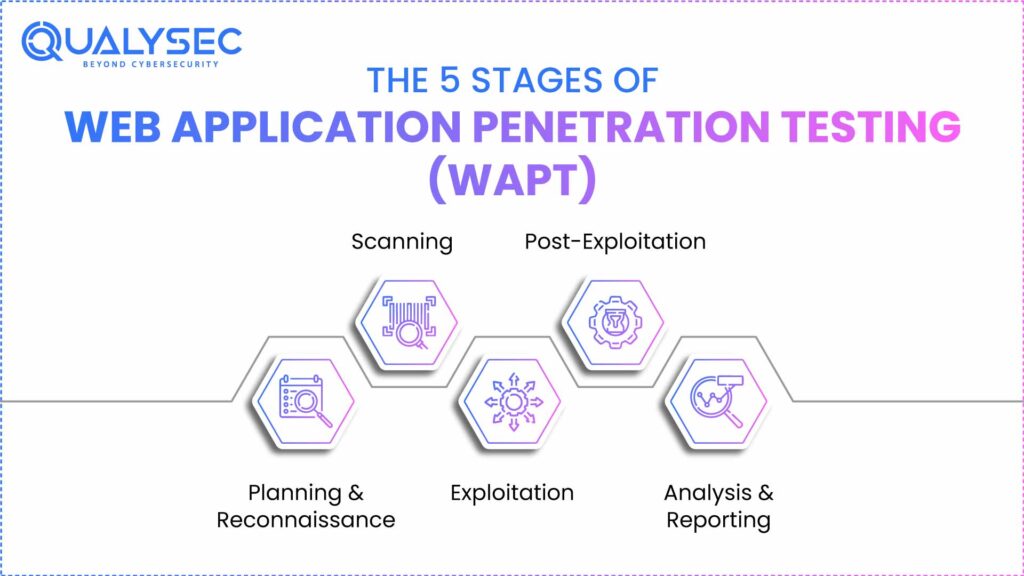
Web Application Penetration Testing methodology is not just a Shot in the Dark. It’s a very well-orchestrated iterative process to discover unknown risks: Step by step, it unveils concealed risks.
Planning & Reconnaissance
The tester compiles an information dossier on your app: subdomains, technology used, and even company names from public sources. This is the basis of a focused attack.
Scanning
Automated tools search for open ports, or out-of-date components or vulnerabilities. Common examples are Burp Suite, OWASP ZAP, and Nmap.
Exploitation
The tester then tries to exploit these problems – sending SQL injections, circumventing logins or even inserting dangerous code. None of our hack attempts were even remotely easy enough to pull off automatically, reading the signs being the hardest part, and manual labor is what we’re depending on to emulate the true hacker spirit.
Post-Exploitation
Once you have access, the tester assesses the impact: What data could be stolen? Was there a chance that the attackers could pivot into adjacent systems, such as payment gateways or HR databases?
Analysis & Reporting
And finally, we create a crisp report that lists all vulnerabilities, risk levels, and remediation steps that we can take — this test provides a path for better defenses.
There are no stones left unturned with this approach.
Download our sample Web app penetration testing report to understand how vulnerabilities are reported and mitigated.
Why Should Web Application Penetration Testing Be Prioritized in the Philippines
The stakes are high for Philippine organizations:
- Financial Vulnerability: Cyberattacks cost Philippine companies millions of dollars every year. Citing DICT records, the Philippines made it to the list of top 10 places targeted by ransomware in Asia.
- Pressure from regulations: The DPA (Philippine Data Privacy Act) mandates companies to protect personal data. Violations can lead to fines and loss of licenses.
- Reputation & Trust: In the era of online banking, fintech’s, and e-commerce, in these competitive times, a breach could potentially destroy years of customer trust.
- National Security Considerations: As vital government services move online, weak spots in web apps can pose risks not just to businesses but to citizens’ safety.
- For these purposes, many companies in the Philippines are now starting to do ongoing penetration testing as a part of their security hygiene.
QualySec: Your Confidante in Web-Application Security
A lot of companies here in the Philippines understand they need improved web application security, but they just don’t know how or who to approach. That’s where Qualysec comes in.
What Makes Qualysec Different?
- World-Class Coverage, Local Attention. In providing services to businesses across the globe, Qualysec knows what relevant threats exist in the Philippines.
- Methodical Testing: Their good guy hackers have moved beyond simply running automated tools to actually testing applications with the intention of finding flaws that many others have missed.
- Actionable Reports: No more generic lists of vulnerabilities, with Qualysec, you receive detailed step-by-step guides based on how strong your team is.
- Compliance-Ready Whether you are focused on GDPR, HIPAA, PCI DSS, and Philippine DPA, Qualysec makes sure your apps meet international and local standards.
Affordable and Scalable: Whether you’re a startup, SME, or a large enterprise, services are ready to adapt to your business, so even small companies in the Philippines can have enterprise-grade protection. Penetration testing on a web application is a controlled security test to find vulnerabilities before a real attacker does.
Get a customized quote for your next web application penetration test today.
Why It’s Important to Perform Web Application Pen Testing in the Philippines
Filipinos have made the Philippines one of the fastest-growing digital markets in Asia. As businesses have quickly shifted to online services, including e-commerce, banking, and government services. But this rapid expansion also makes the country a huge magnet for cybercriminals. Small businesses tend to lack resources and technical expertise for IT security, making them more likely to face basic web hacks like SQL injection or phishing attacks.
This is where conducting web application penetration testing, PH organizations can discover vulnerabilities ahead of cyber attackers, secure customer information, and ensure compliance with industry standards. Let’s just say: Pen testing simply isn’t something that’s nice to have, but rather a business requirement in order to maintain long-term trust and growth. A web server security test checks the security of the server that hosts a website.
The Price of Inattention to Web Safety
Web application security, or web app VAPT, doesn’t have to be costly. In the Philippines, a seemingly insignificant breach could cost you millions of pesos in recovery expenses, legal fines, and customer trust. For sectors such as fintech, e-commerce, and health care, the consequences can amount to more than just money. It can ruin reputation and trust overnight.
Most breaches are the result of simple, known vulnerabilities that could have been fixed. That is why you certainly get your money’s worth with regular web application penetration testing as one of the wisest and affordable investments a business can get today.
As for web app security in the Philippines, Qualysec is not just a service but a partner in the provision of long-term protection.
The Bottom Line: Keep Hackers on the Defensive with Regular Testing
In the present Philippines, digital businesses can no longer function without a web application that accepts payments, manages customers, or runs an e-commerce or online service. But every new web app also introduces new risks. Regular web application penetration testing is crucial for identifying and fixing vulnerabilities before hackers can exploit them.
Application penetration testing is not a technical exercise; it’s a business survival strategy. You learn about and fix weaknesses before they cost you money, raise regulatory flags, or damage your reputation by simulating attacks based on the real world.
In partnership with the likes of Qualysec, Filipino companies can ensure their defenses are rock solid from an attack and compliance perspective, and as a result, build trust among customers.
Making the right decision has never been easier. Let the hackers discover your vulnerabilities, or partner with professionals to secure your apps now.
Book a meeting today and take the first step toward securing your web applications from cyber threats.

Frequently Asked Questions (FAQs)
Q1. What is the meaning of Web Application Penetration Testing (WAPT)?
Web Application Penetration Testing (WAPT) will be like a controlled cyberattack by ethical hackers. They unearth the vulnerabilities in your web applications before actual cybercriminals take advantage of them.
Q2. Can you give me the 5 phases of a penetration test?
The 5 phases of a web application pentest are essential for every web pentest. They are:
- Planning & Reconnaissance
- Scanning
- Exploitation
- Post-Exploitation
- Analysis & Reporting
Q3. What Tools are used in WAPT?
There is no one “best” tool. Good-guy hackers generally use a foundation of pen testing tools — such as Burp Suite, OWASP ZAP, Nmap and custom scripts.
Q4. Please provide one example of penetration testing?
Yes. For example, a penetration tester will use SQL injection in a login form in an attempt to exploit the system and log in as vulnerable users.
Q5. Why Businesses in the Philippines need WAPT?
Because it is one of the most attacked countries in Asia. Without actively testing, companies are vulnerable to breaches, the prospect of enforcement action under the DPA, and reputational ruin.