







Trust in business is created by the safety of the payment. Credibility of a PCI DSS audit will be necessary in 2026 and beyond. Statista forecasts that by the end of 2025, the world will have more than $19 trillion in digital payments, with India contributing over $2.2 trillion, a 30% increase from 2024, with the majority of these payments expected to be made via UPI and card transactions. Despite the high digitization, according to the RBI, India, as of 2024, had over 19,000 cases of card fraud and lost over 3,120 crores.
Indian companies maintain PCI DSS compliance continuously, albeit at only 57 per cent, but the RBI predicts this to increase to 71 per cent by 2026 with improved audits and risk assessment. Merchants that are not in compliance face a fine of 12 crore rupees per breach by the regulators. The increase in the number of PCI compliance audits in India in 2023 amounted to 27 per cent. The highest Indian digital priority is keeping the payments safe in 2025. Ensure that your organisation complies with all the rules of PCI DSS audit and risk assessment.
Get easy compliance immediately from certified experts – Talk to Qualysec today!
Essential PCI DSS Requirements – The 12 Steps
India has PCI rules, which are provided by the PCI Security Standards Council. To become a success, check all 12 PCI DSS Compliance Requirements –
- Install and maintain network controls – Firewalls and intrusion prevention to bar external threats.
- Use safe settings – Configure systems and devices in a way that will eliminate default passwords and minimise risks.
- Protect card information – Store the data, encrypt it, or tokenise it to ensure that hackers do not get access to it.
- Crypt messages on the open networks – Apply powerful protocols like TLS 1.3.
- Antivirus against viruses – Frequent PCI checks detect viruses in a short time.
- Create and maintain secure systems – Continuously keep the patches.
- Restrict access to card data by role – Only provide the required privileges.
- Spot check system access – Multi-factor authentication and monitor credential utilisation.
- Physical access control – Secure card information both physically in the cloud and on-premises.
- Monitor all access logs and SIEM tools – Be able to use central logs and SIEM tools to enable compliance.
- Test security – Usually, penetration tests and segmentation tests should be done at least once every year.
- Back security and policies – Develop and implement company-wide policies.
All of the controls influence the audit outcomes and compliance.
PCI DSS Audit Process – The Process
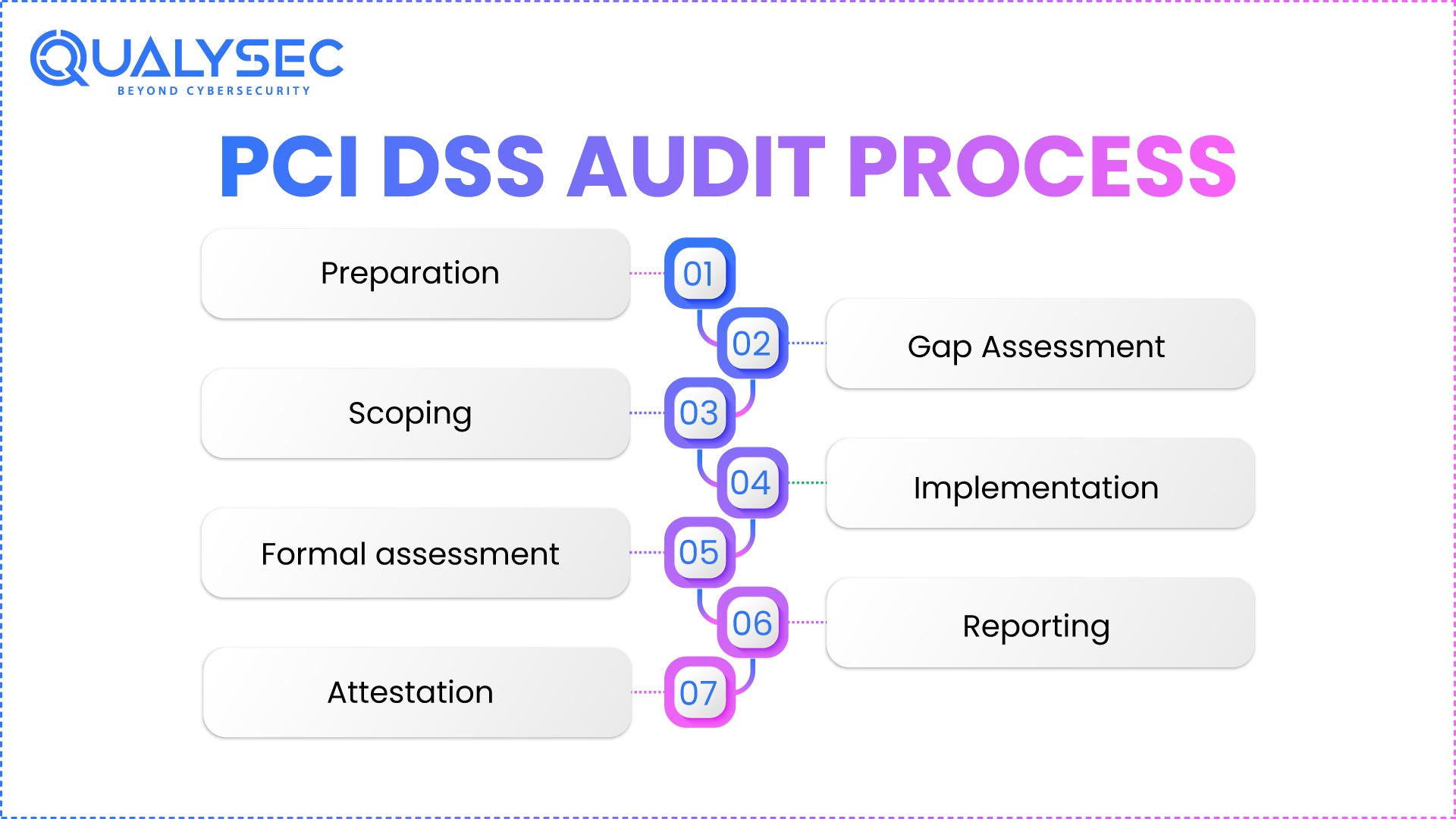
There are numerous steps associated with the lifecycle of PCI compliance audit –
- Preparation – Gather assets and select the PCI Compliance Test.
- Gap Assessment – Compare the current security to the PCI rules and identify missing or ineffective controls.
- Scoping – Locate all the card data areas and isolate non-card areas through segmentation testing.
- Implementation – Rectify deficiencies and comply with all audit regulations of which include risk assessment and penetration testing.
- Formal assessment – On-site check by authorised assessors who run tech, papers, perform penetration tests, and walk through procedures.
- Reporting – Auditors provide a specific report about the adherence to all of the test results.
- Attestation – Provide ROC and Attestation of Compliance to card networks or buyers.
PCI DSS Compliance Audit- Best Practices
The use of the best practices of PCI DSS audit enables the Indian organisations to enhance security, reduce the PCI compliance cost, as well as remain compliant in 2025. The main actions are –
1. Automate Continuous Surveillance
Splunk or IBM QRadar are tools that can be used to automatically gather, review, and alert security events. Automation accelerates the detection and correction of problems and compliance checks in real time.
2. Risk Assessment on a Regular PCI
Perform risk reviews regularly (at least every three months) to identify new issues and revise the controls as the threats evolve, rather than once a year.
3. Conduct Frequent PCI PenTest and PCI DSS Segmentation Testing
Run PCI-DSS Pentesting to identify areas of weakness and segmentation tests to reduce the scope of the audit. These must occur once a year or following significant changes in the network.
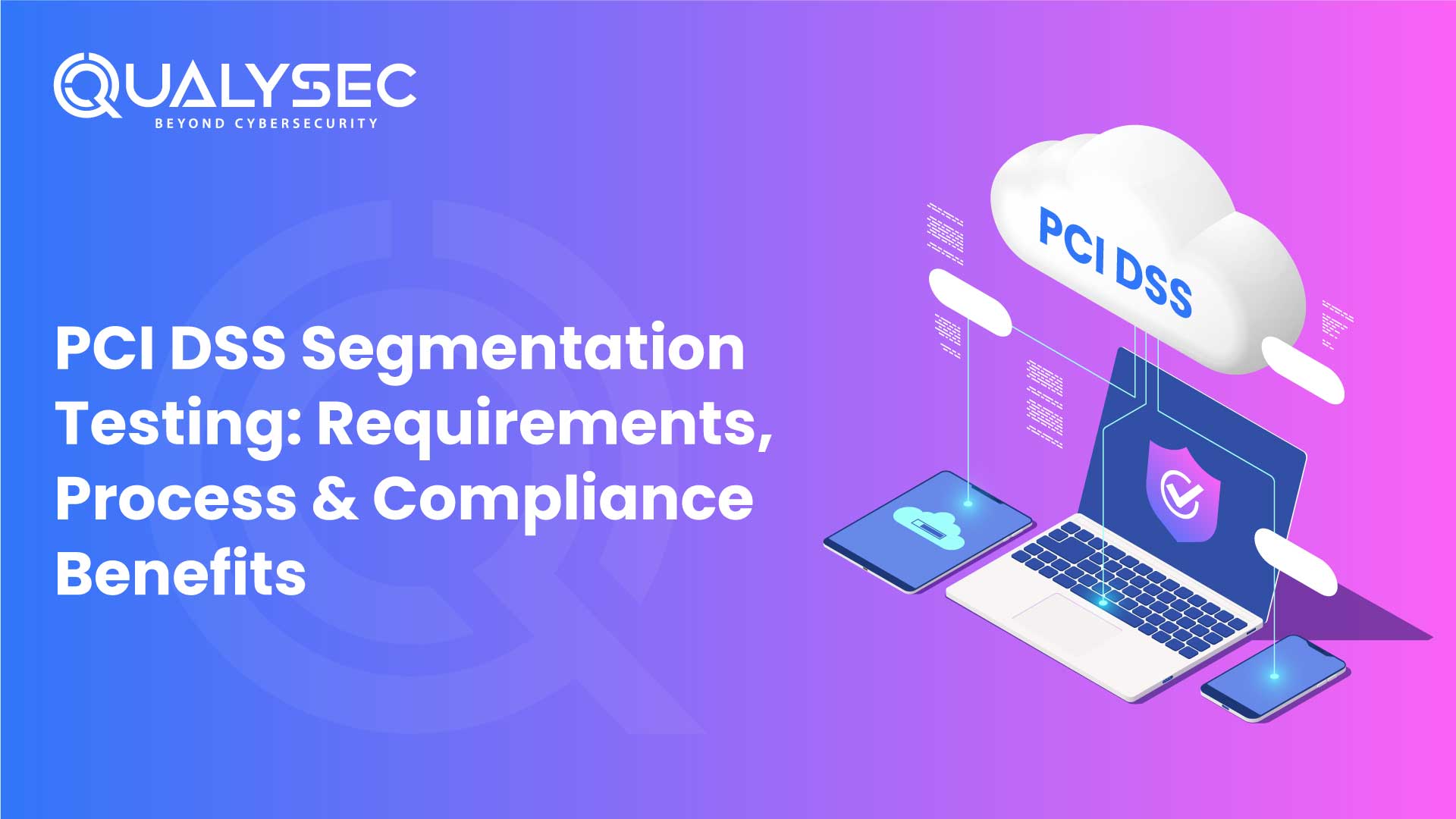
Learn more about What is PCI DSS Segmentation Testing? Requirements, Process & Compliance Benefits
4. Multi-Factor Authentication (MFA)
MFA should be enforced on all systems subject to card information to secure access to prevent the use of passwords.
5. Maintain Current Records
Have security rules, access records, network diagrams, and fix records. Clearly recorded records will accelerate the review of auditors and ensure that you are prepared to undergo the check.
6. Use Role-Based Access Controls
Only individuals who actually require card data should have access to it through the use of unique IDs and rigorous approval procedures.
7. Patch and Harden Systems
Applied security patches should be timely, and only those components that are necessary are installed. Services that are not needed or default accounts should be removed, reducing the scope of attack.
8. Train Employees on an Annual Basis
Conduct training annually to ensure that employees are aware of the PCI rules and the reasons why they are important.
9. Segmentation based on Leverage to Reduce Scope
It will do a good segmentation to isolate the areas of card data in order to reduce the size of the audit, and can reduce the cost of this audit by 40 percent.
The practices will make PCI DSS audit a perpetual security advantage, not an annual burdensome task, but a safeguard to payment and customer confidence.
Choosing Qualysec Technologies for PCI DSS Audit in India
Qualysec is a leader in Indian cyber safety. We assist businesses in maintaining the safety of payment card information, as well as through established technologies founded on the best practices in the industry and evolving regulations. How Qualysec Technologies can be of benefit for PCI DSS audit to your business –
- Professional Team – The employees are qualified as PCI auditors and penetration testers. They are aware of the PCI regulations and the threats to payments in India. They rely on that knowledge to do all audits.
- Process Testing – Qualysec has a different approach that is proven. All PCI audits are undertaken in distinct phases: accurate scoping, tailored risk assessment, extensive PCI-DSS Pentesting, and segmentation testing. This identifies and addresses all loopholes so that no conjecture is made and audits are precise.
- Risk Prioritisation – As opposed to generic lists, Qualysec prioritises risks by the business impact and the ease with which they are exploited. This will assist teams to fix what is most important and, with the resources saved, be fully PCI compliant.
- Real-Time Tracking – Clients receive real-time dashboard vulnerabilities. Reporting contains technical information, sample adventures, and clear-cut instructions on how to fix it. This enables companies to do things quickly and be audit-ready.
- Continuous Support – PCI compliance is not a job done once. Qualysec performs regular re-tests, readiness checks, and annual recommendations to ensure that companies are ahead of new cyber threats and regulations.
- Custom for India – Qualysec is familiar with the payment system, rules, and issues of India. That allows them to provide special solutions adopted by fintechs, NBFCs, and e-commerce giants throughout the country.
Get in touch with Qualysec today to arrange a PCI audit for PCI DSS Compliance Requirements and observe the difference that a process-based test can make!































































































0 Comments