









Driving current digital change, artificial intelligence now powers everything from automated systems and medical analytics to financial forecasting and smart assistants. Still, this same progress has broadened the worldwide threat profile. AI security has risen to become a board-level issue in 2025 as companies struggle with AI cybersecurity threats ranging from data leaks to changed models. Even a little breach could expose confidential corporate data or allow AI model exploitation that attackers can weaponize as AI systems learn from vast datasets.
IBM’s 2024 Cost of a Data Breach Report shows that attacks driven by artificial intelligence have grown by around 40%, mostly as a result of the incorrect use of adversarial inputs and generative models. The conventional perimeter-based security model no longer functions as companies embrace artificial intelligence throughout operations. CTOs must rethink security from an AI-first perspective, one that shields the algorithms themselves as well as the data driving the models.
Partner with Qualysec to conduct a full-scale AI threat assessment and identify vulnerabilities before they become breaches!
Top 5 AI Security Weaknesses Every CTO Should Be Familiar With
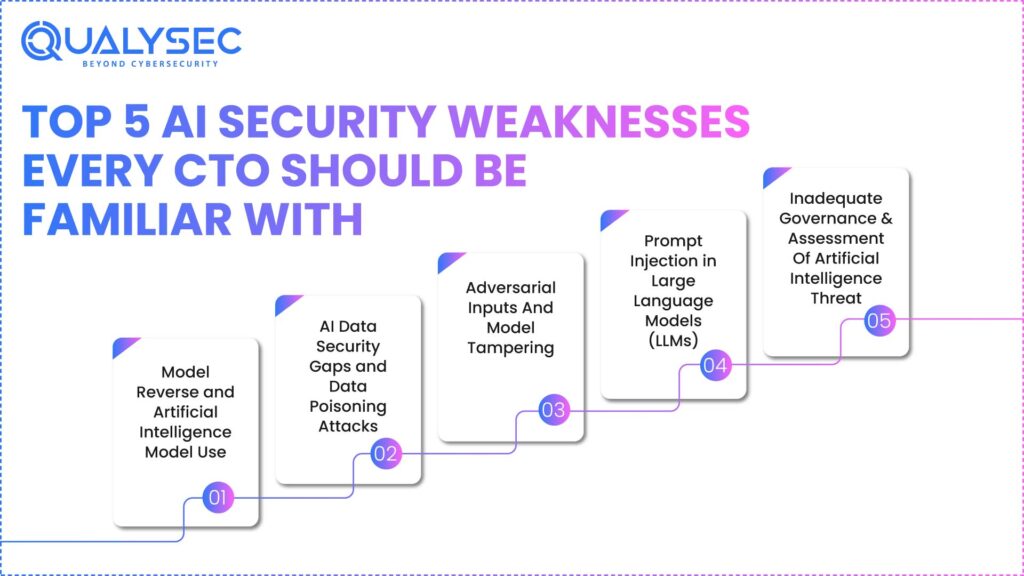
1. Model Reverse and Artificial Intelligence Model Use
Among the most understated but destructive artificial intelligence security flaws is model inversion. Attackers extract sensitive data from trained artificial intelligence systems using reverse-engineering methods, therefore reconstructing information that should remain secret. For example, a machine learning model trained on patient data could unintentionally reveal secret medical information via requests or output leaks. Where data sensitivity is of great importance, industries including healthcare, banking, and defense, where AI models are exploited, threaten themselves.
Organizations should include privacy-preserving methods like federated learning and differential privacy to counteract this. These methods guarantee models can learn well without showing personal-level information. To strengthen AI threat intelligence and identify unexpected query behavior, CTOs should also use strong model access restrictions, rigorous API authentication, and constant logging.
2. AI Data Security Gaps and Data Poisoning Attacks
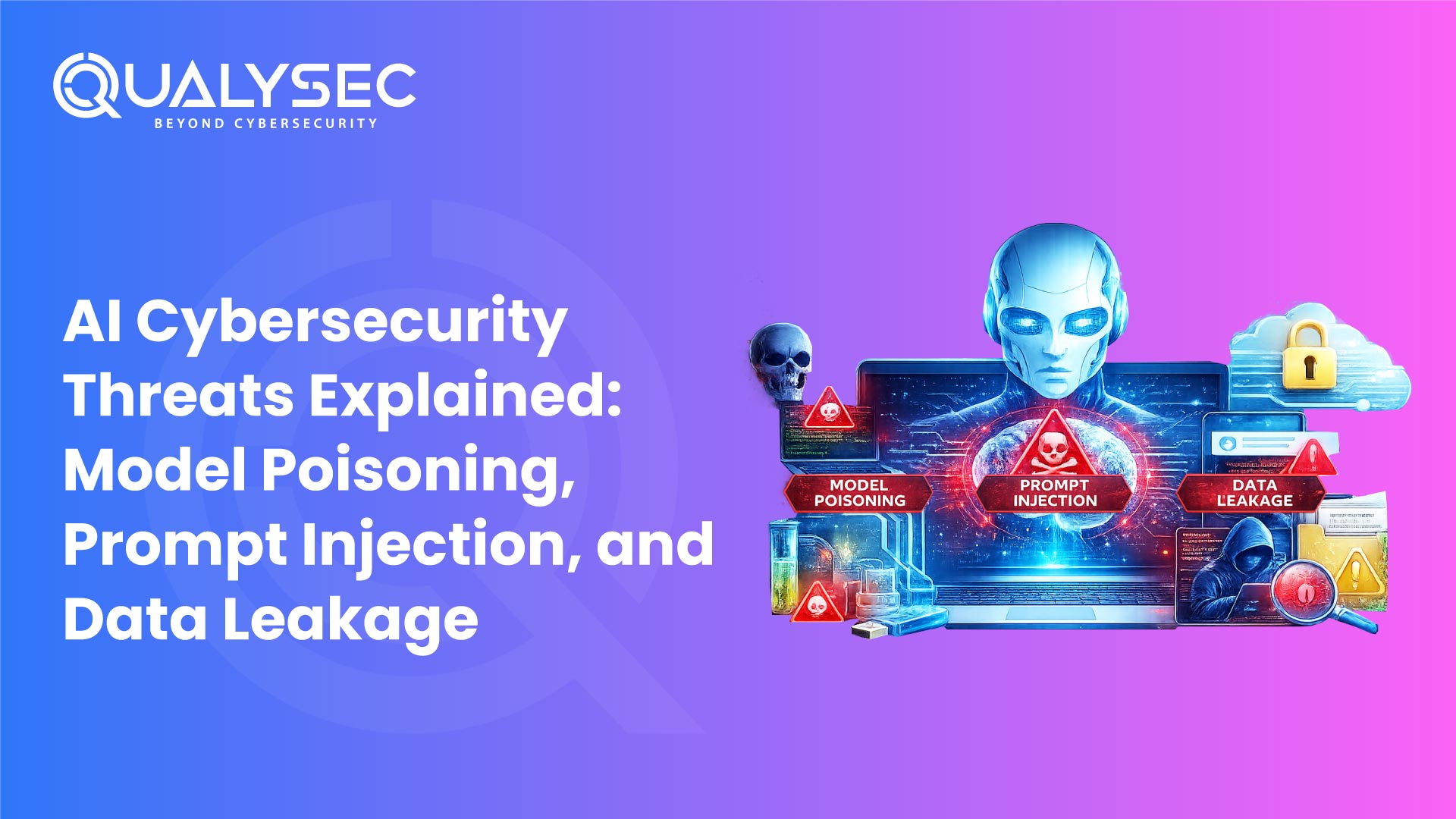
Data poisoning happens when attackers delicately incorporate incorrect or deceptive data into the datasets used to train artificial intelligence models. This causes models to provide prejudiced opinions or false predictions. Picture an autonomous car learning from tampered road sign data. It could readily misread a stop sign, leading to serious safety failures. Research from MIT CSAIL has shown that even a 1% dataset corruption can induce cascading model failures; such AI data security breaches are not theoretical.
Companies should use data provenance verification solutions, rigorously restrict access to datasets, and verify every input during both training and deployment to reduce these AI cybersecurity threats. Constant data set auditing, aided by hashing and anomaly detection systems, can catch early poisoning attacks. To guarantee the reliability of the model, security must cover the whole artificial intelligence lifetime from data ingestion to inference.
3. Adversarial Inputs And Model Tampering
Constructed to trick artificial intelligence systems are adversarial inputs, data points. For instance, a computer vision system could be totally tricked by a picture modified by a few pixels, which would identify a “cat” as a “truck.” These assaults expose the weak decision boundaries of artificial intelligence systems by targeting their data processing. In automated systems, fraud detection, and tools for cybersecurity monitoring, such flaws present significant dangers.
Regular testing sometimes misses these understated strikes; therefore, AI application penetration testing has become quite important. While conventional software penetration tests evaluate network or API vulnerabilities, AI-specific tests go further by examining model response control, data input validation, and adversarial resilience. Continuous red-teaming and stress-testing guarantee that models stay sturdy against evolving techniques of manipulation.
Companies have to create continuous monitoring systems that evaluate model estimates for inconsistencies to guard against such assaults. Recognizing and correcting abnormalities before abuse takes place is aided as well by human-in-the-loop validation and explainable artificial intelligence (XAI).
4. Prompt Injection in Large Language Models (LLMs)
Although generative artificial intelligence technologies like ChatGPT and Claude have changed corporate operations, they also bring a fresh group of AI cybersecurity risks: prompt injection and data leakage. These attacks include malicious actors injecting hidden instructions or payloads into cues that let an LLM expose secret data or circumvent content restrictions, raising common concerns such as is ChatGPT confidential and how securely these systems handle sensitive prompts.
Companies using Large Language Models for customer support or knowledge management have to develop defenses that safeguard both prompts and outputs. Important techniques are like input sanitization, context isolation, and response validation. Preventing data leaks also depends on limiting LLM memory scope, regulating API access, and filtering user-generated material.
CTOs have to understand and control LLM behavior to ensure compliance with data privacy standards, including ISO 27001 and GDPR. Conducting AI threat assessments and safe, prompt engineering reviews can greatly lower exposure.
5. Inadequate Governance And Assessment Of Artificial Intelligence Threat
Many businesses still depend on traditional cybersecurity systems that fall short of adequately dealing with AI-specific threats. Unorganized AI systems are vulnerable to operational, ethical, and regulatory risks when there are no formalized AI threat analysis procedures. Companies run the danger of using models that conflict with data rules or inadvertently making discriminatory decisions without strong governance, therefore damaging not just security but also reputation.
Continuous security testing, ethical review, and compliance mapping should all be incorporated into every phase of AI development under a strong governance system. Early warning signals about emerging threats come from frequent audits and red-teaming tests. Incorporating artificial intelligence security in DevSecOps guarantees that models are validated, tracked, and promptly updated.
Consult Qualysec’s AI security testing team to perform a secure LLM evaluation and safeguard your organization from prompt injection and information leakage attacks!

Why Artificial Intelligence Applications Need Penetration Testing
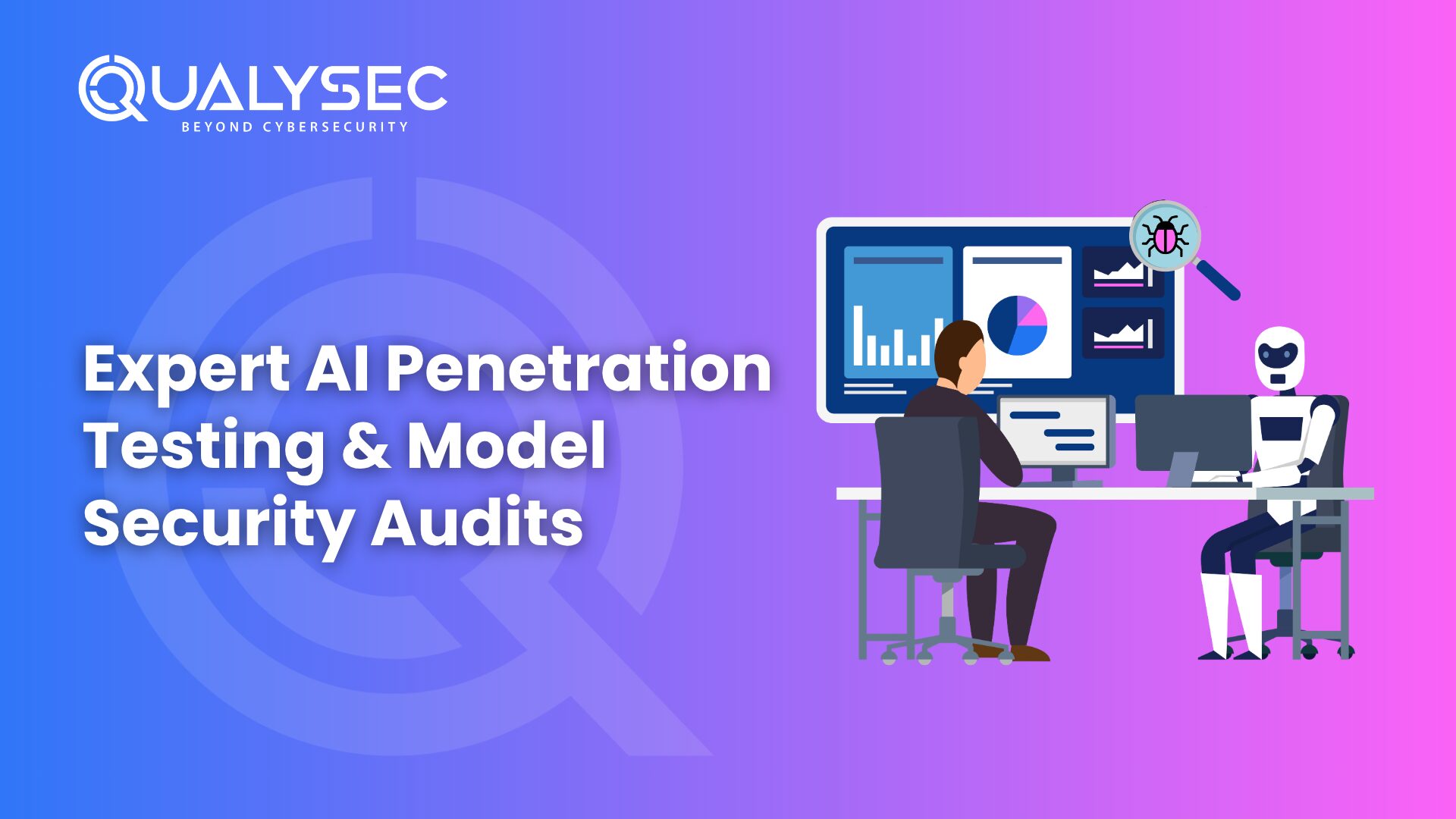
Artificial intelligence systems operate unlike conventional programs; hence, penetration testing of AI applications is absolutely essential. Though they cannot identify model drift, data tampering, or inference manipulation, standard security scans could detect vulnerable endpoints. AI penetration testing aims at assessing how models respond to hostile inputs, how safely they store and analyze sensitive data, and how predictably their outputs are under stress.
Real-world simulation of adversarial assaults, dataset corruption attempts, and privacy assessment make up the Qualysec pentesting process. These evaluations reveal both behavioral and technical flaws that conventional audits overlook. The objective is not just to discover weaknesses but also to guarantee AI models stay dependable and ethical even under hostile influence.
Ensuring businesses meet compliance and resiliency, Qualysec’s penetration testing approach fits international standards like OWASP AI Security Top 10 and NIST AI RMF (Risk Management Framework).
Learn more about Qualysec’s AI Penetration Testing Services and get a tailored assessment to secure your organization’s AI applications!
Creating Future-Ready AI Security Strategy for CTOs
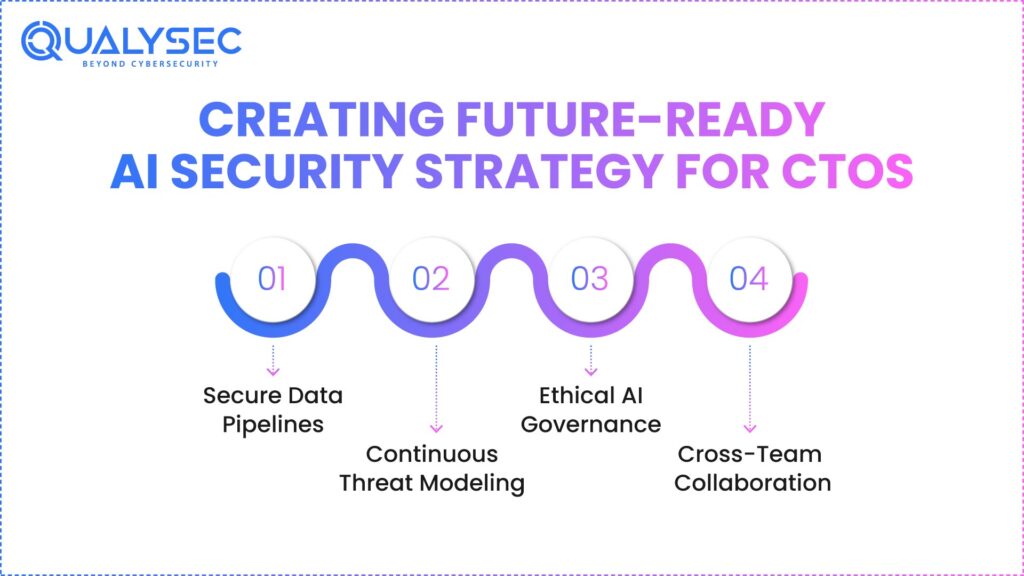
For CTOs, creating an AI-first security strategy calls for juggling innovation and responsibility. Key areas to include in your digital roadmap are:
1. Secure Data Pipelines: Protecting the data lifecycle collection, training, and deployment guarantees that only verified, reliable inputs feed models. Nonnegotiable are encryption, anonymization, and zero-trust principles.
2. Continuous Threat Modeling: Learning AI systems develop via continuous threat modeling. Regular modeling helps with the early identification of developing threat patterns and the refinement of reactive response strategies.
3. Ethical AI Governance: Responsible artificial intelligence approaches ensure that models are explainable, equitable, and in accordance with corporate ethics. Transparency decreases legal risk and exposure when it is combined with others.
4. Cross-Team Collaboration: Security, data science, and compliance teams have to work together to maintain visibility over all phases of artificial intelligence deployment.
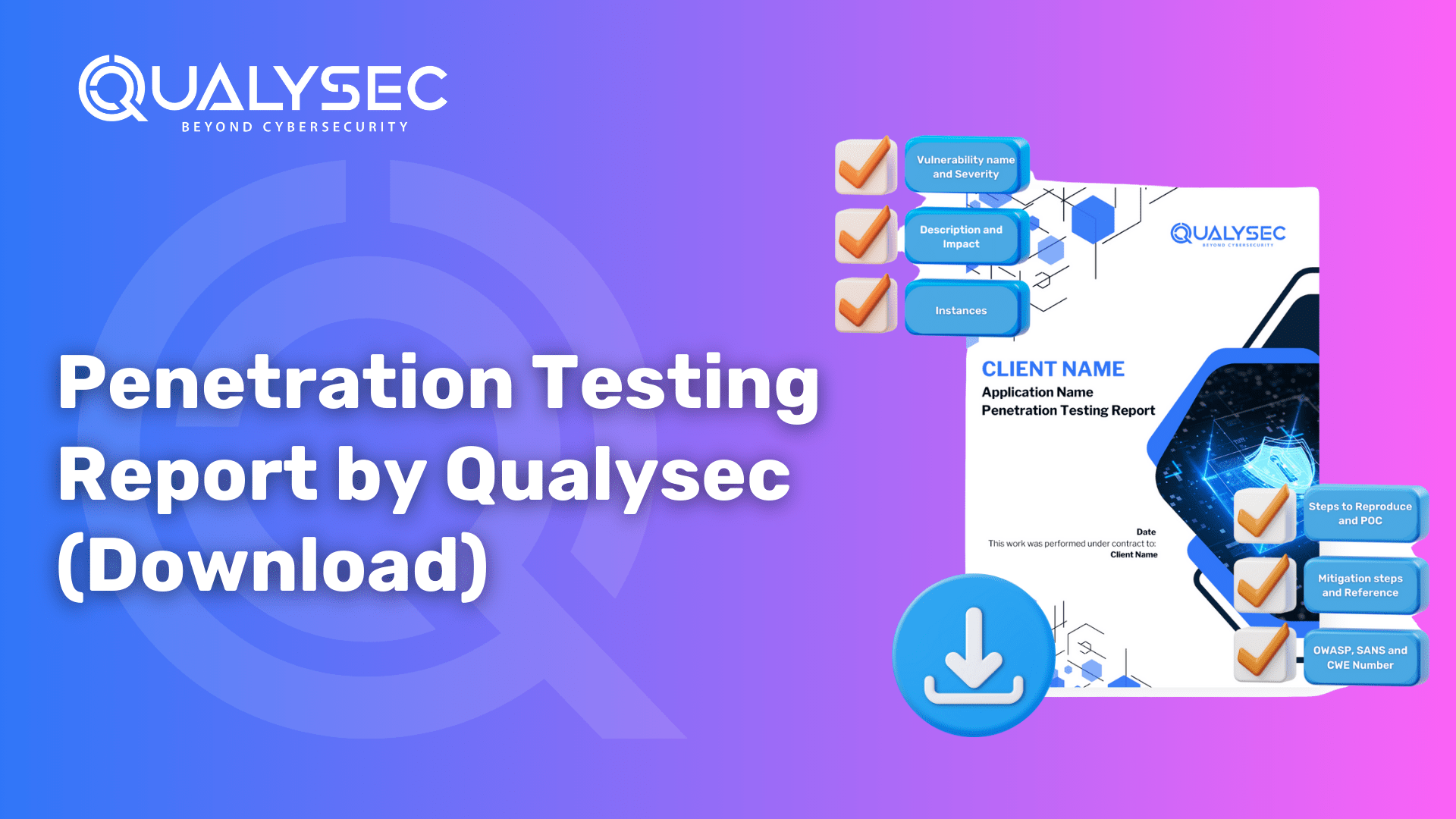
While always adapting to changing hazards, a future-ready AI plan secures creativity. See how AI-driven testing strengthens your security posture. Download our sample penetration testing report today.






































































































































































































































































0 Comments