








Why HIPAA Compliance Audits Matter Globally
Although HIPAA is an American law, its reach spans worldwide. Any company dealing with PHI of American patients, a hospital in California or an IT provider in India must abide. Businesses seeking to operate in the healthcare industry must comply because of this worldwide scope.
Compliance safeguards patients and fosters trust for healthcare professionals. For insurance companies, it guarantees quicker claim processing and lowers liability. Compliance for IT vendors and cloud providers enables cooperation with U.S. healthcare companies. Not following HIPAA standards could cause contracts to be lost or legal action from foreign sources.
Companies may improve their security posture and set themselves as reliable partners by viewing compliance as a worldwide requirement instead of a U.S.-specific rule. For instance, a European telemedicine system partnering with American customers has to be examined as closely as a U.S. hospital.
If your business operates globally and touches U.S. patient data, don’t risk compliance gaps. Talk to Qualysec experts about conducting a pre-audit risk assessment tailored to your geography and systems!
The HIPAA Compliance Audit Process
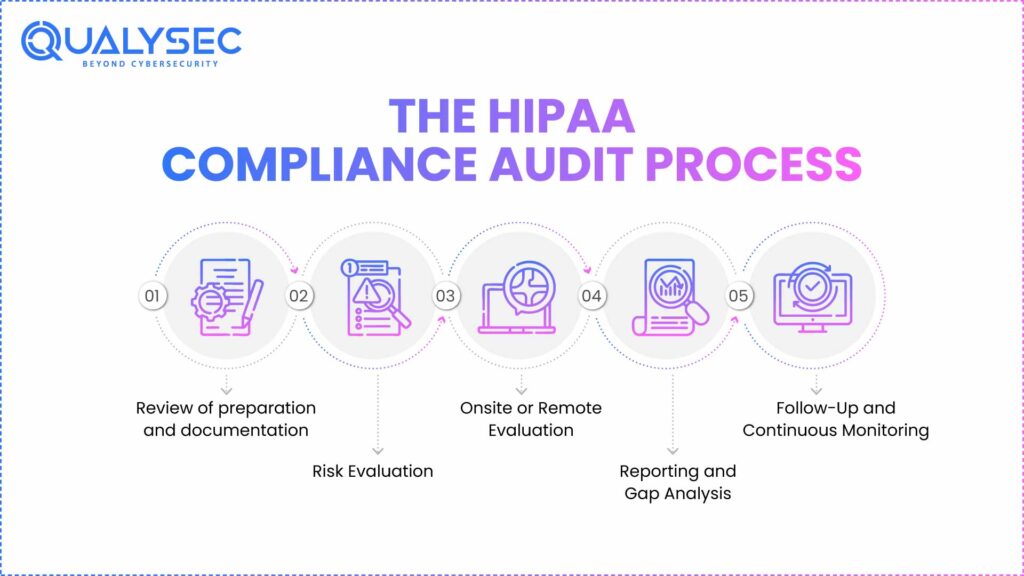
A structured process, a HIPAA compliance audit is not a one-time event. Every phase is meant to expose flaws and give a plan of action for development. Let’s cover it:
1. Review of preparation and documentation
The first step calls for compiling every policy, procedure, and piece of evidence confirming your compliance. This comprises signed contracts with business partners, security measures, training records, and privacy policies. Even the most secure systems might seem noncompliant without perfect documentation.
2. Risk Evaluation
The foundation of HIPAA compliance security rule lies in risk evaluations. Organizations here find flaws in IT infrastructure, including weak access restrictions, unencrypted data, or old software. Auditors also check administrative controls like role-based access policies as well as physical protections like server room security .
3. Onsite or Remote Evaluation
Depending on the nature of the audit, OCR or outside auditors might either visit your facilities or do a remote inspection. They will examine compliance evidence, check IT infrastructure, and interview workers. Organizations frequently encounter surprises here, including missing encryption records or incomplete training logs.
4. Reporting and Gap Analysis
Auditors compile a thorough report once the review is completed. This draws out compliance loopholes and indicates places where your company complies with standards. Recommendations for repair accompany every problem; these could include personnel retraining, access restrictions toughening, or program improvement.
5. Follow-Up and Continuous Monitoring
Once a compliance audit finishes, compliance does not stop. Companies have to correct flaws, conduct follow-up inspections, and constantly track their systems. This cycle guarantees that compliance is sustained year-round, not only during the approach of an audit.
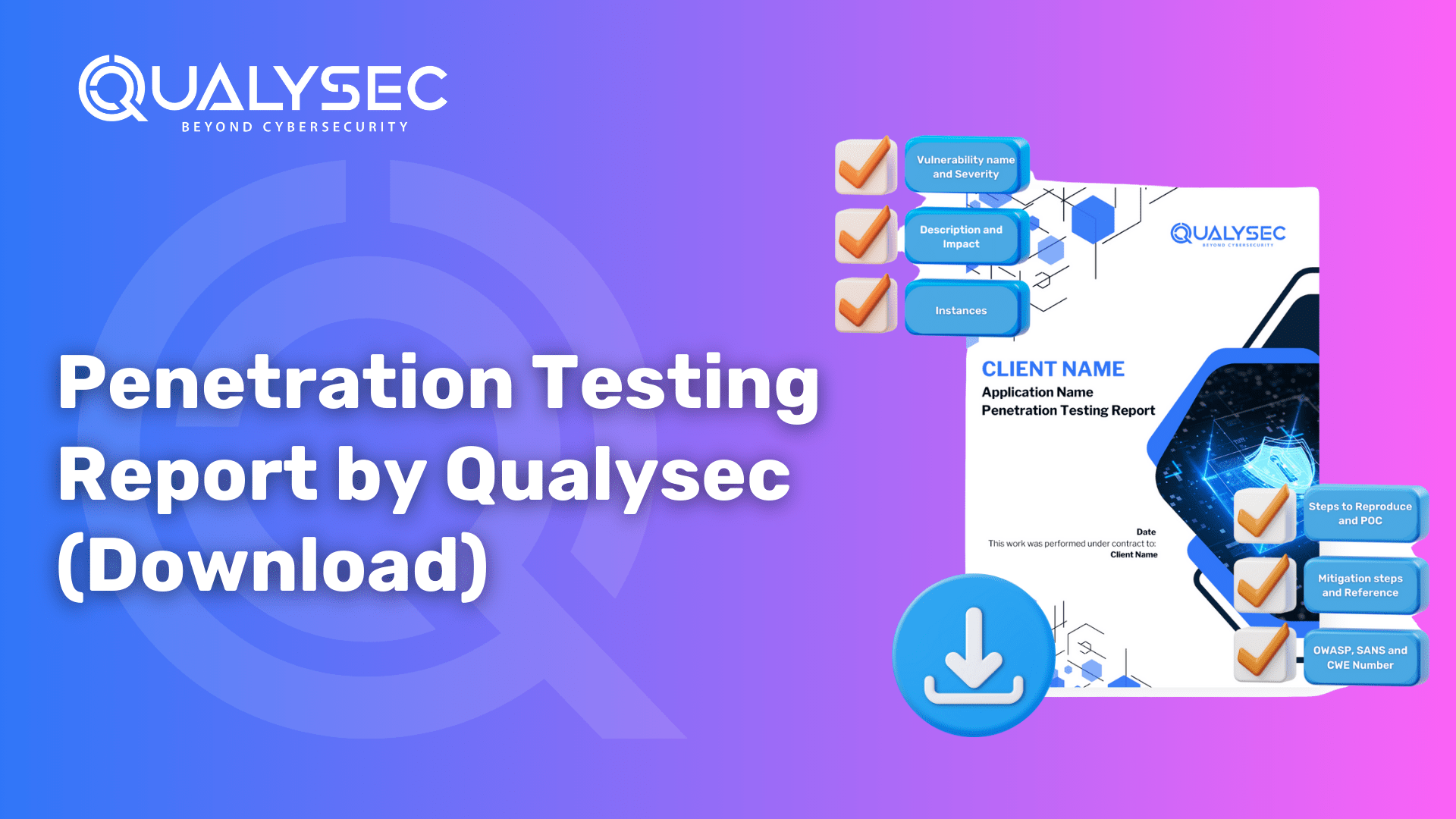
Want to make sure your organization is audit-ready at any time? Download a free sample pentest report with Qualysec and stay a step ahead of regulators!
Requirements under HIPAA audits
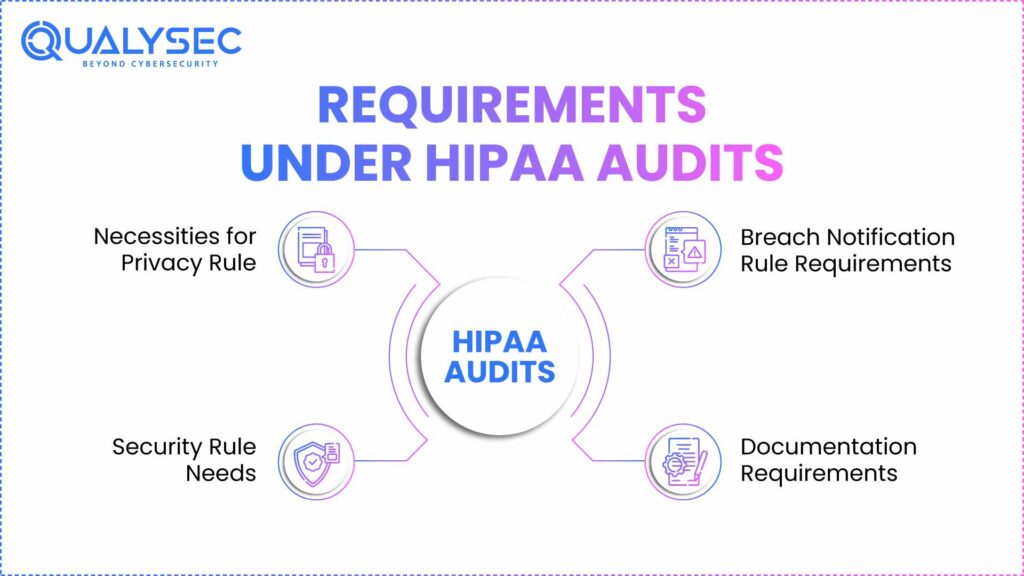
Three fundamental criteria define HIPAA audits: privacy, security, and breach notifications. Each has its own set of demands.
1. Necessities for Privacy Rule
Businesses must guarantee that only qualified people have access to PHI. Patients may ask for and have access to their own medical records. Unlicensed revelations—even unintentional ones can add up to violations.
2. Security Rule Needs
This regulation demands that companies create protections across three levels: administrative, physical, and technical. Administrative systems include training and duties for employees. Physical security calls for securing equipment and facilities. Firewalls, encryption, and secure data transfer fall under technical safeguards. Know more about healthcare data security.
3. Breach Notification Rule Requirements
Should a breach happen, companies must inform impacted people within 60 days. Furthermore, the HHS and the news should be notified of big breaches. Keeping a thorough breach record guarantees transparency and accountability.
4. Documentation Requirements
Correct documentation is required in every audit. This includes signed Business Associate Agreements (BAAs), written compliance policies, and incident response procedures. Documentation proves that compliance efforts are not just conceptual but also aggressively followed.
You might link to read about: Top HIPAA Compliance Support in HRIS Industry
HIPAA Compliance Audit Checklist
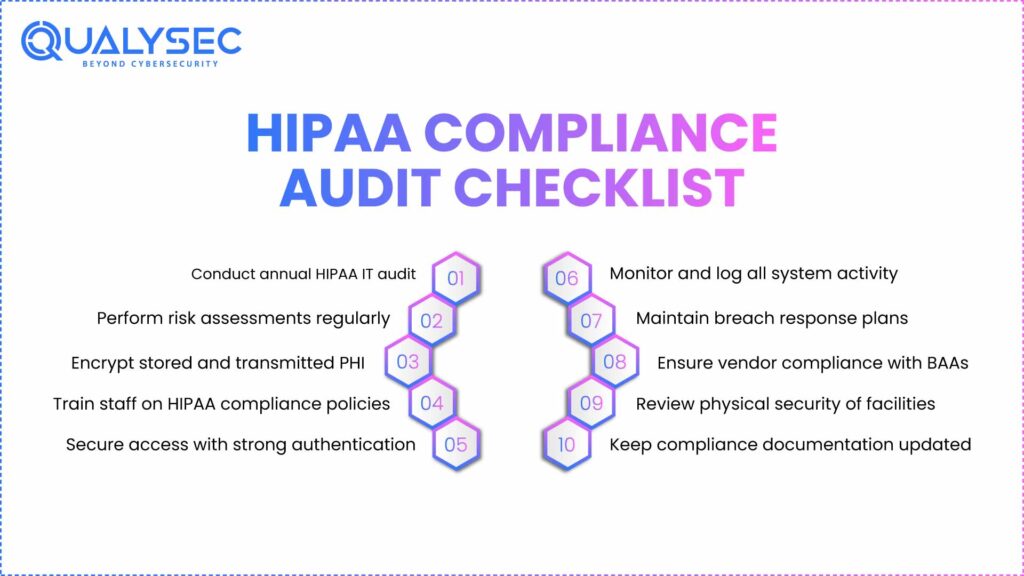
Here is a practical checklist for companies getting ready for a HIPAA audit to help streamline the procedure:
- Conduct annual HIPAA IT audit- An annual HIPAA IT audit should be conducted. These internal reviews enable the spotting of deficiencies before formal auditors come in.
- Perform risk assessments regularly – Regularly undertake HIPAA risk assessments. Regular assessment guarantees quick attention to fresh vulnerabilities.
- Encrypt stored and transmitted PHI – Encryption is among the most efficient means to stop unauthorized access; therefore, encrypt both stored and sent PHI.
- Train staff on HIPAA compliance policies – Often the weakest link is the staff members. Consistent practice lowers error rates.
- Secure access with strong authentication – Strong authentication offers safe access; multi-factor authentication provides yet another degree of security.
- Monitor and log all system activity – Track and record all system activity; logs aid in the identification of anomalous behavior and provide documentation during audits.
- Maintain breach response plans – Being ready helps to lessen the effects of a data leak.
- Ensure vendor compliance with BAAs – Make sure third-party vendors adhere to BAAs; they have to be HIPAA-compliant as well.
- Review physical security of facilities – Server rooms, filing cabinets, and devices need protection.
- Keep compliance documentation updated – Noncompliance can include obsolete policies.
Use this checklist as a starting point, but don’t stop here. Contact Qualysec to get a customized HIPAA compliance roadmap built around your specific needs!
HIPAA Compliance Audit Expense
Depending on scope, size, and complexity, the price of a HIPAA compliance audit changes.
- Small practices ($5,000 – $20,000)- Though prices are reduced, the repercussions of non-compliance remain very terrible.
- Medium organizations ($25,000 – $50,000) – More systems and personnel mean more documentation and more audit scope.
- Large enterprises ($60,000 – $100,000+) –The cost rises substantially with thousands of workers and huge patient data.
Additional elements affect price, including the quantity of PHI processed, the number of outside vendors, and the usage of cloud services. Corrective measures taken following the audit—such as installing encryption or updating systems—can increase expenses.
Although the initial price appears high, it is much less than the financial fines or reputational damage resulting from non-compliance with the HHS OCR Audit Protocol.
Explore our flexible and transparent pricing plans to find the perfect solution for your business.

Common Difficulties Encountered during HIPAA IT Audits
During security audits, companies sometimes run into the same problems:
- Lack of updated risk assessments – Many businesses examine risks only once and then never revisit them.
- Inconsistent employee training – Without timely updates, employees might not know about changing compliance requirements.
- Weak access controls – Shared passwords or obsolete login techniques expose PHI due to poor access controls.
- Outdated encryption protocols – Using old encryption techniques makes systems vulnerable to current cyberattacks.
- Unclear vendor compliance management – Organizations can be legally responsible for vendor errors without strong BAAs.
Early resolution of these issues not only helps compliance but also fortifies general cybersecurity.
Contact us today to schedule a HIPAA compliance consultation!
How Often Are HIPAA Audits?
Though industry best practices call for yearly internal HIPAA compliance in IT security audits, HIPAA does not prescribe specific timelines. Following any major system modification, such as switching to a different cloud provider, risk evaluations should also be carried out.
OCR audits, by contrast, are erratic. They can be caused by breaches, grievances, or suspicious activities or occur randomly. This is why companies should view compliance as an ongoing process instead of a one-time occurrence.
How Qualysec Can Help
You might be wondering at this point how do you guarantee your readiness for a HIPAA compliance audit? This is where Qualysec steps in here.
For healthcare providers and international companies, we focus on HIPAA IT audits, HIPAA security audit requirements, HIPAA Penetration Testing, and compliance advising. Our staff assists you with:
- Carry out thorough HIPAA risk analyses.
- Find and eliminate gaps in compliance.
- Get OCR audit documentation ready.
- Teach staff HIPAA security measures.
- Monitoring systems for continued compliance
With Qualysec as your ally, you may concentrate on patient care while we ensure compliance, minimize dangers, and prevent expensive fines.
Conclusion
A HIPAA compliance audit is a defense against expensive breaches, fines, and reputational harm rather than simply a box to mark. Every stage from risk assessments to employee training and vendor risk management, helps to create trust with patients and officials.
Following the audit process and checklist enables companies to actively find flaws, get ready for OCR inspections, and guarantee ongoing compliance. Working with professionals like Qualysec helps you to negotiate your way more easily with advice customized to your own systems and dangers.
Act now; don’t wait for an audit notice or a breach. Begin getting ready right away. Contact Qualysec and start the first step toward better compliance and patient trust.












































































0 Comments