








Medical devices today are smarter and more connected than ever. From heart monitors to insulin pumps, many of these devices now link to hospital networks or cloud platforms to make patient care faster and more efficient. But this growing connectivity also brings new cybersecurity risks, making HSA medical device guidance crucial for safety and compliance.
In Singapore, the Health Sciences Authority (HSA) ensures that all medical devices are safe and perform as expected. One key part of this process is cybersecurity testing, including penetration testing, which helps uncover any hidden weaknesses before the devices reach patients.
To strengthen trust and safety, Singapore recently introduced the Cybersecurity Labeling Scheme for Medical Devices (CLS-MD). This scheme encourages manufacturers to test and label their devices based on how secure they are, helping hospitals and consumers make safer choices.
The need for such measures is growing fast. Around 15% of medical devices in Singapore’s public healthcare system, over 16,000 devices, are now connected to the internet, creating more opportunities for potential cyberattacks. The country’s medical technology market is worth nearly $500 million. Strong cybersecurity is essential for patient safety and public confidence.
In this guide, we’ll explore why penetration testing is so important for medical devices in Singapore, how it fits into HSA medical device guidance, and the best practices that manufacturers can follow to stay compliant and protect patients.
Understanding HSA Regulations for Medical Devices in Singapore
The HSA medical device regulations in Singapore address the importance of cybersecurity at all aspects of the device’s lifecycle. Manufacturers should follow guidelines that include risk management, secure design, and post-market surveillance.
The HSA has specific guidelines regarding cybersecurity, including the “Best Practices Guide for Medical Device Cybersecurity,” for manufacturers with appropriate instructions regarding the implementation of security controls, conducting routine assessments, and ensuring devices remain secure post-market.
Compliance with these regulations also serves to maintain patient trust and safety, which is very important and in some cases legally mandated.
Shield Your Medical Devices from Cyber Threats – Contact Qualysec.

Challenges You May Face Without HSA Medical Device Guidance
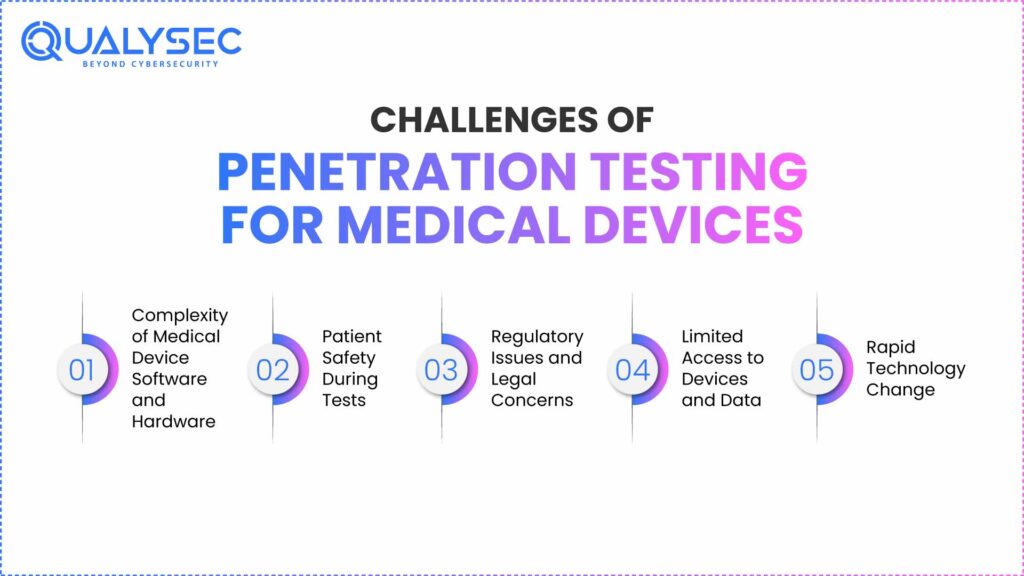
Penetration testing medical devices is not as straightforward as testing “normal” software. Medical devices can be life-critical devices, which means any defects can affect the health of the patient. To make it more complex, medical device systems consist of specialized hardware, software, and/or network components. Compounding the issue, the HSA and hospital bylaws are strict about what can happen during testing. Recognizing these challenges to conduct penetration testing in an efficient yet safe manner is important. That’s why you need proper HSA medical device guidance.
1. Complexity of Medical Device Software and Hardware
Medical device software operations typically involve a proprietary piece of software on specialized hardware components. These systems, in comparison to normal software, may limit the testing access to the software or be reliant on proprietary protocols or have tight dependencies on a hard-wired function. Therefore, penetration testers must have a deep understanding of both the software and hardware to potentially identify vulnerabilities. If even the weakest attack path or vulnerability is not found, that vulnerability may cause severe risk or impact to the system.
2. Patient Safety During Tests
Healthcare Device Pentesting that are in physical or practical use to directly treat patients can demonstrate risks that would otherwise not be acceptable. A change or ‘disruption’ to the expected usage of the device could have adverse effects on patient care or, in extreme cases, could result in death.
Penetration testers follow or facilitate measures to extend the existing programming or hardware capabilities while performing covert attacks on the system. Therefore, patient safety can always take precedence over mobility to potentially extend the test so that it could create a 100% test of coverage. Take HSA medical device guidance if required
3. Regulatory Issues and Legal Concerns
Regulatory approval requirements by the HSA can limit how and what types of penetration tests can be performed on medical devices. Some tests can be limited or require prior independent approval. Penetration testers need to ensure that their penetration testing does not violate any legal principles or regulations. To do otherwise may create undue risk or delayed approval of the medical device.
4. Limited Access to Devices and Data
A majority of medical devices function in isolated networks or have very limited capabilities to connect outside of a pre-approved interface or connection. This makes simulating attacks in the real world much more difficult. Further, because patient data is sensitive and private, vulnerabilities cannot be exposed in the testing environment. Testers will need to use different techniques to substantiate their vulnerabilities, particularly through anonymizing efforts and a reputable testing environment.
5. Rapid Technology Change
Medical devices, in particular, are changing at a rapid rate and often bringing new or uninterrupted features to existing models. Pen testers must be able to update their skills and knowledge to keep up with these technological changes. A summary of a test from last year might not adequately cover risks introduced by the next model. Ongoing security assessment is a necessity and not a rarity.
Discover Vulnerabilities Before They Do – Scan Your Site Now with Our Website Vulnerability Scanner.
Step-by-Step Guide to Penetration Testing for HSA Compliance Requirements
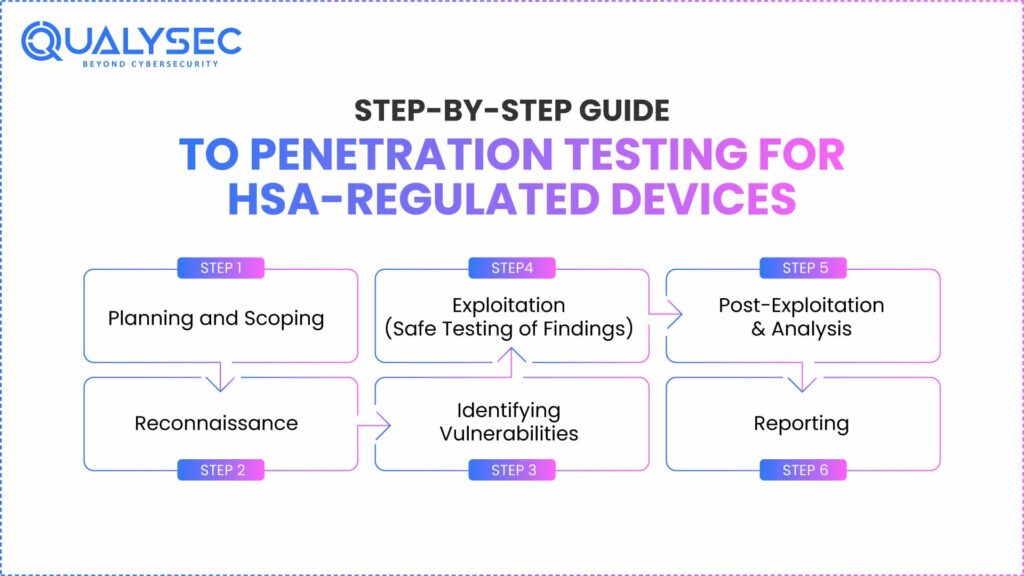
Conducting testing for the penetration of medical devices should be done carefully and systematically. You can also take HSA medical device guidance beforehand. The objective is to find risk points without endangering patients or care delivery.
The HSA Singapore recently issued draft guidance that reiterates the importance of conducting testing through the lifecycle of a medical device and ensuring future ongoing monitoring after the product has been launched. A staged, documented plan will allow manufacturers and regulators to conduct testing in a safe, repeatable, reproducible manner that is useful for each of them.
1. Planning and Scoping
First, you need to agree on what is going to be tested, by whom, and what you will define as “success”. This agreement means that you may be listing devices, software versions, networks, and boundaries on the test, so nothing is missed. Also, include safety rules for testing early on – as an example, do not test live patient devices, and provide fallback plans if something goes wrong.
You will want to involve clinicians, product owners, and legal early on, so you can be realistic in your medical IoT security testing and ensure it is allowed. Frameworks and best-practice guides recommend the careful step of scoping with clear boundaries before using any tools.
2. Reconnaissance
The reconnaissance stage is the fact-finding phase and involves collecting simple information about the device, interfaces, and connections to other systems. Use public-facing documents, network diagrams, and test lab investigations to build a framework of where HSA risk management guidelines might lie.
Likewise, keep the impact low; do not run heavy scans on devices currently used with real patients. Establishing a simple understanding of some potential weaknesses as a starting point should inform your next steps, which we recommend being more focused and safer.
3. Identifying Vulnerabilities
At this point, you will be looking for specific weak points through a combination of simple instruments and on-site examination. For analogy, it is akin to checking doors and windows — some problems will be obvious and some need more scrutiny. Address issues that may enable someone to modify device behaviour or access a patient’s data through vulnerability testing. Use repeatable techniques and methods for follow-up so findings can be spaced out over time or be related to a standard or labelling scheme.
4. Exploitation (Safe Testing of Findings)
When evaluators identify a weakness, they will cautiously attempt to verify how severe the weakness is — always in a mode that will not harm a patient or disrupt device functionality. This may mean utilising test units or a separate laboratory context that emulates the real context. Keep teams small and utilise the safety practices that were intended at the time of planning. Always stop if anything unanticipated occurs. Regulators and standards also highlight safety first in the exploitation contexts.
5. Post-Exploitation & Analysis
Once you confirm an issue, note what a prospective attacker could do and how easy it was to do it. With your report, illustrate the real-world impact: could data be exposed or did device operation get affected? This stage helps provide meaning to raw test outcomes in terms of business risks and patient-safety risks.
Identifying impacts assists in prioritising which actions matter most, and informs any additional testing that needs to occur after that as well. Findings can also inform further revisions of the risk logs and the device’s security plan and align with HSA medical device classification requirements and Software as a Medical Device (SaMD) guidelines.
6. Reporting
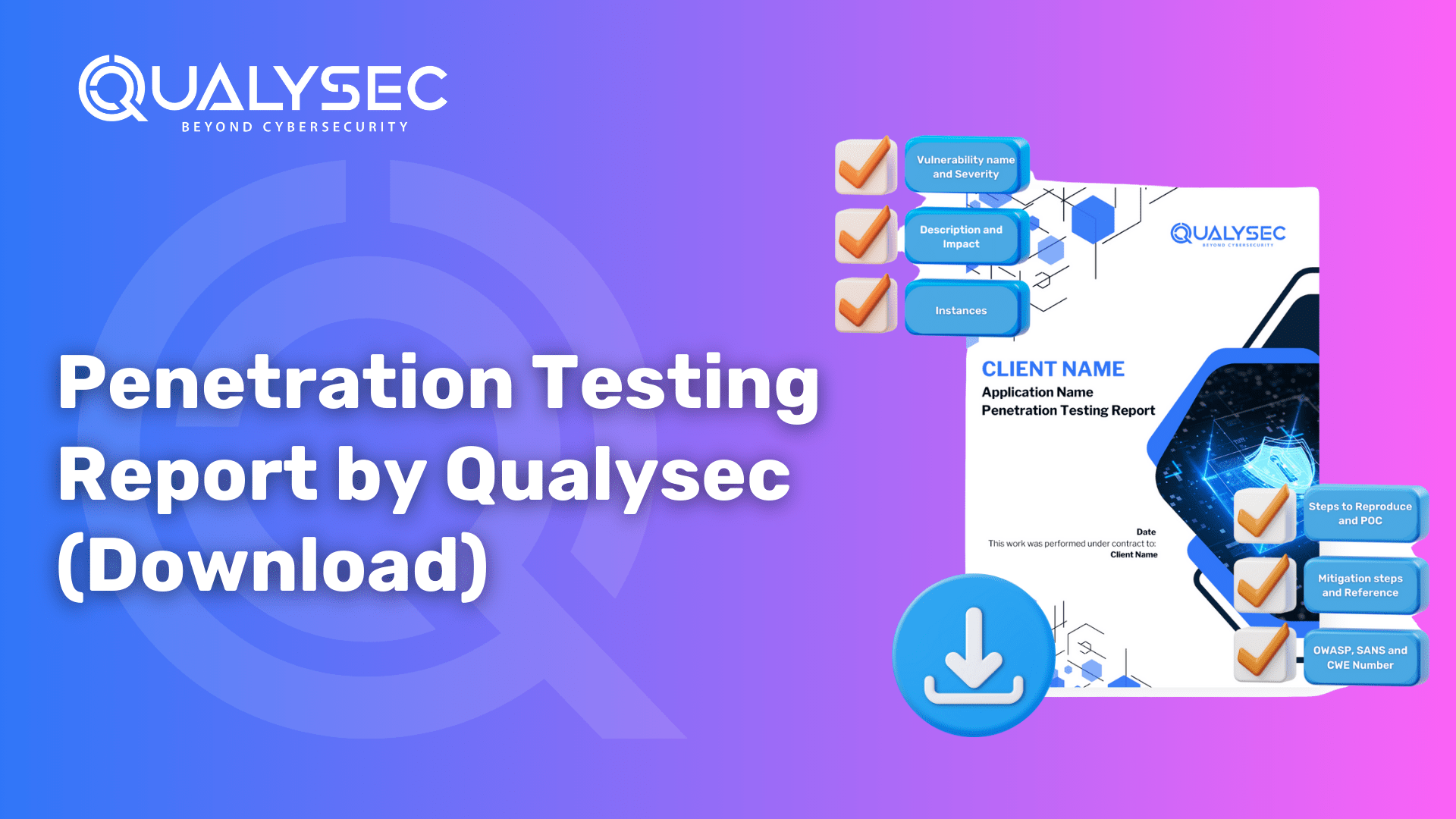
Establish a written threat report that is actionable and relevant to both product teams and regulators. Use clear language where possible, and include a description of the issue, evidence, impact, and attribute descriptions of an ordering of corrective action. Include the test scope, dates tested, and any safe steps of demonstration so that an engineer can confirm that any corrective actions have successfully implemented.
The draft guidance issued by the HSA calls for documentation consistency, as well as a plan for ongoing testing. Therefore, your report should assist future retests and any labelling or certifying requirements.
Download HSA Medical Device Pen Test Report. See vulnerabilities, risks, and fixes quickly.









































































































































































































































































































































































































0 Comments