

In 2026, cyber threats are on the increase, and the global cybercrime is estimated to be between 1.2 trillion and 1.5 trillion annually. American corporations are losing their money in cybercrime to the tune of $639.2 billion, which predetermines a high demand among offensive security companies. It is reported that 131 new vulnerabilities are reported every day, which is the highest point, and 25.7 per cent of production systems are under threat.
In North America, offensive security companies conduct AI simulations and continuous testing. These companies provide hacker-style tests that detect concealed dangers prior to a breach occurrence. Businesses are opting to apply offensive security testing in order to secure cloud, Internet of Things, and artificial intelligence. The U.S. companies are the leaders in innovation according to NIST and CMMC regulations. Select an offensive security company wisely – only skills, techniques and past performance can make the difference between the online and the offline.
Do not until the next cyber story. Enhance your security with the best OSCP professionals of Qualysec – book a consultation now!
Assessing Offensive Security Firms
Research more on offensive security companies that have a quantitative measure. Give preference to offensive security firms that qualify for such thresholds –
New Technology in Offensive Security Services
The offensive security services are evolving rapidly in 2026, and new equipment is employed to overcome sophisticated threats. The AI tools work, connecting the vulnerability points at numerous attack points. Their threat data looks at vast quantities of threat data, and they reduce the manual testing time.
Simulation of Attacks on AI/ML
The AI models mimic the severe long-term threats and develop specific attacks to cloud systems such as Kubernetes and serverless applications. Malware modification is done by ethical hackers with the help of generative AI, indicating flaws in XDR detection. After utilising AI red teams in the major companies, the number of breaches among US businesses has reduced.
Cloud-Native Zero-Trust Testing
These testing services examine short-lived tasks of clouds, scanning, agentless and in-flight alteration of processes among the best offensive security companies. They access their tools in order to locate mis-configured IAM roles and side-steps in AWS, Azure and GCP, and discover more privilege gains than archaic pentests. Zero-trust testing is used to test identity systems to the farthest extent and mimic the stealing of tokens and session hijacking.
Breach and Attack Simulation (BAS) Platforms
BAS tools continue to repeat MITRE ATT&CK moves to ensure that a SOC is prepared for actual attacks. They automate response testing with SOAR, reducing the average time to respond to hours. Best companies provide BAS in the form of a service, and their simulations are 24/7 to comply with NIST 800-53 and CMMC 2.0.
Cryptography Testing in Quantum Resistance
Intelligent business houses are probing into the quantum-level vulnerability and recreating the algorithm of Shor to crack the existing encryption. They test the transition of moving to NIST-validated algorithms such as CRYSTALS-Kyber, which guards the US financial systems against later decryption attacks.
Such novel concepts make the greatest offensive security companies stay ahead to provide early warning defense to the arduous threats of 2026.
8 Best Offensive Security Companies in 2026
1. Qualysec Technologies

The Hacker-Style Offensive Security Testing at Qualysec
Qualysec Technologies will bring professional hackers to simulate an actual attack on your systems. They identify vulnerabilities in websites, mobile applications, cloud services, IoT devices, API, financial software, online stores and SaaS products that automated scanners do not recognise. Qualysec also conducts complete offensive security tests by duplicating actual long-term attacks using custom tools. Qualysec maintains the tests up-to-date and addresses the latest threats like model tampering with AI and zero-day attacks.
Certified Process-Based Testing – The Qualysec Speciality
Qualysec has an established procedure that has made it stand out among other offensive security companies. Their professionals adhere to a straightforward five-step model – collecting data, scanning and verifying data, exploiting data flaws, validating data findings and providing reports with root cause analysis and working examples. The plan compares to the best standards, such as OWASP, CREST, and OSSTMM, therefore making the results reliable. In contrast to most scanners, Qualysec reviews all discoveries manually, reducing false alarms. They also retest following fixes, and this helps to make sure that no risks are left. This is the extent of commitment that is not offered by any other firm.
Explore Qualysec’s advanced penetration testing services that help you to secure your business from evolving threats.
Elite Certified Team and Global Reach
Qualysec experts have OSCP, CEH, and OSWE qualifications and experience in zero-day exploits. In every engagement, the team reviews over 450 assets, including payment systems and blockchain, and is never late. They collaborate with the U.S. enterprises that are certified to ISO 27001 and Nasscom/STPI and DSCI and tailor services to the requirements of NIST, CMMC, and SOC 2 regulations.
Established Effect and Customer Excellence
The prevention of breaches allows Qualysec to assist U.S. businesses in receiving enhanced ROI. Fixed issues in companies can be solved in a shorter time, with video demos and step-by-step instructions from Qualysec. The company serves both small and medium organisations up to Fortune 500s, and it includes Kubernetes, serverless functions, and industrial control systems. Qualysec invests its results into XDR systems to ensure that threats are hunted continuously.
Ready to outsmart hackers? Request a free Qualysec Technologies consult today!
2. CrowdStrike
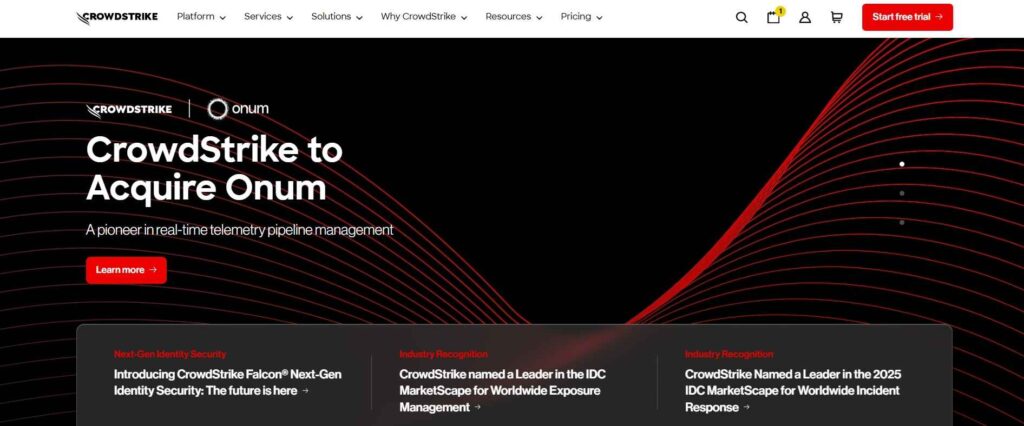
CrowdStrike offers the use of crowd-fighting tools in their Counter Adversary Operations and Falcon Surface. They pay attention to the External Attack Surface Management, which identifies the exposed digital resources and the concealed IT in the global networks. They would then include AI Systems Security Assessments in 2026 that model attacker moves on large language models and automated workflows to discover prompt-injection risks.
3. Rapid7

Rapid7 operates a collection of offensive security instruments at its Insight platform. The important services include Vulnerability Management and Managed Application Security Testing. They provide Vector Command, which is a running red-team service. Rapid7 also maintains the Metasploit Framework, which is an exploit kit, that is popular and it also engages in manual network, cloud, and IoT penetration tests.
4. NetSPI

NetSPI is a service provider of Penetration Testing, which allows continuous tests and on-demand tests via its platform. They are testers of web applications, networks, cloud and mainframe systems. They also operate Attack Surface Management that automatically identifies assets, and human checks are used to identify live risks. The teams also test hardware and embedded devices in their laboratories, and the industries served by these are health care and cars.
5. Synack
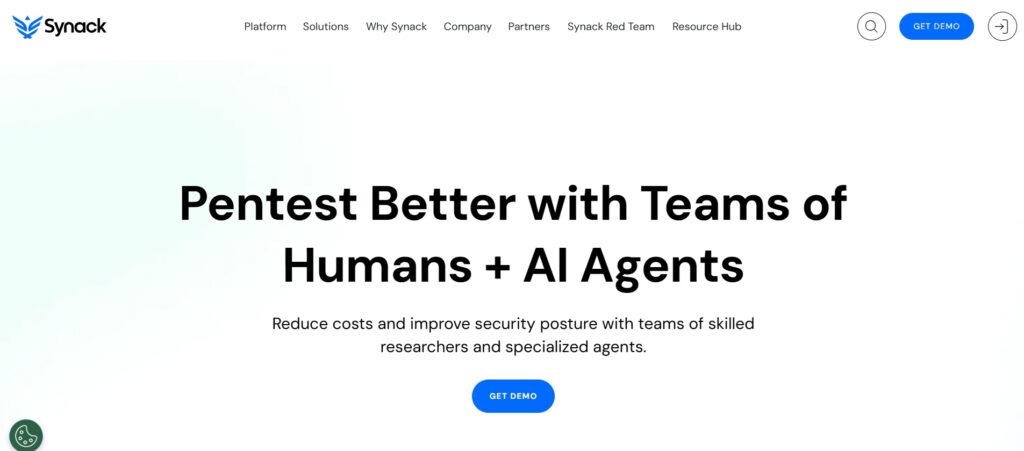
Synack is a crowdsourced testing platform enabled by an active global team of ethical hackers known as Synack Red Team. They provide on-demand penetration tests of apps, APIs and cloud systems, where real hackers are used to discover issues that automated scanners fail to detect. Services of Synack comprise constant vulnerability disclosure programs, offering sorted results and verifying the efficacy of patches.
6. Cobalt
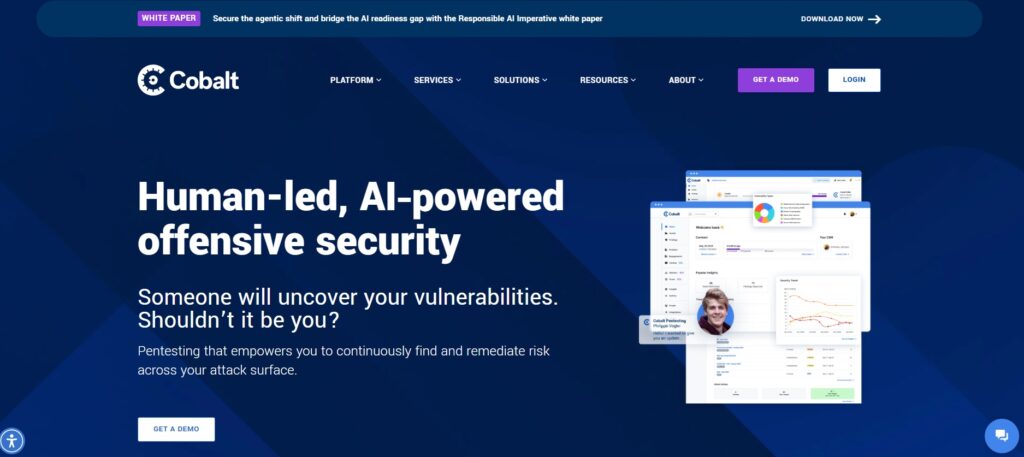
Cobalt is the provider of a Penetration Testing as a Service solution that can integrate with contemporary DevOps. It provides on-demand access to its approved community of security researchers who perform manual testing of websites, mobile applications and APIs. In 2026, it acquired Agile Pentesting that looks at particular code modification or new functionality as opposed to full tests.
7. BreachLock

BreachLock is an automated tool that integrates AI and human capabilities. Continuous Penetration Testing and Attack Surface Management are found on a single platform to identify problems as they occur. It later acquired Agentic Offensive Security by 2026, in which the independent AI agents identify and verify exposures on both internal and external networks. It has services at all levels, including apps, cloud and network endpoints.
8. Rhino Security Labs
Rhino Security Labs is a small, specialised company that deals with deep cloud checks and technical research. They test AWS systems, Azure systems, and GCP systems. Their technique seeks cloud-related threats like improper IAM permissions, lateral movement through serverless code, and container escapes. The IAM Stress Testing and Infrastructure-as-Code security reviews were added in 2026 to enable companies to identify missteps before the launch.
Thematic Future Trends of Offensive Security in the Year 2026
Robot-based Autonomous Attack Simulations
AI alters the operation of offensive security companies in 2026. It drives the robots that search and connect the weaknesses more quickly than human testers. These robots can anticipate the direction that the attack will take and generate new exploits over zero-day vulnerabilities immediately. AI red teams have the companies alter tactics during work and are similar to the advanced persistent threat groups, such as nation-state hackers, where they mimic the style. U.S. companies are the most aggressive in adopting machine learning at the end of the year. Generative AI will generate new and evolving payloads capable of circumventing common defences and demonstrate issues within the large language models themselves.
Cloud-Native and Serverless Exploitation
The most targeted one is cloud systems, as Kubernetes clusters and serverless functions increase. The 2026 target of black hats is now the escape of containers, the elevation of IAM privileges, and the infiltration of the supply chains. Testers seek poorly configured RBAC, traverse sideways using service meshes and steal data stored in etcd secrets. The use of AWS, Azure, and GCP exploits is increasing. Top security companies automate fluctuating workloads.
Zero Trust Adversary Emulation
Zero Trust installations require in-depth simulations by security teams. These exercises include Purple Team tests, identity federation checks, MFA tests, and just-in-time access control tests. Hackers can be expected to employ real credentials in their attacks in 2026, and therefore, testers map strategies, methods, and processes to the MITRE ATT&CK framework. Leveraging the U.S. firms, the ZTNA gateways and SASE platforms are continuously checked, reducing the amount of time attackers spend in a system from weeks to hours.
Critical Infrastructure Testing and IoT/OT
SCADA devices and IoT (industrial) are subjected to closer inspection due to the ransomware attacks on manufacturing PLCs. In 2026, security teams develop fuzzers of protocols such as Modbus and DNP3, as well as industrial controls. Physical and cyber worlds are now connected by attack chains that break air-gapped networks by USB drops and insider threats. Regulators mandate annual OT penetration tests, and this makes the industry expand.
Cryptography against Quantum Attacks
Quantum computers constitute a threat to the future, and security services need to test against quantum algorithms. The attacks simulated by testers replicate the attacks that are predicted to be broken by decrypting old RSA keys.
SOAR Exploitation and XDR
Security firms bridge SIEM blind spots to SOAR playbook gaps, showing points of defence breakdown. Single platforms involve tests that encompass endpoints, networks and cloud data simultaneously.
Conclusion
The most successful companies struggle with 131 emerging vulnerabilities a day and a 1.2 trillion dollar bill of crime simulated by AI, basic application protection, and cloud testing. The U.S. firms are the top ones, with 43 per cent of the market, particularly in the banking, finance, insurance and retail sectors. Select a company among offensive security companies in the U.S. based on its certifications, practices, low false alarms, and high fixing rates. This is best at Qualysec due to its established testing mechanism, which provides hacker-like insights to the web, cloud, IoT, and so on.
Build your future in the world of threats in 2026. Call Qualysec Technologies to receive experienced offensive security testing!
FAQs
1. What makes a penetration testing company reliable?
Expert reliability is by those with OSCP, CEH, and OSWE certifications. They apply well-established techniques, including OWASP and CREST, which provide reliable results and root cause analysis. Their reports have proof of concepts, schedule fixing, and free re-testing, which indicates that all the issues are resolved and false alarms are reduced to less than 5%. The real impact of offensive security testing services is established by reference to clients and a record of no breach on over 450 assets.
2. Should I choose a global or regional offensive security provider?
Global offensive security testing services represent high risk awareness of 18+ countries, leaders in APT simulation and zero-days. Local U.S. providers understand local regulations such as CMMC and react within a shorter period of time than 24 hours. Such hybrid models as Qualysec combine global knowledge and an American focus to achieve the optimal outcomes. Better results are achieved by giving priority to verified processes by the offensive security companies in USA rather than geography.
3. How do I compare penetration testing vendors effectively?
Request sample reports to determine the depth of the explanation of the root cause and the purity of the proof-of-concepts. Make sure that testers possess three or more certifications and are adherent to the rules of OSSTMM. Check false-positive rates (less than 5 per cent), assets covered and the number of actual fixes done (95 per cent). Read Clutch reviews and referrals are conducted to ensure timely provision and assistance. Evaluate offensive security companies in USA based on their flexibility to web, cloud, IoT and AI – best companies perform well in this area.