

In today’s world, compliance isn’t optional anymore. With strict regulations like CCPA and HIPAA, organizations are under pressure to ensure complete data security. Add frameworks like ISO 27001, SOC 2, DPDP Act, and RBI cybersecurity mandates, and you know data security compliance is a must.
However, most people confuse compliance with security. Data security compliance means more than encryption and access control. It’s a structured process of securing sensitive data while aligning with regulatory expectations. In this guide, we explain everything – what data security compliance means, which frameworks matter, and how assessments can help to ensure the company is audit-ready.
What Is Data Security Compliance?
Data security compliance simply means following the rules to keep sensitive information safe. Now these rules can come from laws, industry standards, or company policies.
This might mean:
- Encrypting stored financial data to meet ISO 27001
- Limiting employee access to patient records to align with HIPAA
- Ensuring audit logs are intact for a SOC 2 audit
- Designing consent workflows and breach protocols to comply with specific regulations
But here’s the catch: You can have airtight encryption and still fail an audit if you lack documentation. You can tick database security compliance checkboxes and still expose data via an insecure database.
Compliance demands that your data protection practices:
- Map to a recognised framework (e.g., ISO, SOC 2, DPDP)
- Include defined controls and evidence
- Can be tested, audited, and verified—by you or a third-party assessor
Importance of Data Security Compliance
In 2025, global companies face a rapidly tightening net of regulatory expectations. Whether it’s the DPDP Act or SOC 2, organizations are being rightfully held accountable for data accountability.
Here’s why getting data security compliance right matters:
1. It protects user trust.
These days, people care more than ever about their privacy. Just one data breach mistake involving personal, financial, or health information can break their trust instantly. And it’s not just about facing legal trouble anymore. It’s reputational, and that’s why database security compliance is so important. It is an operational discipline around how data is collected, stored, accessed, and deleted.
2. It’s a deal-breaker for investors and clients.
If you’re raising funds, entering partnerships, or bidding for enterprise deals, cybersecurity compliance is expected, not optional anymore. Without audit-aligned security reports, the growth of the company gets stalled by due diligence.
3. Real financial costs due to non-compliance.
Fines under these regulations can cause hefty penalties. But even without penalties, the financial fallout can be massive. It could lead to customers leaving and long-term damage to the company’s reputation and trust in the market. That’s why data protection and compliance are so important.
Common Data Security Compliance Laws and Frameworks
It is important to understand that there are numerous data protection and compliance laws and frameworks. Your company doesn’t need to comply with all. However, you do need to comply with what’s relevant to your industry, data type, and geography.
Here’s a list of the most commonly applicable data security compliance laws:

1. CCPA (US)
California Consumer Privacy Act, or CCPA, is a privacy law applicable to residents in California. It gives them control over their personal data.
It focuses on:
- Right to know what data is collected
- Right to delete personal data
- Right to opt out of data selling
- Mandates secure data handling and breach notifications
➡️Learn how penetration testing helps with CCPA compliance.
2. HIPAA (US)
HIPAA regulates how healthcare data is collected, stored, shared, and protected. Includes:
- Protecting patient health information (PHI)
- Role-based access to medical records
- Strict breach notification rules
➡️ Explore HIPAA penetration testing services.
3. GDPR (EU/Global)
General Data Protection Regulation or GDPR, is a comprehensive EU privacy law that covers multiple aspects, like:
- User consent and control
- Data minimisation and purpose limitation
- Mandatory breach reporting within 72 hours
➡️ See how GDPR compliance benefits from penetration testing.
4. SOC 2
Designed for service providers storing customer data in the cloud. Evaluates:
- Security, availability, and processing integrity
- Confidentiality and privacy over time (Type II)
- Formal documentation and control testing
- This applies to SaaS, B2B tech firms, and data-hosting services.
➡️ Learn about SOC 2 penetration testing.
5. ISO 27001
An international standard for managing information security. Focuses on:
- Access controls
- Risk management
- Physical and digital asset protection
- Operational policies and incident response
Applies to companies seeking global credibility or enterprise contracts.
➡️ Read about ISO 27001 penetration testing.
6. NIST CSF
The NIST Cybersecurity Framework is a set of guidelines and best practices developed by the US National Institute of Standards and Technology. It applies to enterprises looking for structured security postures.
7. DPDP Act (India)
This Act covers the collection, storage, and processing of personal data. Requires:
- Lawful purpose and consent mechanisms
- Breach reporting within defined timelines
- Organizational safeguards
Applies to almost all businesses operating in India that handle user data.
8. RBI Cybersecurity Framework (India)
Mainly applicable for banks, financial service providers, fintechs, and NBFCs. Requires:
- Cyber incident reporting
- Secure customer authentication
- Network segmentation, monitoring, and audits
NIST CSF: What Is It and Why Is It Important For US Companies
Developed by the US National Institute of Standards and Technology (NIST), the NIST CSF is a widely recognised framework. It was created with the aim of helping organisations manage and reduce cybersecurity risk.
The NIST CSF is mainly structured around five core functions: Identify, Protect, Detect, Respond, and Recover.
US companies, especially those in critical infrastructure, tech, finance, or government supply chains, understand that NIST CSF is a competitive necessity. It aligns internal security policies with national expectations and strengthens defences against evolving threats. It also simplifies vendor risk management.
➡️ Discover how penetration testing aligns with NIST CSF.
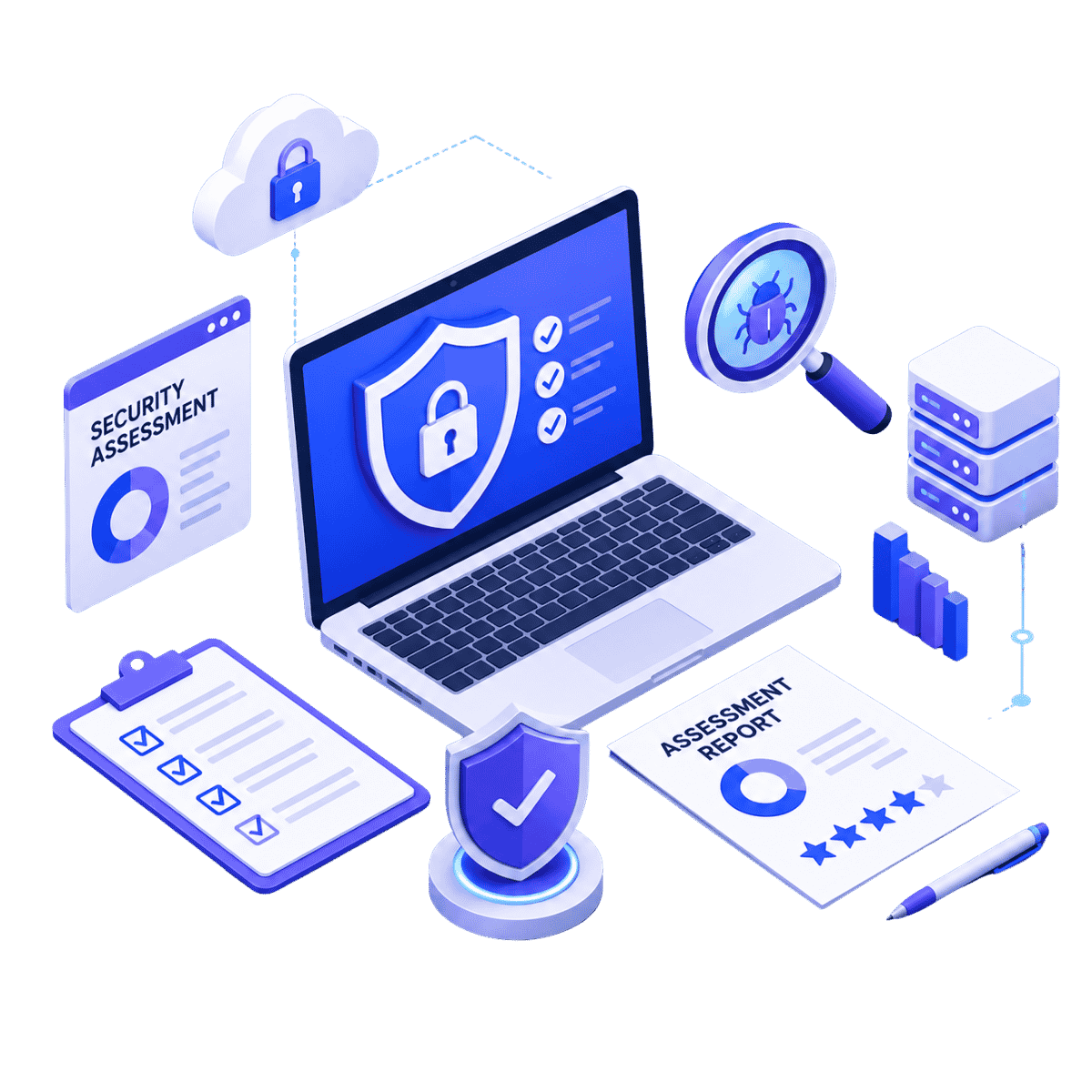
How Penetration Testing Helps You Achieve Data Security Compliance
Note that if compliance tells you what to secure, penetration testing tells you how well you’ve secured it.
Penetration testing, if done right, can help you achieve real operational safety. Here’s how:
1. Validates your security controls under pressure: Instead of just listing whether basic data security solutions like firewalls or encryption exist, a pentest actively attempts to bypass them. This real-life simulation helps in discovering potential gaps and securing them.
2. Uncovers what auditors might miss: Automated scans won’t spot insecure authentication flows or token manipulation vulnerabilities. That is why a hybrid approach is important – manual testing can spot these vulnerabilities with ease.
3. Produces compliance-ready documentation: Every penetration testing report must be compliance-ready. At Qualysec, every test report is:
- Mapped to frameworks like ISO, SOC 2, or DPDP
- Includes severity levels, remediation advice, and test logs
Tips for Complying with Data Security Regulations
Looking to achieve complete data security compliance? Here are some proven tips to help you:
- Know what data you collect and why: Identify what personal, financial, or sensitive data you handle. After that, you need to ensure you have a lawful basis (especially under DPDP, GDPR, or ISO 27001) to collect and process it.
- Build security controls that match real risks: Using generic controls is always a mess. Instead, opt for role-based access, encryption, MFA, and logging. Make sure all of these are particularly designed around your architecture, users, and potential threats.
- Validate your controls with penetration testing: Don’t assume you have complete control over your data security. Instead, prove it with pen testing. Get your systems tested by a credible provider like Qualysec, who can identify vulnerabilities aligned with compliance frameworks.
- Update regularly: It is critical to keep in mind that new features, vendors, or locations can change your risk profile. And that is exactly why you need to review and revise controls at least every three months. Make sure to retest security after major updates or incidents to maintain data protection and compliance.
How Qualysec Helps You Stay Secure and Compliant
At Qualysec, we offer comprehensive Data Protection as a Service to help you close the gap between compliance checklists and real-world security posture. While most providers rely on automation, we opt for manual-first testing. We conduct business logic testing, simulation exploitation, zero-trust validation, etc.
Every test report that we prepare is tailored to comply with DPDP, ISO 27001, SOC 2, RBI, or client-specific frameworks. Our technical findings are mapped to severity and affected systems. We also provide remediation guidance that developers can act on.
Become Audit-Ready With Our Experts!

Conclusion
Data security compliance doesn’t mean avoiding penalties or ensuring all the boxes are ticked off. It’s more about building trust with everyone involved – internal team, investors, and customers.
It is important to note that compliance requirements have become stricter. However, that is directly due to the evolving threats. This completely justifies why a proactive approach to compliance testing is important for companies.
Are you an early-stage startup aiming to ensure compliance? Do you want to scale up, aiming to enter regulated markets? Qualysec can help you with compliance-ready testing.
Schedule Your Compliance Assessment Today!
FAQs:
Q: What is compliance in data security?
Ans: Compliance in data security means making sure your business is doing everything it’s supposed to do to protect sensitive information as per the rules set by law or industry standards.
Q: What are GDPR and CCPA in security?
Ans: GDPR (General Data Protection Regulation) is a European Union law focused on protecting personal data and user privacy.
On the other hand, the CCPA, or California Consumer Privacy Act, is a US law providing California residents with rights over their personal data.
Q: How do you ensure data security and compliance with regulations?
Ans: There are plenty of ways to make sure data security and compliance with regulations. These are:
- Document your policies and technical safeguards
- Opt for penetration testing and audits
- Map controls to compliance frameworks
Q: What is meant by data compliance?
Ans: Data compliance simply means following rules and laws about how personal or sensitive data is collected, stored, used, and shared.
Q: What are the different types of compliance?
Ans: There are several types of compliance. For example:
- Regulatory Compliance (e.g., DPDP, GDPR, HIPAA)
- Industry-Specific Compliance (e.g., PCI DSS for payment data, RBI for financial services)
- Framework-Based Compliance (e.g., ISO 27001, SOC 2, NIST)
- Internal Compliance (company-specific policies and controls)
Q: What are the top compliance frameworks for U.S. companies?
Ans: Common compliance frameworks for US companies include SOC 2, HIPAA, PCI DSS, NIST Cybersecurity Framework, etc.