

It is often said that the most vulnerable doors are those left unchecked. When we think of network security, this wisdom holds intense truth. Penetration testing in network security is crucial in identifying these overlooked vulnerabilities. Cybersecurity is not just a technical concern – it is a responsibility, a practice of safeguarding not only data but the trust and integrity of businesses and their connections.
But how do you truly know if your network’s defenses are perfect? How do you uncover vulnerabilities before unethical hackers exploit them? This is where penetration testing, often described as the “art of ethical breaking,” steps in.
The global penetration testing market is projected to grow from $2.45 billion in 2024 to $6.35 billion by 2032, at a compound annual growth rate (CAGR) of 12.6%. Penetration testing remains crucial for even compliance, with 93% of organizations considering it at least somewhat important for meeting regulatory requirements. Also, 41% have increased the number of penetration tests in response to data protection and security laws.
This blog can guide you through the purpose of penetration testing in network security, explaining its principles and value, as well as its broader implications in protecting your digital assets. Let’s get started!
What is Penetration Testing in Network Security?
Just imagine inviting a locksmith to “break into” your home – not to steal but to point out where your locks and barriers are failing. With penetration testing (or pen testing), your network becomes that metaphorical home. It is a strategic and authorized attempt to simulate a cyberattack on your network system, identifying vulnerabilities before they can be exploited by unethical hackers.
But this goes beyond just testing firewalls. Pen testing stretches its reach into databases, applications, endpoints, and even your company’s practices and behavior. It sheds light on blind spots that might otherwise remain unnoticed.
Whether you are looking for compliance with industry standards, protecting client data, or simply your business, penetration testing allows you to step into your responsibilities with clarity and confidence.
“Related Read: What is Network Penetration Testing?
Why Is Penetration Testing Essential?
The importance of penetration testing in network security extends beyond mere risk identification; it mitigates potential financial losses, supports regulatory compliance, and strengthens incident response strategies. Let’s explore 4 key reasons why penetration testing is essential for modern organizations:
1. Exposing the Hidden Security Gaps in Your Network
Many vulnerabilities remain hidden, like invisible threads in the fabric of a complex network. Regular security software and firewalls, although strong, often have blind spots. Penetration testing just exposes those security gaps that many software and firewalls might miss. These silent weaknesses could include poorly configured systems, weak passwords, or outdated software that no longer withstands modern-day attacks. A penetration test methodically probes for these shortcomings, much like seeking weak links in a chain.
2. Mitigating the Cost of Cyber Threats
Did you know that the average cost of a data breach in 2023 reached a staggering $4.45 million? This isn’t just a monetary loss; it reflects reputational damage and the erosion of trust. When your network undergoes penetration testing, potential breaches are uncovered before they can disrupt operations. The cost of proactively defending your system is lesser as compared to the aftermath of a breach.
3. Meeting Compliance Standards with Confidence
Many industries now enforce strict regulations to maintain data security. From PCI DSS requirements in the financial sector to HIPAA in healthcare, compliance is non-negotiable. Penetration testing is often a mandatory requirement for audits and certifications. Yet beyond simply “ticking a box,” compliance through pen testing signals your commitment to not only meeting industry standards but exceeding expectations.
4. Strengthening Incident Response and Recovery Plans
Every vulnerability revealed offers an opportunity to prepare. Threats and risks highlighted during a penetration test contribute to the charting of response strategies. Equipping your team with realistic scenarios ensures not just prevention but also resilience during unforeseen cyber incidents.
Thus, it is evident that penetration testing is not just a technical necessity; it is a strategic investment in your company’s future. Beyond enhancing your network’s security posture, penetration testing builds trust and shows a commitment to excellence in both compliance and resilience.
Core Areas Addressed by Penetration Testing
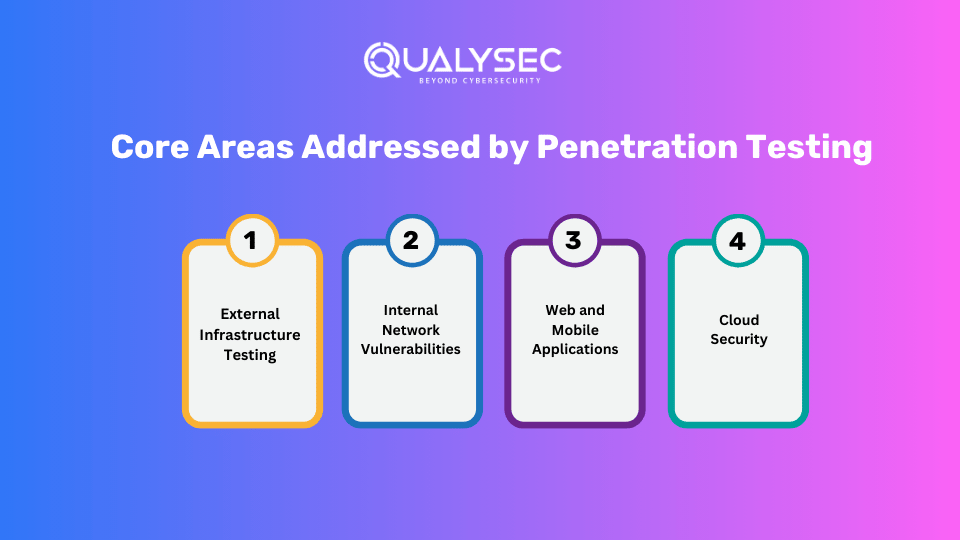
1. External Infrastructure Testing:
This evaluates the public-facing elements of your network, servers, IP addresses, web applications, checking for any exposure to outside attackers. These external doorways are among the first targets for threat actors.
2. Internal Network Vulnerabilities:
What happens if, somehow, an intruder crosses the outer barrier? By simulating an attack from within, penetration testing examines whether an attacker with insider access can move laterally to compromise confidential data.
3. Web and Mobile Applications:
Your customers’ trust is encoded within your applications, whether they are mobile apps, e-commerce platforms, or customer portals. A penetration test simulates attacks like SQL injection or cross-site scripting (XSS) to safeguard end-to-end user experiences.
4. Cloud Security:
With cloud services becoming increasingly dominant, penetration testing now extends into securing cloud-hosted data and applications. It ensures your configurations align with best practices to keep vulnerabilities in the cloud at bay.
“You might like to explore: Advanced penetration testing services
A Journey Toward Understanding and Action
When its real purpose is understood, penetration testing is not merely a technical practice; it appears like a tool of reflection. It challenges stillness, inviting businesses to ask themselves, “Are they doing enough?” It builds bridges between IT teams, organizational leadership, and trusted partners to weave the fabric of resilience and responsibility.
Every security flaw uncovered during penetration testing is a teacher. It asks you to address not just the surface level but the structural integrity of your systems. And through addressing these vulnerabilities, you evolve not as a reaction to fear but as a declaration of continuous improvement.
The Process of Penetration Testing in Network Security
Below are some steps that show how penetration testing is strategically carried out in most organizations:
Step 1. Planning and Scope Definition
Every good test begins with a clear intention. Frameworks are defined. What systems will be tested? What is the scope? Is this to improve compliance, strategy, or enhance protocols?
Step 2. Reconnaissance
This step involves gathering intelligence about your network and applications to understand potential weak points. It is the “before the storm” phase, which is quiet and observant.
Step 3. Exploitation Simulation
Now, the testers enter. They simulate attacks to exploit vulnerabilities using safe, controlled methods. Their aim is not malicious; it is to reveal if and where actual harm could occur.
Step 4. Reporting and Recommendations
An expertly executed penetration test always results in actionable insights. Every vulnerability uncovered is paired with targeted advice on fixes and mitigations.

Step Retesting to Reinforce Security
The process extends beyond the report. Retesting validates that mitigations are effective, and the previously weak doors are now strengthened.
“Also Explore: Top Penetration Testing Methodologies & Standards
Conclusion
Penetration testing in network security is not just a technical exercise; it’s a proactive commitment to strengthening your organization’s digital infrastructure. By identifying hidden vulnerabilities, mitigating potential financial and reputational losses, ensuring compliance, and strengthening incident response strategies, penetration testing serves as a complete approach to protecting your network. It builds a resilient framework that keeps your data, reputation, and operations secure.
QualySec’s Network Penetration Testing Services
At Qualysec, we specialize in delivering thorough penetration testing services customized for your network security needs. Our skilled experts combine manual techniques with automated tools along with data-driven processes to identify vulnerabilities with precision.
Partnering with us will give you relief as your network defenses will be strong and resilient, significantly reducing the risk of data breaches and unauthorized access. Contact us today to secure your network and protect your digital assets.