






Key Takeaways
1. One scanner is incomplete: Network scanners miss web application logic flaws. DAST programs overlook dependency weaknesses. Cloud CSPM systems do not consider code-level issues. The research of Edgescan conducted in 2025 found that the proportion of all identified flaws is either high or severe at every item in the stack.
2. Free tools: More than most teams realise: Most of the exploited attack surfaces consist of four layers, and free solutions such as OWASP ZAP, Trivy, Nmap, and OpenVAS all cover these four layers at no cost.
3. The reason most results never change the structure is to blame: PDFs sent in a security portal scan report have near-zero remediation rates. Code-level direction develops developer tickets, thus the output is directly sent to ServiceNow or Jira.
4. Misconfiguration is the most recent cause of real breaches, not zero-days: OWASP A02:2025 (Security Misconfiguration) dropped to 2 in 2021, but it was 5 in 2021. The exposure to DeepSeek. The Brightspeed disaster. Open doors.
5. The appropriate scanner is dependent on the appropriate layer: Various surfaces are scanned by web scanners, network scanners, container scanners, cloud CSPM solutions, and SCA tools. One instrument does not have all of them.
Introduction
More than 200 vulnerability-scanning technologies will be in use by 2026. The majority of the businesses are using fewer than three. The same layer is also being covered by most of those three.
That’s the real issue. Not a shortage of tools, instead, a deficit in coverage. DAST web application tools do not analyze container images. Scanners of the network do not examine your open-source dependencies. A cloud CSPM platform will not find hard-coded credentials in your code. Each tool targets a single layer of an attack surface, which now includes third-party libraries, AI-generated commits of code, containerised workloads, APIs, cloud infrastructure, and web applications.
The 2025 Vulnerability Statistics Report by Edgescan reported that more than 33 percent of all vulnerabilities found in corporate environments are critical or high severity, spread evenly across network, application, and cloud layers. Focusing the scanning on a single layer and leaving the others to go undetected does not reduce risk. It only concentrates on the next place that attackers target.
Visualizing the 10 tools counting 2026 on the layers counting- what each one scans, who it is aimed at, what it will cost, and how to stack them together instead of counting with a single tool. The right coverage can be achieved in case you have no money or a corporate platform agreement.
What are Vulnerability Scanning Tools?
Before we jump into the list, it’s important to clarify what vulnerability scanning tools are and why they matter. Vulnerability scanners are software solutions designed to identify potential security weaknesses in systems, networks, and applications. By running automated scans, these tools pinpoint vulnerabilities that hackers could exploit, enabling organizations to address these issues before problems occur.
Modern vulnerability scanning tools go beyond basic detection; they also provide actionable remediation advice, real-time updates for evolving threats, and compliance-checking capabilities across industries.
Key Types of Vulnerability Scans:
- Network Scanning: Identifies vulnerabilities in network infrastructure such as routers, switches, and firewalls.
- Web Application Scanning: Focuses on detecting vulnerabilities in web applications, including SQL injection, cross-site scripting (XSS), and more.
- Infrastructure Scanning: Examines servers, databases, and other foundational systems for potential risks.
By conducting regular vulnerability scans, organizations can maintain a robust security posture and safeguard their digital assets.
Why Are These Tools Critical in 2026?
- Increasing Threat Complexity: Cyber threats are getting more sophisticated and frequent, meaning businesses need advanced tools to stay ahead.
- Regulatory Compliance: Governments worldwide are implementing stricter data protection and privacy regulations.
- Rising Costs of Data Breaches: The average cost of a data breach in 2025 is projected to exceed $5 million.
Let’s explore the vulnerability assessment tools making waves this year.
Top 10 Vulnerability Scanning Tools in 2026
1. Qualysec

Qualysec continues to lead the cybersecurity industry with its cutting-edge vulnerability scanning services. Founded in 2020, Qualysec has rapidly gained recognition for its expertise in penetration testing, security consulting, and incident response. With an office in India, the company serves global clients, offering a wide range of services, including:
- Web Application Penetration Testing
- Mobile Application Penetration Testing
- API Security Testing
- Cloud Security Testing
- IoT Device Security Testing
- Blockchain Security Testing
Why Choose Qualysec?
- Combines human expertise with automated tools for comprehensive assessments.
- Adheres to industry standards with clear, actionable reports.
- Offers post-assessment consulting to enhance security strategies.
Qualysec’s solutions are particularly beneficial for businesses adhering to regulatory standards or aiming to demonstrate their commitment to cybersecurity. Routine penetration testing with Qualysec ensures that vulnerabilities are identified and addressed before they can be exploited.
Talk to our Cybersecurity Expert to discuss your specific needs and how we can help your business.
2. Invicti

Invicti excels in web application security, offering highly accurate and user-friendly vulnerability scanning solutions. Its powerful engine is designed for developers and security professionals, providing comprehensive coverage and easy integration into development pipelines.
Features:
- Seamless integration with CI/CD tools.
- Advanced vulnerability detection for web applications.
- Intuitive interface for streamlined usability.
3. Nmap

Nmap remains a top choice for network discovery and security auditing. As an open-source tool, it is favored by network administrators for its powerful port scanning capabilities and extensive customization options.
Highlights:
- Effective for network inventory and monitoring.
- Supports a wide range of scanning techniques.
- Free and open-source.
4. OpenVAS

OpenVAS (Open Vulnerability Assessment System) is another robust open-source tool specializing in infrastructure vulnerability assessment software. With its extensive database and powerful scanning capabilities, OpenVAS is ideal for securing IT environments.
Advantages:
- Comprehensive vulnerability database.
- Free and community-supported.
- Flexible configuration options.
5. RapidFire

Tailored for Managed Service Providers (MSPs) and Managed Security Service Providers (MSSPs), RapidFire VulScan offers an all-in-one solution for vulnerability scanning and remediation.
Key Features:
- Efficient scanning for multi-client environments.
- Comprehensive reporting and remediation workflows.
- Easy integration with IT management tools.
6. StackHawk

StackHawk focuses on DevOps and small-to-medium businesses (SMBs), offering application security testing that seamlessly integrates into development pipelines.
Notable Features:
- Developer-centric approach to vulnerability scanning.
- Continuous scanning for application security.
- Simplified setup and operation.
7. Cobalt.IO
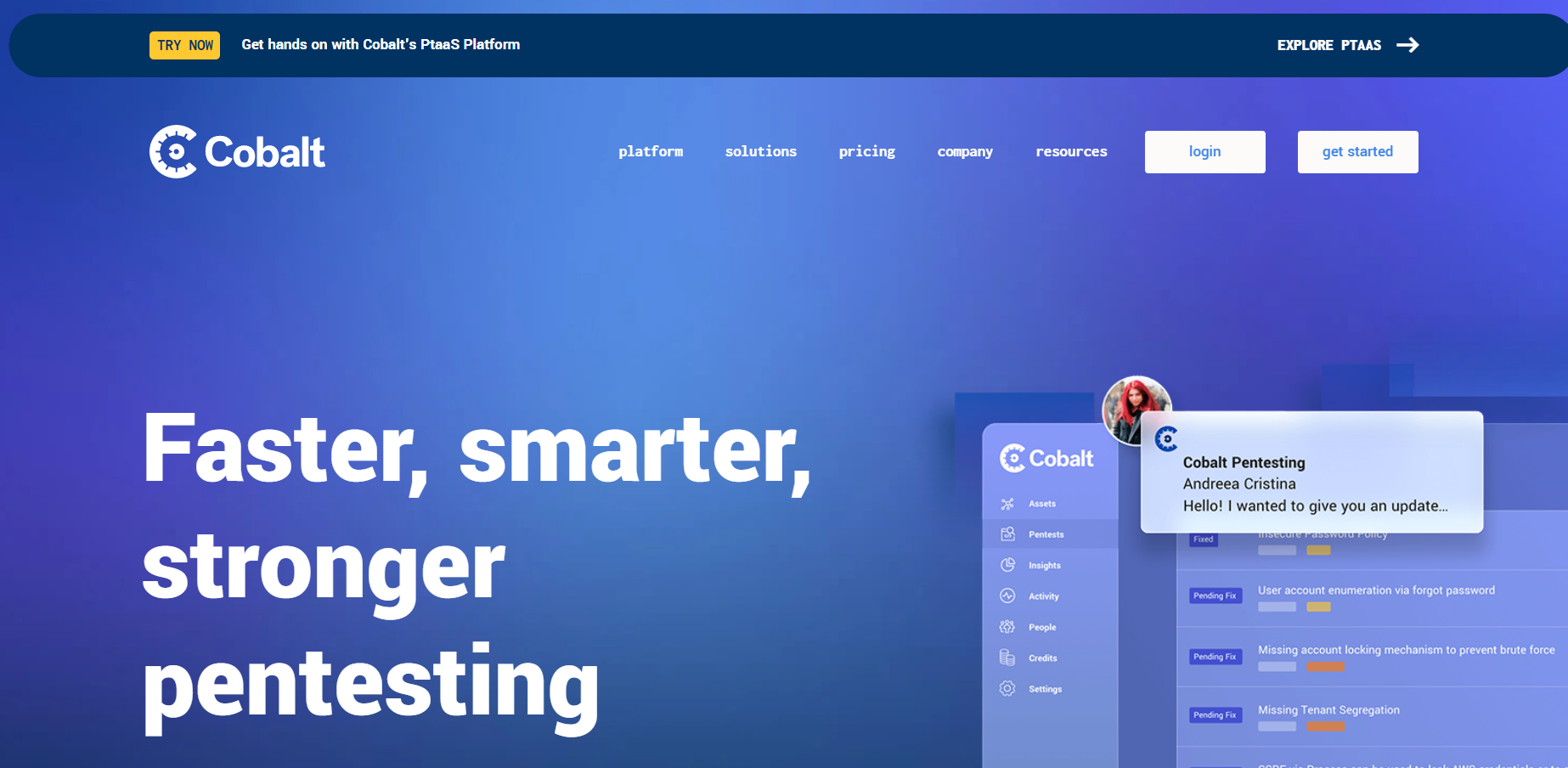
Cobalt’s cloud-based vulnerability scanning platform is renowned for its scalability and efficiency. It offers comprehensive web application testing and boasts an impressive clientele, including global brands like Nissan and Vodafone.
Pros:
- Scalable solutions for enterprises.
- Accurate and detailed reporting.
- Free trial available for new users.
Cons:
- It can be slow for large scans.
- Slightly expensive compared to competitors.
8. Burp Suite
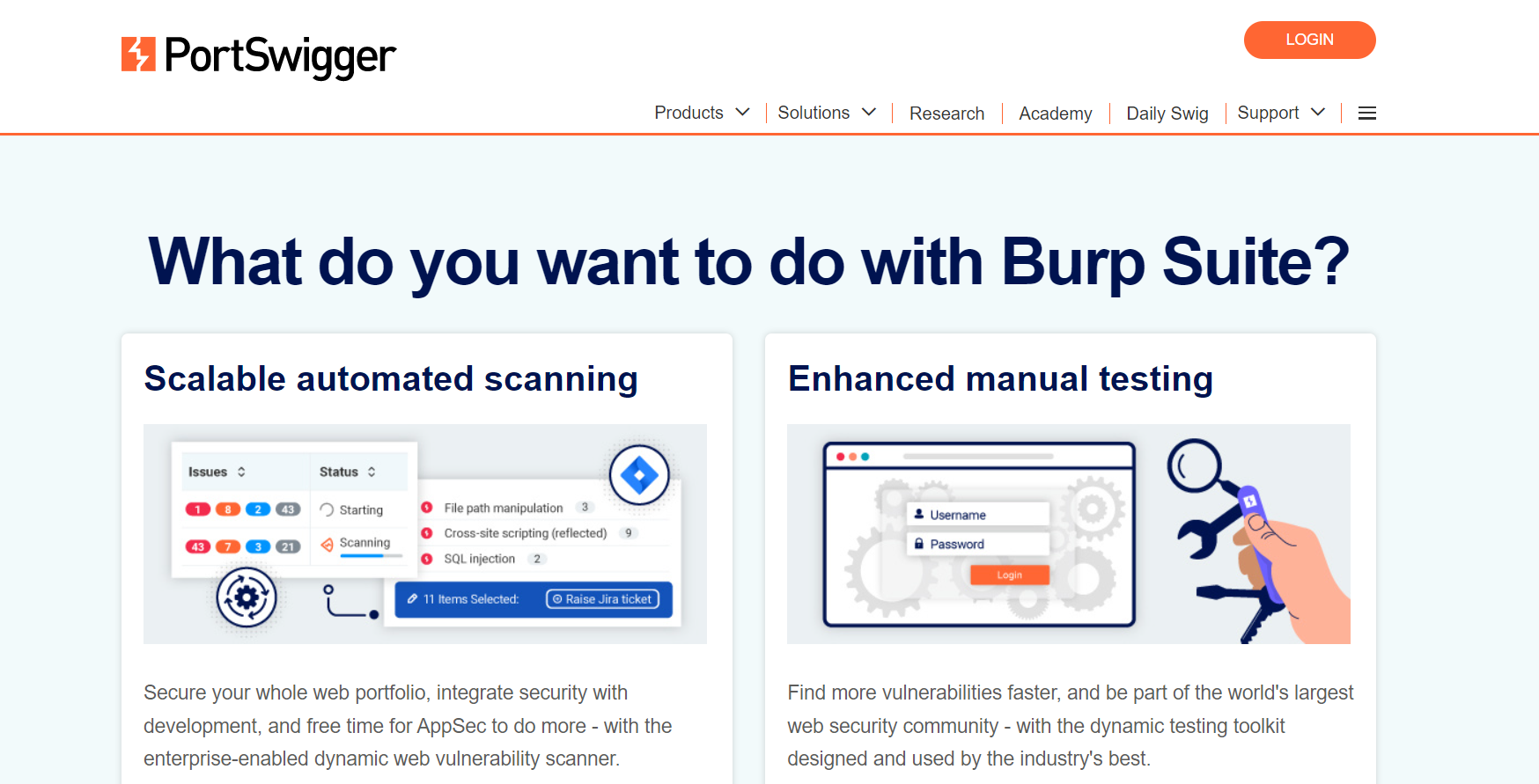
A favorite among penetration testers, Burp Suite combines manual and automated tools for thorough vulnerability analysis. It excels in web application security testing and offers step-by-step remediation advice.
Strengths:
- Detailed vulnerability insights.
- Integration-friendly for ticketing systems.
- Supports complex targets and URLs.
Limitations:
- Advanced features are locked behind a commercial license.
- High pricing for enterprise editions.
9. Wireshark
Wireshark is a powerful network packet analyzer widely used for network troubleshooting and analysis. While not a traditional vulnerability scanner, its capabilities make it indispensable for monitoring network traffic.
Features:
- Live traffic capture and analysis.
- Compatibility with various operating systems.
- Free and open-source.
Drawbacks:
- Lacks automated intrusion detection.
- Steep learning curve for beginners.
10. Qualys Guard
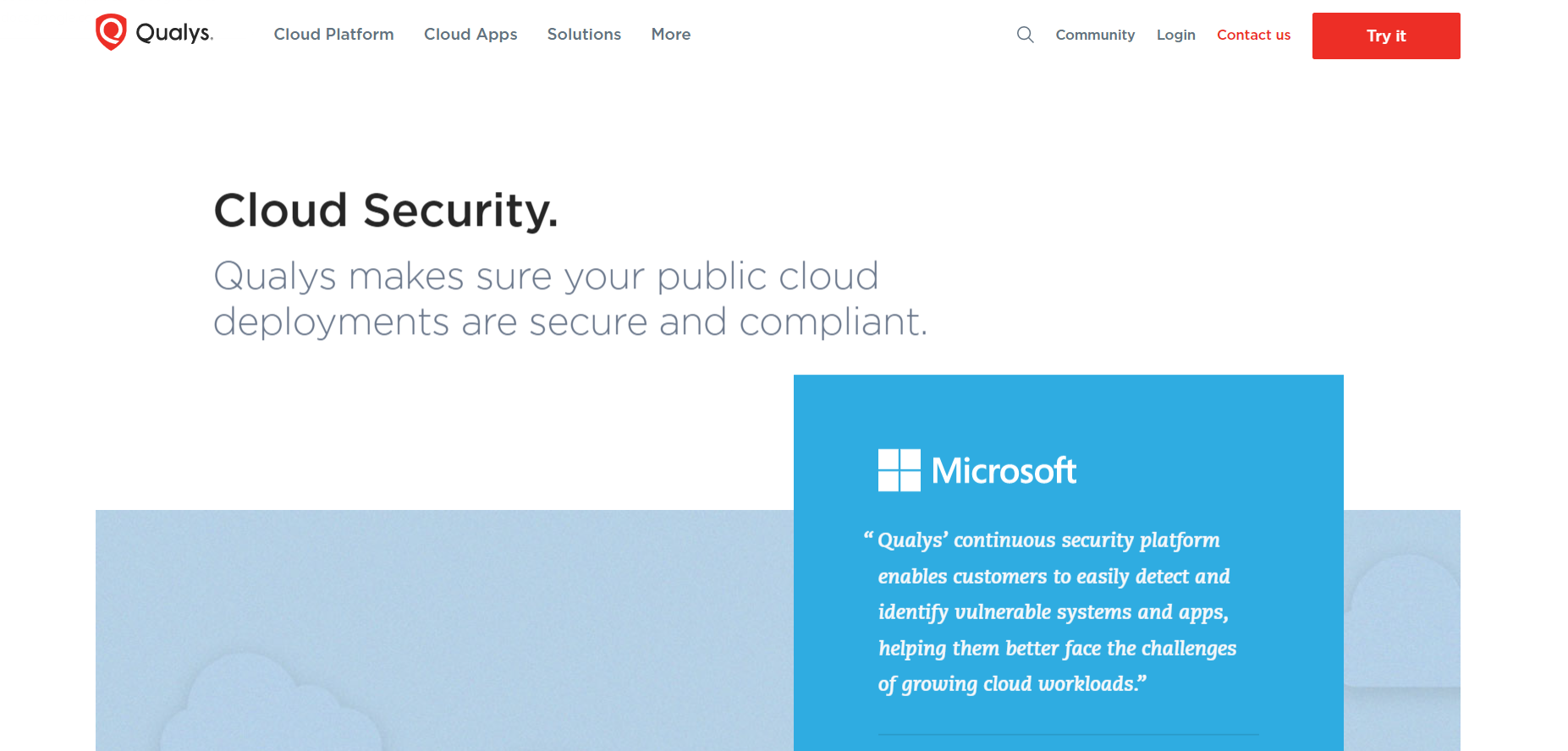
Qualys Guard is a leader in cloud-based vulnerability management, providing automated auditing and protection for IT assets in hybrid environments.
Key Benefits:
- Seamless integration with AWS, Azure, and GCP.
- Automated vulnerability remediation.
- Comprehensive dashboards and analytics.
Challenges:
- Limited scheduling options for scans.
- Compatibility issues with specific applications.
Learn more about Vulnerability Testing in Cyber Security in our detailed blog.
Why is There a Need For Regular Vulnerability Scanning?
Cyber threats are constantly evolving, and businesses must adopt a proactive approach to security. Regular vulnerability scanning helps organizations:
- Identify Risks: Detect vulnerabilities before attackers exploit them.
- Meet Compliance Requirements: Ensure adherence to regulatory standards like PCI-DSS, GDPR, and SOC2.
- Protect Data: Safeguard sensitive information from unauthorized access.
- Build Customer Trust: Demonstrate commitment to cybersecurity.
By taking advantage of the right vulnerability scanning tools, businesses can significantly reduce their risk exposure and enhance their overall security posture.
Factors In Choosing the Right Vulnerability Management Tools
Selecting the right vulnerability management tool can significantly enhance your organization’s security posture. Here’s an updated look at the key factors to consider in 2026:
|
Factor |
Description |
|
Experience |
Opt for a tool with a strong track record of accurately identifying vulnerabilities and delivering effective remediation strategies. |
|
AI & Automation |
Look for advanced AI-driven automation to detect vulnerabilities faster and reduce manual effort, especially for large-scale environments. |
|
Customer Support |
Reliable, 24/7 customer support is crucial for addressing critical issues and ensuring seamless tool functionality. |
|
Compliance |
Ensure the tool supports your industry’s compliance requirements, such as GDPR, PCI-DSS, HIPAA, or SOC2. |
|
Features |
Evaluate features like real-time scanning, patch management, and risk prioritization to ensure the tool meets your security needs. |
|
Integrations |
Check if the tool integrates effortlessly with your existing systems, including SIEM, DevOps pipelines, and cloud environments. |
|
Regular Scans |
Automated, frequent scans are vital to staying ahead of new and evolving threats. |
|
Detailed Reports |
The tool should generate actionable, detailed reports with clear mitigation steps to streamline the remediation process. |
|
Ease of Navigation |
A user-friendly interface ensures that teams can efficiently operate the tool without extensive training or experience. |
Final Thoughts!
The cybersecurity background continues to evolve. Businesses that prioritize complete vulnerability scanning are not only better protected but also more likely to meet compliance requirements, earn customer trust, and avoid costly breaches.
To avoid breaches, you need the right tools and timely expertise. Consider starting with one of these top vulnerability scanners to safeguard your systems in 2026. Prioritize your organization’s unique needs, and remember that consistent updates and vigilant monitoring are essential to keeping your assets secure.
Ready to strengthen your cybersecurity? Talk to our experts at Qualysec and discover how our advanced solutions can protect your business from emerging threats. Schedule a Call Today!
FAQ’s
Q: Why is compliance crucial?
A: This ensures that your organization adheres to industry-specific regulations and standards. Choosing a tool that aligns with compliance requirements helps in maintaining a secure and compliant environment, reducing the risk of penalties and legal issues.
Q: What role do integrations play in vulnerability assessment scanning?
A: Integrations allow the vulnerability scanning tool to work seamlessly with your existing security systems and processes. This streamlines your cybersecurity efforts and ensures a more comprehensive and interconnected security strategy.
Q: Why are regular scans essential for staying ahead of vulnerabilities and threats?
A: Regular, automated scans are crucial because they continuously monitor your systems and applications for emerging vulnerabilities. This proactive approach helps in identifying and addressing security weaknesses before malicious actors can exploit them.