







A few years ago, most medical devices worked inside closed hospital systems. That is no longer the case. Today, devices connect with cloud platforms, mobile apps, Bluetooth networks, APIs, and remote monitoring systems every day, making medical device threat modeling an important part of healthcare cybersecurity. A patient’s data may travel through several systems before it even reaches a doctor.
In 2025, researchers found that 89% of healthcare organizations had internet-connected IoMT devices with known security weaknesses on their networks. Some of those weaknesses were already linked to ransomware activity.
This is one reason the FDA has started paying closer attention to cybersecurity during device submissions. Manufacturers are now expected to show how they identify possible security problems before a product reaches hospitals or patients.
Threat modeling helps answer those questions early. It gives teams a way to study how attackers could misuse a device and where protections are still missing. The sections ahead cover the methods, tools, workflows, and FDA expectations shaping medical device threat modeling today.
What Is Medical Device Threat Modeling?
Medical device threat modeling is a way to find security problems before they turn into real attacks. Teams study what needs protection, where a device may be exposed, how attackers could get in, and what controls can stop them.
This includes checking assets, attack surfaces, trust boundaries, vulnerabilities, attack paths, and possible mitigations.
In healthcare, the concern is not only data theft or system access. A security issue can also affect patient care and device safety. That is why manufacturers use threat modeling to understand both cybersecurity risks and patient impact early in development.
Why Threat Modeling Matters for FDA Compliance
The FDA expects medical device companies to follow evolving FDA security guidelines and think about cybersecurity much earlier than before. Waiting until a security issue appears is no longer enough.
During submissions, manufacturers now need to show how they handled security throughout development. That often includes:
- Cybersecurity risk management
- Secure device architecture
- Threat modeling records
- Vulnerability management processes
- Postmarket security monitoring
Threat modeling gives clear proof that your team looked for possible security problems before release. It shows how risks were identified and which protections were added to reduce those risks.
For the FDA, this is not just about protecting software. It is also about reducing risks that could affect patient care and device reliability.
Understanding FDA SPDF (Secure Product Development Framework)
The FDA uses the term SPDF, or Secure Product Development Framework, for a reason. Security is expected throughout the entire product lifecycle, not only during final testing.
Under SPDF, manufacturers build cybersecurity into everyday development activities, including:
- Secure design
- Threat modeling
- Secure coding practices
- Security testing
- Patch management
- Vulnerability monitoring after release
Threat modeling also connects with other security work happening during development. Teams often use it to decide:
- Which areas need stronger security controls
- What testers should focus on first during penetration testing
- Which third-party components in the SBOM deserve closer review
- Whether any remaining risks could still affect patients or device functions
Without threat modeling, many of these decisions turn into guesswork later in the process.
Why FDA Reviewers Expect Threat Modeling Evidence
FDA reviewers want proof that cybersecurity was considered during development, not added at the last minute during FDA 510k submission preparation. Threat models help show that process clearly.
They help reviewers understand:
- Where attackers could target the device
- What assumptions were made about possible threats
- Which protections were added
- Why were any remaining risks accepted
FDA Threat Modeling Documentation Requirements
1. System Architecture Diagrams
FDA reviewers want a clear picture of how the device actually works and connects with other systems. That is why architecture diagrams matter. These diagrams usually show:
- Device components and firmware
- Cloud platforms
- Mobile apps
- APIs
- Bluetooth, WiFi, or other wireless connections
- Third-party integrations
When everything is mapped visually, it becomes easier to spot exposed entry points, data flow risks, and trust boundaries between systems.
2. Data Flow Diagrams (DFDs)
Data Flow Diagrams show how information moves from one system to another. In medical devices, this could include patient data, login requests, cloud communication, or software updates.
These diagrams are useful during STRIDE analysis because they help teams see where something could go wrong. FDA reviewers also use them to understand how the device handles external communication and sensitive data.
A proper DFD should clearly map authentication paths, OTA update routes, outside connections, and any flow involving sensitive information. Once everything is visible, finding risky connections becomes much easier.
3. Threat Enumeration
This step focuses on listing the different ways a device could be attacked. Teams look at how someone may gain access and what conditions could make the attack possible. They also check how difficult it would be to exploit the weakness.
They also review who the likely threat actors are and how serious the impact could become if the attack succeeds.
4. Risk Assessment Mapping
A cybersecurity issue in a medical device can do more than expose data. In some cases, it can interrupt therapy and affect device performance. It can also create situations that put patients at risk.
Because of this, manufacturers connect cybersecurity findings with safety risk assessments. Many teams align this work with ISO 14971 so security risks and patient harm are reviewed together instead of separately.
5. Security Controls Documentation
Manufacturers should document the security protections built into the device and supporting systems, such as:
- Encryption for sensitive data
- MFA for user access
- Secure boot protection
- Firmware signing
- Role-based access controls
- Runtime integrity checks
This helps reviewers understand how the device is protected against unauthorized access and tampering.
6. Residual Risk Documentation
The FDA expects manufacturers to explain any risks that still remain after security controls are added. That explanation should show why the remaining risk is considered acceptable and how the device can still operate safely in real-world use.
Best Threat Modeling Methodologies for Medical Devices
1. STRIDE
STRIDE is a threat modeling method used to study different types of security threats inside a system. It helps teams look at how attackers may target connected medical devices, hospital networks, cloud platforms, or remote monitoring environments.
| STRIDE | Meaning |
|---|---|
| S | Spoofing |
| T | Tampering |
| R | Repudiation |
| I | Information Disclosure |
| D | Denial of Service |
| E | Elevation of Privilege |
In medical devices, STRIDE can uncover issues like fake clinician logins, firmware modification attempts, or exposed telemetry data shared between connected systems.
2. Attack Trees
Attack trees show how an attacker could reach a specific target step by step. The process starts with one end goal. Then branches into smaller actions that could make the attack possible.
This method is useful for medical devices where a small failure can create serious safety problems. Teams often use attack trees for implantable devices, insulin pumps, and surgical robotics because these systems handle critical functions and multiple connected operations.
3. MITRE ATT&CK-Based Modeling
MITRE ATT&CK is used to study the techniques attackers use during real intrusions. Instead of only listing weaknesses, teams look at how an attack may actually unfold inside a healthcare environment. This approach is useful for scenarios:
- Ransomware
- Stolen credentials
- Lateral movement across connected hospital systems
It helps manufacturers understand how one compromised system could lead to wider device or network exposure.
4. PASTA
PASTA stands for Process for Attack Simulation and Threat Analysis. This method focuses heavily on how attackers think and what kind of damage a successful attack could cause.
Instead of only finding technical weaknesses, teams study realistic attack scenarios and the business or patient impact behind them. That makes PASTA useful for large healthcare environments where devices, hospital systems, cloud platforms, and third-party services are all connected together.
5. LINDDUN
LINDDUN focuses on privacy risks instead of direct system attacks. Teams use it to study how patient information could be exposed or misused during device operation.
This method is especially useful for wearable devices and connected health platforms that collect large amounts of patient data. It also supports privacy-focused requirements tied to HIPAA compliance and patient data protection.
Need help with medical device FDA cybersecurity compliance? Schedule a call with our cybersecurity expert today!
Reduce Compliance Costs with Qualysec.
AAMI TIR57 and ANSI/AAMI SW96
What Is AAMI TIR57?
AAMI TIR57 helps medical device companies handle cybersecurity risks while building and testing devices. The FDA also recognizes it as a trusted cybersecurity risk management framework for medical devices. It works alongside ISO 14971, so teams can review security risks and patient safety risks as part of the same process instead of handling them separately.
What Is ANSI/AAMI SW96?
ANSI/AAMI SW96 is a medical device cybersecurity standard focused on secure software development and cybersecurity engineering practices. It gives manufacturers more detailed expectations for building, testing, and maintaining secure medical device software.
Many of the ideas introduced earlier in AAMI TIR57 are expanded further in SW96 with more structured engineering guidance and lifecycle security practices.
Threat Modeling Process for Medical Devices
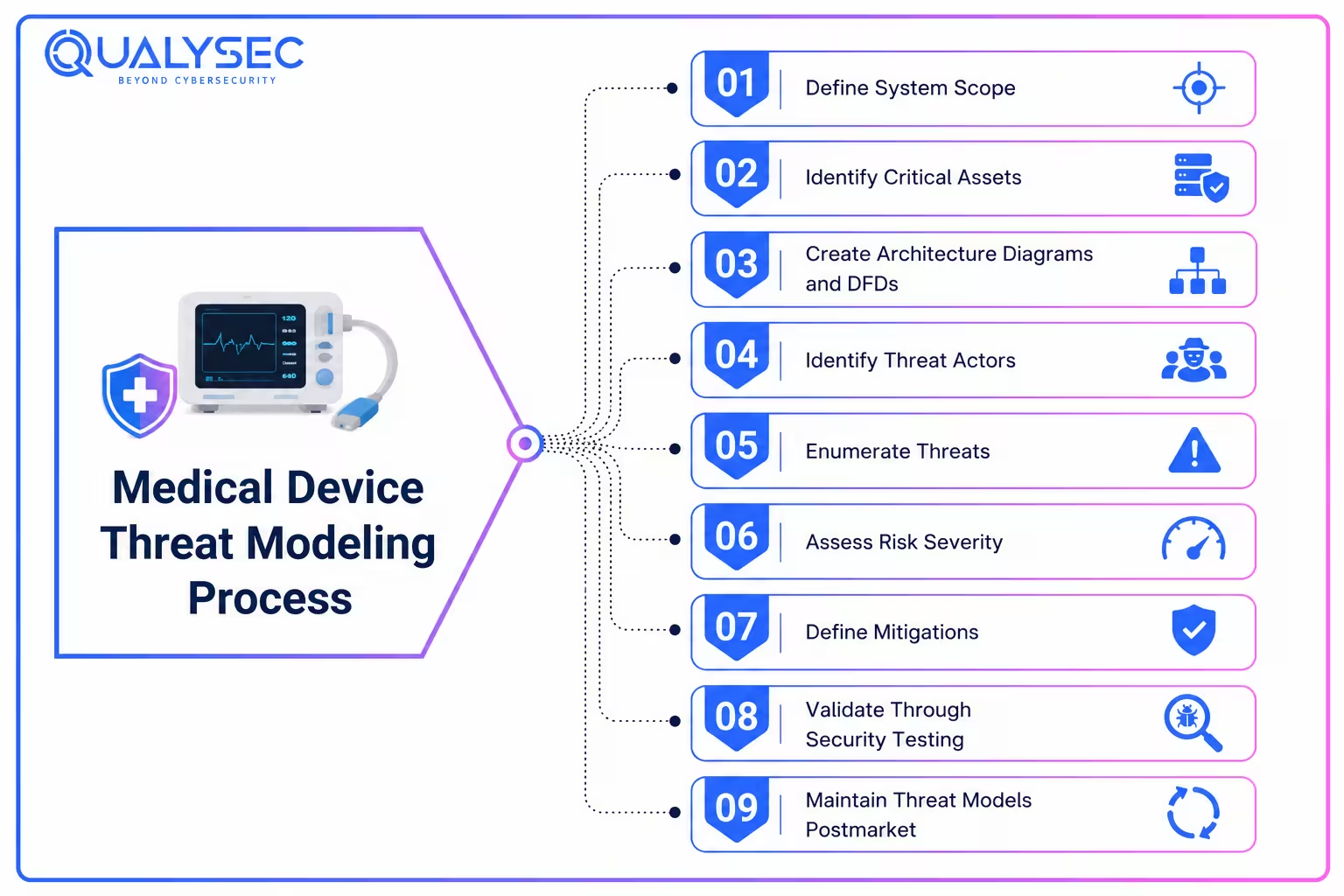
Step 1: Define System Scope
The first step is mapping everything connected to the device. If something gets left out here, security gaps can easily go unnoticed later. Teams usually review:
- Firmware
- Hardware components
- Cloud backends
- APIs
- Mobile applications
- Hospital system integrations
Wireless connections, third-party services, and remote access points should also be part of the review from the beginning.
Step 2: Identify Critical Assets
After defining the scope, teams identify the assets that need the strongest protection. These are the systems, settings, or data that could create serious problems if exposed or changed.
Critical assets may include:
- PHI and patient records
- Device firmware
- Clinician credentials
- Telemetry data
- Therapy settings and treatment configurations
Step 3: Create Architecture Diagrams and DFDs
After identifying the important assets, teams create architecture diagrams and Data Flow Diagrams to see how the device communicates across the environment. These diagrams show where trust boundaries exist, how wireless connections interact with the device, and how remote updates move through the system.
Once everything is mapped clearly, weak spots become much easier to notice before attackers do.
Step 4: Identify Threat Actors
At this stage, teams identify who may try to target the device or connected systems. That may involve:
- Ransomware groups are attacking hospital networks
- Malicious insiders with internal access
- Nation state actors targeting healthcare infrastructure
- Opportunistic attackers searching for exposed devices online
Step 5: Enumerate Threats
Once the system is mapped, teams start identifying possible threats across the environment. Different methods help uncover different kinds of risks.
Some teams use STRIDE to study issues like spoofing, tampering, or privilege escalation. Others use attack trees to trace how an attacker could move step by step toward a target. MITRE ATT&CK is also useful for studying real-world attacker behavior inside healthcare systems.
Step 6: Assess Risk Severity
After identifying the threats, teams review how serious each risk could become. The goal is to understand which issues need immediate attention and which ones carry a lower impact.
During this review, teams assess:
- How easy is the threat to exploit
- Possible patient harm
- Operational disruption inside healthcare environments
- How difficult would the attack be to detect
Step 7: Define Mitigations
By this point, the team already knows where the weak areas are. The next job is deciding how those gaps should be protected before the device moves further into development.
Some risks may need secure boot protection to stop unauthorized firmware changes. Others may require encryption, signed firmware updates, MFA for privileged access, or segmentation between hospital networks and connected devices.
Step 8: Validate Through Security Testing
Security testing helps confirm whether the threats identified earlier can actually affect the device in real conditions. Instead of testing randomly, teams use the threat model to focus on the areas that carry the highest risk. This usually connects with:
- VAPT activities
- Fuzz testing against unexpected inputs
- Penetration Testing across connected environments
- SBOM scanning for vulnerable components
Step 9: Maintain Threat Models Postmarket
Releasing the device does not mean the threat model is finished. New vulnerabilities appear, software changes happen, and additional integrations may introduce new security risks over time. That is why the FDA guidance treats threat models as living documents that should be updated whenever the device environment changes.
Best Threat Modeling Tools for Medical Devices
1. OWASP Threat Dragon
OWASP Threat Dragon is an open source threat modeling tool used to create and review security diagrams during development. It supports Data Flow Diagram creation, STRIDE-based threat modeling, and collaborative reviews between security and development teams.
Many teams use it to visualize attack surfaces, track identified threats, and document mitigations in one place.
2. Microsoft Threat Modeling Tool
This tool is widely used for STRIDE-based threat modeling and automated threat generation. It helps teams map threats across applications, APIs, cloud services, and connected systems during the design stage.
The tool is especially useful for cloud-connected healthcare environments where devices communicate with hospital systems, remote platforms, and external services.
3. IriusRisk
IriusRisk is a threat modeling platform built for automated security workflows. It helps teams generate threats automatically, track security requirements, and connect threat modeling with DevSecOps pipelines.
Many organizations use it for compliance-focused workflows because the platform helps document risks, security controls, and mitigation activities across the development lifecycle.
4. ThreatModeler
ThreatModeler helps large organizations manage threat modeling across different teams and systems. It supports automated threat analysis, CI/CD integration, and governance tracking during development. This makes it useful for healthcare environments where devices, cloud services, and internal applications are all connected and updated continuously.
Common Medical Device Threats to Model
Connected medical devices can be exposed in many different ways once they interact with hospital networks, cloud platforms, mobile apps, and wireless systems. During threat modeling, teams usually review threats such as:
- Ransomware spreading through connected environments
- Unauthorized firmware updates
- Bluetooth-based attacks
- Cloud API abuse
- Credential theft
- Supply chain compromise
- Insecure OTA updates
- Hardcoded passwords
- Vulnerable third-party components
- AI or ML model poisoning
- Wireless telemetry interception
- Denial of service attacks
Threat Modeling for Different Medical Device Types
| Medical Device Type | Common Threats to the Model |
|---|---|
| Implantable Devices | Telemetry abuse, wireless authentication risks, battery depletion attacks |
| Wearables | Bluetooth vulnerabilities, mobile app API risks, PHI exposure |
| Infusion Pumps | Therapy manipulation, unauthorized commands, and credential compromise |
| Imaging Systems | Ransomware attacks, DICOM exposure, operational disruption |
| AI-Enabled Diagnostics | Model poisoning, adversarial AI attacks, and data integrity manipulation |
Common FDA Compliance Mistakes
Many FDA cybersecurity gaps happen because threat modeling is treated like a paperwork task instead of an ongoing security activity. Some of the most common problems include:
- Treating threat modeling as one-time documentation
- Missing trust boundaries inside DFDs
- Ignoring third-party software dependencies
- No connection between cybersecurity work and ISO 14971 processes
- Failing to update threat models after software changes or new vulnerabilities
- Using generic mitigations without proper validation
- Weak residual risk documentation
- Not connecting cybersecurity risks with patient safety impact
How Qualysec Supports Medical Device Cybersecurity and Threat Modeling
Medical device companies today face growing pressure around FDA cybersecurity alignment, secure architecture reviews, and postmarket security visibility. Integrating threat modeling into active development workflows can also become difficult when devices connect with cloud systems, APIs, and hospital environments.
Qualysec supports healthcare and MedTech organizations through medical device penetration testing, API security testing, cloud security assessments, IoMT security validation, and VAPT services.
It’s Human Led, AI-Powered testing approach combines automated scanning, AI-driven analysis, and expert-led validation to uncover risks that single-layer testing may miss. This helps identify insecure APIs, firmware vulnerabilities, authentication weaknesses, and business logic flaws across connected medical systems.
Qualysec also helps organizations align with FDA cybersecurity guidance, OWASP, NIST, HIPAA, and ISO 27001 requirements while improving secure product development maturity before submissions and audits.
Talk to our cybersecurity experts for medical device penetration testing
Consult with our cybersecurity experts
Discuss your unique security requirements and discover how we can help your business.
Conclusion
FDA cybersecurity reviews no longer treat threat modeling as optional documentation. It has become an important part of how medical device manufacturers identify risks before products reach hospitals and patients while improving the path toward FDA clearance.
Modern medical devices threat modeling operates inside connected healthcare environments where cybersecurity problems can affect patient safety, treatment delivery, and operational continuity. Because of this, manufacturers now need stronger security programs that connect threat modeling with penetration testing, SBOM management, postmarket monitoring, and secure development practices.
The most effective security programs treat threat modeling as an ongoing engineering activity instead of a one-time compliance task. As devices evolve through software updates, new integrations, and changing threat landscapes, the threat model should evolve with them.
FAQs
Q.What is threat modeling in medical devices?
Threat modeling is the process of finding possible security risks before a medical device is released. Teams review how attackers could target the device, connected systems, software, or patient data.
Q.Why is threat modeling important for FDA compliance?
The FDA expects manufacturers to identify and reduce cybersecurity risks during development. Threat modeling helps provide that evidence during premarket submissions.
Q.What are the best threat modeling methods?
Some of the most widely used methods are STRIDE, Attack Trees, MITRE ATT&CK-based modeling, PASTA, and LINDDUN. The right choice depends on the device type, risk level, and healthcare environment.
Q.Which tools are used for medical device threat modeling?
Teams commonly use tools like OWASP Threat Dragon, Microsoft Threat Modeling Tool, IriusRisk, and ThreatModeler for creating DFDs, identifying threats, and documenting mitigations.
Q.How does threat modeling improve device cybersecurity?
Threat modeling helps teams identify weak points earlier in development. This makes it easier to strengthen security controls, reduce attack exposure, and improve patient safety before deployment.



























































































































































































































































































































































































































































































0 Comments