







What Are the Essential Real-Time Threat Detection Strategies?
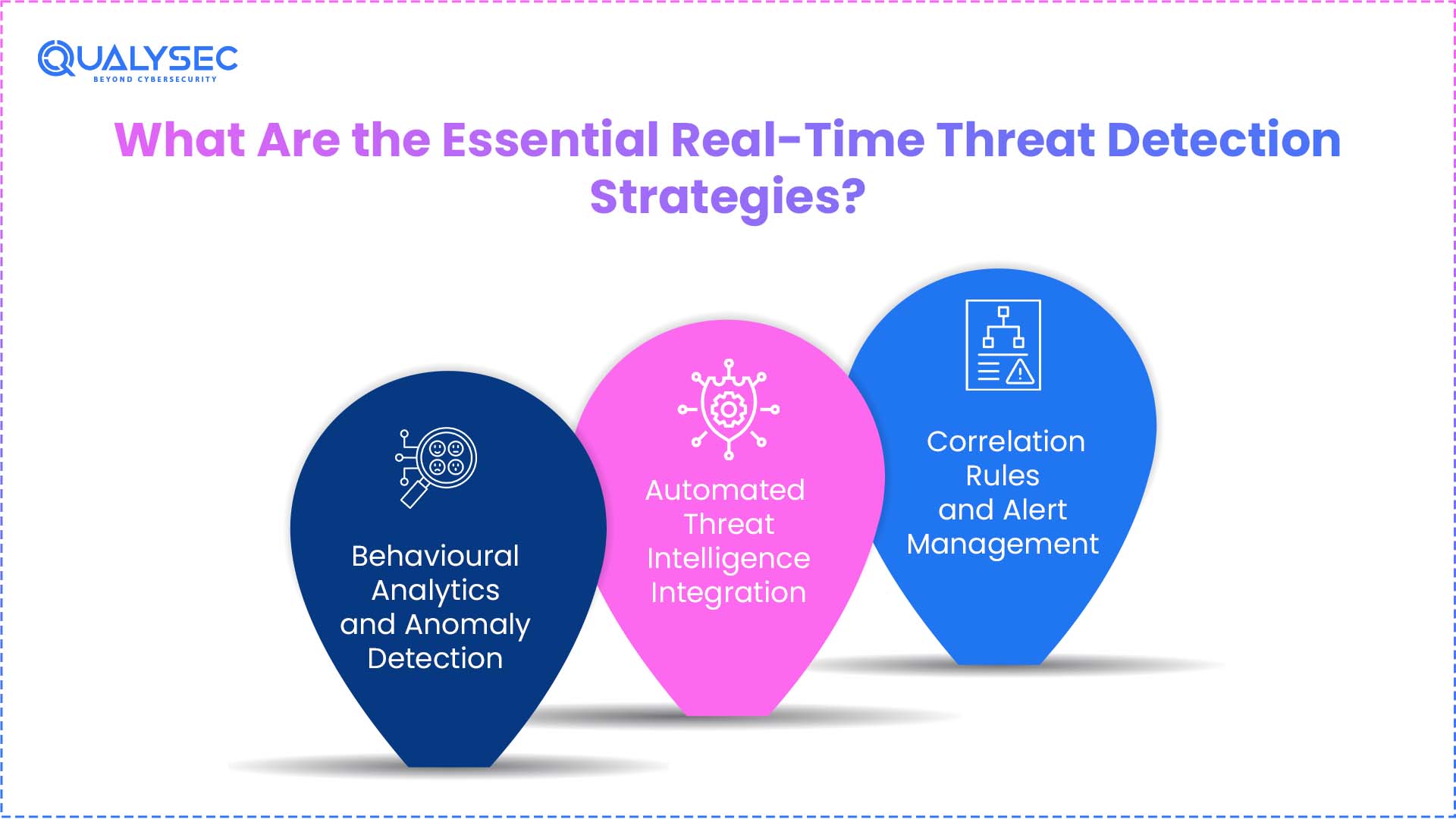
Real-time threat detection needs to be in real time and needs multiple layers. Companies are required to have holistic systems of monitoring. Also, they require automatic response features. The strategies must include all possible attack vectors. Moreover, these threats are bound to evolve, and they have to keep up with them.
1. Behavioural Analytics and Anomaly Detection
Cloud anomaly detection is based on baseline patterns of behaviour. The system is capable of learning normal activities as time goes by. Then it finds differences in such patterns. It also raises red flags whenever there is abnormal access. Hence, security personnel can be able to probe into suspicious activity at an early stage.
UEBA improves user and entity behaviour analytics. It keeps track of user activities and system activities. In addition, it identifies minute indicators of attacks well. The technology identifies low-and-slow attacks that are not identified by other technologies. Therefore, organizations are able to detect advanced threats in time.
2. Automated Threat Intelligence Integration
Cloud SIEM solutions use Global threat intelligence feeds. They are continuously updated on the new attack vectors. Also, they compare these indicators with the internal activities. The system relates external threats and internal events. Thus, companies will remain safeguarded against recent attacks.
Automation saves security teams a lot of time in responding. The site automatically completes a preset of measures in case of any threat. In addition, it seals vulnerable systems to avoid contagion. Then, the work of human analysts can be concentrated on complicated investigations. In this way, organisations will be able to use their security resources to the max.
3. Correlation Rules and Alert Management
Security event monitoring relies on complex correlation rules. Such rules bind associated events to more than one source. Also, they lessen the alert noise to a considerable extent. The system has a ranking of alerts according to the level of risk. Moreover, it gives a background for quicker research.
An efficient alert management system avoids burnout and fatigue in the analysts. False positives are filtered on the platform by advanced algorithms. Further, it consolidates similar alerts in one incident. Security teams are then able to manage fewer but more critical alerts. As such, their levels of performance are high.
What Should Organisations Monitor in Cloud Environments?
Comprehensive cloud security monitoring covers multiple critical areas. Organisations must track user activities continuously. Additionally, they should monitor network traffic patterns closely. The monitoring scope includes applications and data access. Furthermore, it extends to configuration changes and compliance status.
Critical Monitoring Areas
Focuses on several essential components. First, it tracks user authentication and authorisation events. Then, it monitors data access and transfer activities. Additionally, it watches for unauthorised configuration changes. Moreover, it detects malware and suspicious file activities.
- Network traffic and connection patterns
- API calls and access requests
- File integrity and changes
- Privileged user activities
- Cloud resource configurations
- Third-party application access
Data Sources for Effective Monitoring
Log aggregation cloud systems collect data from multiple sources. They gather information from cloud service providers directly. Additionally, they ingest logs from applications and databases. The platform processes network device logs continuously. Furthermore, it monitors endpoint security events comprehensively.
Cloud platforms like AWS, Azure, and Google Cloud generate extensive logs. These logs contain valuable security information constantly. Moreover, SaaS applications produce important event data. Therefore, organisations must integrate all these sources. Subsequently, they achieve complete visibility across their environment.
Compliance and Regulatory Monitoring
Security event monitoring supports compliance requirements effectively. It tracks activities required by various regulations. Additionally, it generates audit reports automatically. The system maintains detailed records of all events. Furthermore, it proves cloud security compliance during audits easily.
Global regulations like GDPR require strict data protection measures. Moreover, industries have specific compliance standards to meet. Therefore, Cloud SIEM solutions include pre-built compliance templates. They map security events to regulatory requirements automatically. Consequently, organisations demonstrate compliance efficiently.
How Can Organisations Implement Effective Cloud Security Monitoring?
The introduction of cloud security monitoring has to be properly planned and carried out. The first step in organisations should be to establish clear security objectives. They should also determine their security posture. There are several steps and participants in the implementation process. More so, it needs continuous optimisation and enhancement.
Planning and Preparation Phase
Organisations need to recognise important data and assets. Then, they should identify some compliance requirements. Also, they are to evaluate the current security tools. The planning stage involves resource allocation and budget allocation. Successful implementation is therefore provided by good preparation.
Cloud SIEM solutions have certain technical requirements. Organisations require sufficient network bandwidth for their data transmission. In addition, they ought to have competent security guards. The infrastructure should be able to integrate with the existing systems. Then, it is possible to successfully conduct the deployment with the help of proper planning.
Integration and Configuration Steps
Real-time threat detection depends on proper system integration. The first thing that organisations should do is to link all the pertinent sources of data. Also, they are supposed to set the rules of correlation in place. The process of setup consists of the custom dashboards and reports. In addition, it also entails the testing of alert mechanisms in detail.
- Connect cloud platforms and applications
- Configure log collection and forwarding
- Define correlation rules and thresholds
- Create user roles and access controls
- Set up alert notifications and workflows
- Test detection capabilities extensively
Continuous Optimisation and Improvement
Cloud security monitoring should be maintained and tuned. Organisations ought to check the effectiveness of alerts on a regular basis. Moreover, they will need to update correlation rules regularly. Training security team members is part of the process of optimisation. Besides, it entails the continuous adoption of new detection methods.
Machine learning algorithms are beneficial in cloud anomaly detection. Such systems are continuously learning as they take new data. Thus, the accuracy of detection improves automatically with time. Moreover, security incident responses should be included in the organisation. In turn, the latter increase their surveillance powers.
Why Is Qualysec the Best Company for Cloud Security Monitoring and SIEM Solutions?
The selection of the appropriate security partner is key to achieving success. Qualysec is one of the leaders in the field of offering full-scale security services. The firm deals with the monitoring of cloud security and SIEM. Furthermore, Qualysec provides differentiated solutions to organisations across the world.
Qualysec’s Comprehensive Security Services
Qualysec provides end-to-end Cloud SIEM solutions to the enterprises of the modern world. The company offers the services of professional consultation and implementation. Also, Qualysec is performing due-level security testing and audits. They have a group of trained security specialists who are highly experienced. More so, they provide continuing support and maintenance services.
Location and Global Reach: Qualysec has clients in the USA and worldwide. The company has a good presence in major business centres. Also, they offer remote assistance to customers across the globe.
Key Services Offered:
- Implementation and design of cloud security architecture.
- Implementation and configuration of SIEM.
- Incident response and real-time threat monitoring.
- Security compliance audit and reporting.
- Vulnerability tests and penetration testing.
- Security awareness training programs.
Why Choose Qualysec for Your Security Needs
Qualysec is a company that has experience in cloud security monitoring implementations. The company has managed to implement solutions for many organisations. Besides, they know security needs in the industry in and out. They are a mix of technicality and business knowledge. As such, customers get solutions to actual security problems.
Qualysec has its staff that is abreast with the current trends in security. They constantly upgrade their skills and expertise. In addition, they make use of advanced technologies and practices. Thereafter, the clients enjoy high-level security measures. Therefore, Qualysec assists the organisations to be ahead of the changing threats.
Unique Value Propositions:
- Solutions that are customised to meet business-specific requirements.
- 24/7 security surveillance and incident response.
- Regulatory knowledge in various regulatory markets.
- Open reporting and communication during engagements.
- Attractive prices and adaptable interaction models.
- Continuous improvement and postimplementation support.
The client-based practice of Qualysec makes guarantees of successful results. The company collaborates with in-house organisations in execution. They also offer a thorough knowledge transfer and training. Their solutions are compatible with the current infrastructure. In addition, Qualysec has long-term relationships with the clients.
Ready to strengthen your cloud security posture? Contact Qualysec today for a free consultation. Their experts will assess your needs and recommend appropriate solutions. Moreover, a penetration testing report highlights vulnerabilities. Take the first step toward comprehensive cloud security monitoring now!
Advanced Threat Detection Technologies and Approaches
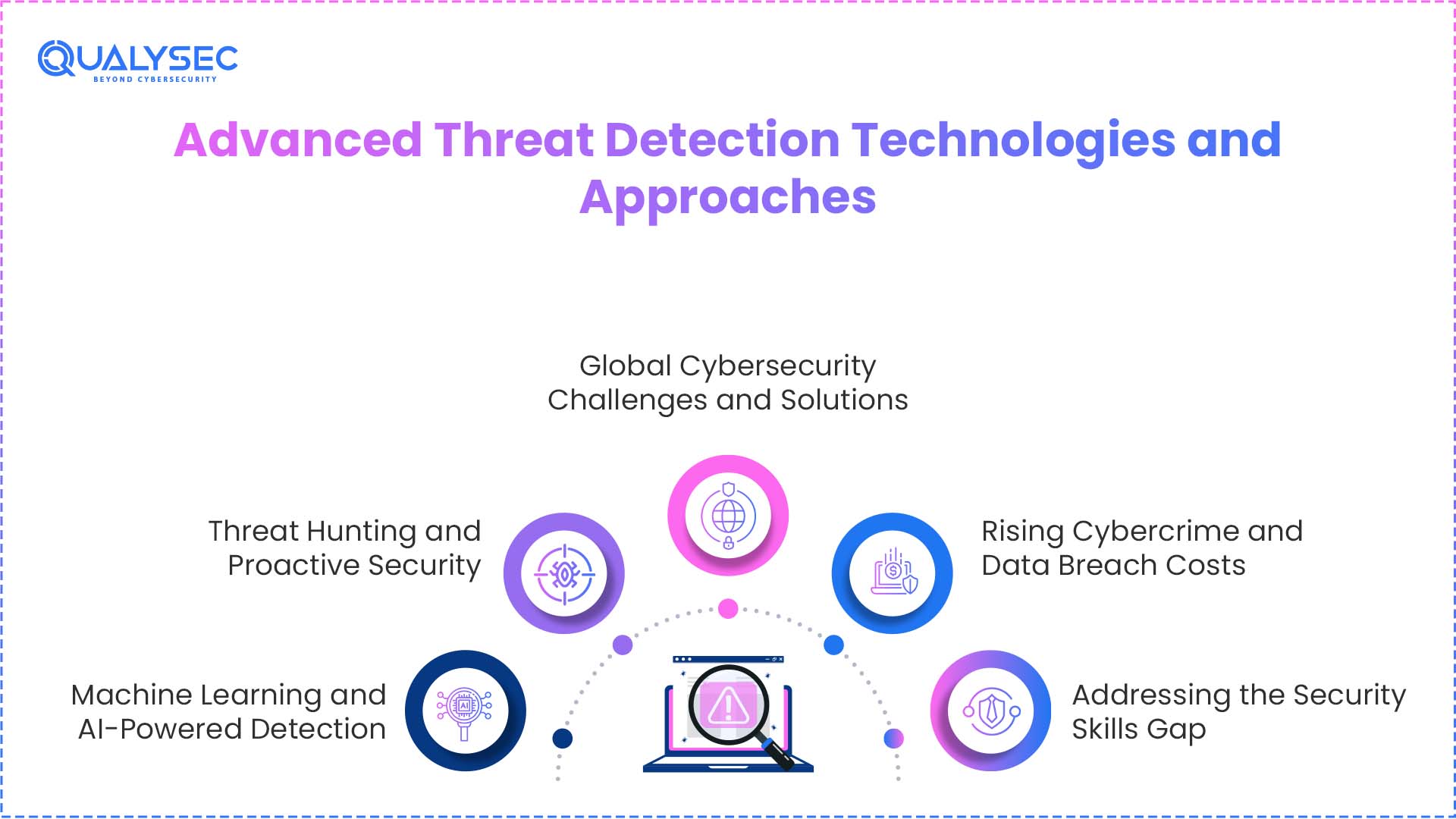
Modern Cloud SIEM solutions incorporate artificial intelligence extensively. These systems use machine learning for pattern recognition. Additionally, they employ advanced analytics for threat hunting. The technologies process massive datasets efficiently and accurately. Therefore, organisations detect sophisticated attacks more reliably.
1. Machine Learning and AI-Powered Detection
AI is highly useful in cloud anomaly detection. Machine learning detects threat indicators that are subtle automatically. In addition, they minimise false positives by the use of smart filtering. The system enhances the accuracy of detection in the long run. After that, the teams of security become more efficient than before.
Threat detection is an AI-driven scaling behaviour analysis. It analyses the millions of occurrences at once. It also identifies attack patterns in the distributed environments. The technology associates apparently disparate events successfully. Thus, complex multi-stage attacks are identified at an earlier stage in organisations.
2. Threat Hunting and Proactive Security
Activities of threat hunting that are proactive complement security event monitoring services significantly. Security analysts aggressively seek to uncover disguised threats. They also research suspicious activities in advance of warning bells being sounded. The method reveals the attacks that cannot be detected by automated systems. Moreover, it enhances the general security stance to a great extent.
Cloud SIEM solutions have effective threat hunting facilities. They have robust search and query functions. In addition, the way they visualise data is in more meaningful ways. The platforms embrace hypothesis-based research methods. Thus, it means that threats are found more quickly and effectively by analysts.
3. Global Cybersecurity Challenges and Solutions
Cyber threats are increasing in every organisation around the world. The sophistication of attacks is on the rise to disastrous levels. Also, threat actors employ sophisticated methods in an unending fashion. These problems are aggravated by the cybersecurity skills gap around the globe. Hence, automated monitoring of cloud security services is even more important.
4. Rising Cybercrime and Data Breach Costs
The cost of cybercrime is the loss of billions of dollars by businesses in all sectors. Breach of data causes very serious financial and reputational losses. Additionally, penalties in case of security failures are on the rise. As such, companies need to spend on effective security. The cloud SIEM systems will reduce these risks.
The cybersecurity situation in the world requires vigilance and adaptation. Hackers go on internationally without any restrictions. They also take advantage of cloud environment weaknesses ruthlessly. Comprehensive protection plans are therefore required in the organisations. Therefore, the key defence mechanism.
5. Addressing the Security Skills Gap
Millions of cybersecurity positions remain unfilled globally currently. This shortage creates significant operational challenges for organisations. Moreover, existing security teams face overwhelming workloads continuously. Therefore, automation through Cloud SIEM solutions becomes necessary. It amplifies human capabilities and reduces the burden substantially.
The amount of manual work is reduced by security event monitoring platforms. They are used to automate regular tasks and processes of analysis. Also, they give the alerts to the analyst. The systems offer the background that speeds up investigation processes. In its turn, the wider environment can be handled by smaller teams.
Take action today to secure your cloud environment! Contact Qualysec for comprehensive security assessment and implementation services. Their experts deliver customised solutions that address your specific needs. Don’t wait until a breach occurs – implement robust now!
Conclusion
The current organisations require cloud security monitoring and SIEM solutions. Their usage offers full visibility of cloud environments on a real-time basis. Moreover, they provide fast threat detection and response services. Companies that install such solutions minimise the risk to security. In addition, they are more in line with the regulatory requirements.
The threat context is changing at a rate that the world has never experienced before. Thus, enterprises are obliged to take up hi-tech security technologies. Cloud SIEM systems have scalable and adaptable security systems. They incorporate various security functionalities into integrated systems. As a result, organisations are able to counter the advanced attacks.
The implementation must be done with proper planning and professional advice to be successful. Companies are supposed to collaborate with reputable cloud security vendors, such as Qualysec. Also, they should be dedicated to optimising and improving. The expenses on cloud security surveillance are really worth it. Besides, it safeguards important business resources and
Schedule a consultation with Qualysec experts to assess your security needs. Their team will help you implement effective solutions. Visit Qualysec now to learn how they protect organisations globally!




































































0 Comments