






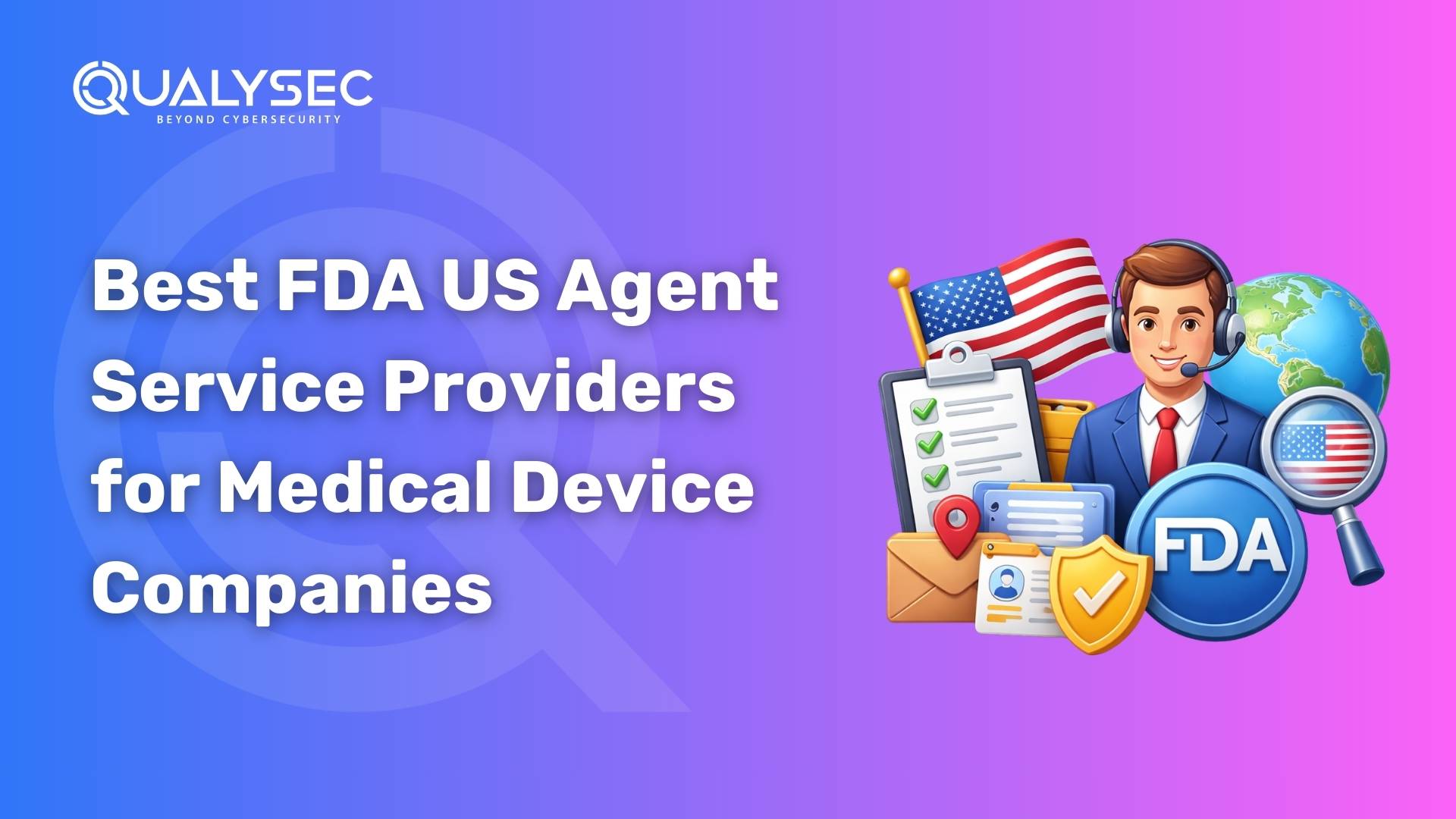
Innovative technology is not all one needs to enter the U.S. medical device market in 2026. It would require stiff regulatory alignment with the U.S. Food and Drug Administration. In the case of non-U.S. manufacturers, a stable FDA US Agent cannot be appointed as an option. It is a compulsory compliance provision and an important provision for approvals, imports and post-market activities.
With the FDA regulation also on the rise, especially of related medical devices and Software as a Medical Device (SaMD), the FDA US Agent services have evolved to be more than just a matter of mere communication. A competent FDA US Agent today assists manufacturers to overcome regulatory investigations, address compliance challenges, and address emerging risks, e.g. cybersecurity vulnerabilities and post-market surveillance requirements.
This guide is based on the most superior FDA US Agent service providers in 2026. It answers the question of what medical device and SaMD companies should consider and why the choice of FDA US Agents directly influences the success of approval, and how the changing FDA US Agent needs are influencing regulatory strategies in the United States.
What Is an FDA U.S. Agent?
The FDA U.S. Agent is an individual or organization in the U.S., officially appointed by a medical device manufacturer in a foreign country to act on its behalf in liaisons with the U.S. Food and Drug Administration.
The rules of the FDA mandate that any non-U.S. manufacturer of medical devices appoint a U.S. Agent during their establishment registration and device listing procedure. The FDA does not have an FDA U.S. Agent, and therefore, a foreign manufacturer is prohibited from placing medical devices or Software as a Medical Device (SaMD) on the U.S. market.
The U.S. Agent of FDA is the main regulatory contact of the FDA. This position will make sure that the agency is capable of rapidly and consistently reporting to the manufacturer on compliance inquiries, inspections, safety concerns, or enforcement measures.
Regulatory-wise, FDA U.S. Agent is not the distributor or legal owner of the device. Rather, the agent acts as a regulatory liaison agent which facilitates the timely communication, regulatory transparency and compliance with FDA requirements in the lifecycle of the product.
In the case of firms that provide FDA US Agent of medical devices or FDA US Agent of SaMD, this role plays a crucial role because of the heightened FDA attention to software updates, post-market monitoring, and those related to cybersecurity.
Key Responsibilities of an FDA U.S. Agent
An FDA U.S. Agent is in the heart of the line of communication between the foreign manufacturers of medical devices and the U.S. Food and Drug Administration. Although the agent does not become a legal owner of the device, its functions are paramount to its fitness and continued access to the market.
The functions of the Core FDA U.S. Agent are:
- As the point of contact with regulatory inquiries and notifications at the FDA.
- Helping in registering the establishment and renewing it on a yearly basis.
- Listing activities and updates of supporting devices.
- Getting FDA inspection notices, warning letters, and regulatory letters.
- Organizing the response to FDA requests for information or corrective measures.
- Contributing to communication in the context of the recalls, adverse events review, and safety alerts.
- Helping with FDA queries and compliance matters that are related to imports.
In the case of companies that offer FDA US Agent to medical equipment and FDA US Agent to SaMD, these duties are becoming more associated with software-related control. It can be communication on post-market surveillance, disclosure of vulnerabilities and expectations on security updates.
An FDA U.S. Agent will make sure that all important FDA communication is not overlooked and the response is timely, precise and in tandem with the existing FDA expectations.
Also Read: What Is an FDA Agent? Role, Requirements, and Why You Need One
Why FDA U.S. Agent Selection Matters for Approval Success
The selection of FDA US Agent directly affects the efficiency of a medical device company in the process of FDA approval, entering the U.S. market, and compliance over the long term. Although the appointment of an agent is a regulatory prerequisite, the success of FDA US Agent services is largely based on the experience, responsiveness and regulatory knowledge of the agent.
Impact on premarket review timelines
During premarket submissions such as 510(k), De Novo, or PMA, the U.S. Food and Drug Administration may request:
- Explanations on the documentation submitted.
- Other technical or regulatory data.
- This is by way of formal follow-up responses in stipulated timeframes.
A qualified FDA US Agent for medical devices ensures these requests are:
- Received without delay
- Obviously perceived in regulation.
- Reported effectively to the manufacturer.
- Discussed in FDA timetables to prevent delays in reviews.
Learn more: FDA 510(k) Compliance
Influence on import and clearance outcomes
The selection of FDA U.S. Agents also influences the ease with which the products pass U.S. ports of entry. In the case of FDA queries in the review of importation:
- Fast resolution can be coordinated by an agent of the FDA who is responsive.
- Understanding of the FDA import process decreases clearance time.
- Shipment holds, refusals, or prolonged delays may occur as a result of poor responsiveness or lack of regulation.
This necessitates the unbroken access to the market by reliable FDA US Agent services.
Read also: What is FDA 510(k) Clearance? A Complete Guide
Role in ongoing compliance and regulatory trust
With medical devices and FDA US Agent to SaMD manufacturers, success in the approval is not limited to its first clearance. The follow-up demand is enforced by:
- Constant regulatory repetition.
- Post-market review support.
- Stability in FDA relations with time.
A good FDA US Agent will assist in proving that the manufacturer is a dependable and responsible U.S. regulatory figure.
Strategic importance in 2026 and beyond
FDA is paying more attention to:
- Software functionality and updates.
- Real-world performance data
- Monitoring and corrective measures after marketing.
The choice of the FDA US Agent in this environment has not become an administrative formality anymore. It is a tactical move which has direct impacts on timelines of approvals, continuity in the market and long term regulatory trust.
Read our guide on Medical Device Cybersecurity: The Importance in Healthcare
Criteria to Evaluate FDA U.S. Agent Service Providers (2026)
The capabilities and specialization of FDA U.S. Agents service providers are not always equal. Medical device and SaMD companies need to consider potential agents in 2026, based on practical performance factors, instead of price or simple availability, considering only one of them.
Regulatory depth and device focus
It is expected that an effective FDA U.S. Agent will be a person who has hands-on experience in the rules regarding medical devices and understands how the U.S. Food and Drug Administration works in real-life situations. Given that the regulatory interactions are nuanced, providers that support device manufacturers regularly are in a better position to deal with them.
SaMD and digital health readiness
In the cases of companies that sell software or connective products, it is also necessary to measure whether the FDA U.S. Agent is familiar with the SaMD lifecycles, software change management and digital health oversight. This is becoming more essential because the FDA inspection of software performance and updates is constantly increasing.
Communication reliability and availability
FDA dealings are usually characterized by rigid schedules. A competent FDA U.S. Agent is supposed to provide specified response time, well-defined lines of escalation and constant availability within U.S. business hours. Slow or interfered communication may pose compliance risks very quickly.
Inspection and enforcement support experience
Although the FDA U.S. Agent does not carry out inspections, experience of FDA inspections, enforcement correspondence, and compliance follow-ups are some of the good signs of agent maturity. With this kind of background, the providers can respond better in terms of organizing and correcting the responses.
Data security and confidentiality controls
FDA messages often contain regulatory and technically sensitive information. By 2026, manufacturers are encouraged to assess their FDA U.S. Agent to have robust data protection practices, particularly in connection with SaMD documentation or communications about cybersecurity.
Transparency of service scope
Clearly defined roles, written service limits and contracts ensure that there are no loopholes in cases of regulatory incidents. A good FDA U.S. Agent must explain clearly what is contained in his/her services as an FDA U.S. Agent and what needs further assistance.
When the FDA U.S. Agent providers are assessed in terms of these requirements, medical device companies will decrease the level of uncertainty about compliance and choose a partner that can help sustain not only the regulation but also the market position over the long term.
Must Read: A Complete Guide to FDA Postmarket Cybersecurity Guidance for Medical Devices (2026 Update)
Leading FDA U.S. Agent Service Providers to Consider in 2026
The menu of organizations that provide FDA U.S. Agent services in 2026 has different strengths, models of services, and focuses. Instead of releasing a single size fits all ranking, it would be more feasible that the medical device companies should be aware of the principal categories of providers and where each would fit best.
FDA regulatory consulting firms
FDA U.S. Agent is frequently offered as a subset of a compliance offering by established regulatory consulting firms. These vendors are normally best suited to manufacturers that have a complex portfolio of devices, multiple submissions or more sophisticated regulatory routes. They are strong in alignment of regulatory strategies and experience of various interactions with FDA.
Specialized FDA U.S. Agent service providers
Some companies are majorly involved in FDA U.S. Agent, establishment registration and device listing services. Such providers are usually cost-effective and efficient in their operations and therefore would be appropriate in case of start-ups or manufacturers with stable regulatory situations and minimal submission activities.
Quality and compliance service providers
FDA U.S. Agents can also be organizations that provide support of quality management systems. The model is effective when the manufacturer wants to align the FDA communications with the internal quality processes (especially when audits, corrective measures, or post-market compliance reviews are to be conducted).
Cybersecurity and SaMD-focused firms
The new breed of FDA U.S. Agents providers has come up with the expansion of interconnected devices and Software as a Medical Device. These companies are a combination of FDA communications support, cybersecurity, software risk, and post-market monitoring knowledge. This is becoming more and more applicable to SaMD and digitally enabled medical devices in 2026.
In considering the top U.S. Agent service providers of the FDA, manufacturers must not just consider brand recognition. The best provider is one that has the best expertise, responsiveness, and technical knowledge based on the type of devices, regulatory maturity and risk profile of the firm.
Explore: Top Medical Device Cybersecurity Companies for FDA Compliance
How Qualysec Supports FDA U.S. Agent Services
Qualysec offers FDA U.S. Agent services to medical device and SaMD firms in an environment that is becoming more complex in regulatory and security matters. It is concerned with systematic implementation, technical focus, and regulatory preparedness and not with a simple message relay.
Key areas where Qualysec adds value include:
Centralized FDA communication management
- Serves as a U.S. one-stop FDA correspondence.
- Monitors and coordinates FDA communications to prevent delays or incomplete responses.
- Guarantees that regulatory messages are effectively translated into activities of internal teams.
Alignment with software and SaMD operations
- Covers FDA relations related to software upgrades, functional modifications and system adjustments.
- Helps arrange the proper reaction to questions by FDA when questions of application behaviour or system architecture are at stake.
- Lessens the chances of irregular or incomplete regulatory communication of SaMD products.
Cybersecurity aware regulatory support
- Knows the overlap between FDA cybersecurity expectations and FDA U.S. Agent responsibilities.
- Aids in communication about vulnerability disclosures, remediation schedules, and security patches.
- In cybersecurity-related FDA investigations, manufacturers help provide structured and risk-based responses.
Post-market and lifecycle-focused support
- Supports the FDA communications associated with post-market surveillance.
- Facilitates regulatory correspondence in respect to adverse events, field actions and corrective measures.
- Ensures continuity in the FDA interactions during the product lifecycle.
Secure handling of regulatory information
- Imposes high levels of confidentiality and data protection of sensitive technical documentation.
- Supports manufacturers dealing with controlled data, software objects and security-related documents.
Through a fusion of FDA U.S. Agent services, cybersecurity, and technical awareness, Qualysec assists medical device and SaMD manufacturers to achieve a high level of regulatory credibility, diminish the burden of compliance, and remain ready to meet future FDA expectations in 2026 and beyond.
Secure your FDA compliance today with Qualysec.
FDA U.S. Agent + Cybersecurity: Why It Matters Now
FDA regulations of medical devices and Software as a Medical Device have incorporated cybersecurity in 2026. The move has a direct influence on the delivery of FDA U.S. Agent services and the necessity of cybersecurity awareness as a mandatory rather than optional activity.
The U.S. Food and Drug Administration is progressively considering the safety of devices in terms of software resiliency, data security, and real-world security performance. Consequently, FDA messages will incorporate more technical and security-related issues that need to be addressed with some form of knowledge.
Some of the reasons why cybersecurity is important to the FDA U.S. Agent services encompass:
Increased focus on software vulnerabilities
The FDA investigations can cover familiar weaknesses, the third party elements, or documented security flaws. An FDA U.S. Agent should be aware of the impact of these problems on the regulatory risk and response timelines.
Post-market security monitoring expectations
In regard to connected devices and SaMD, the FDA anticipates manufacturers to monitor, evaluate, and address cybersecurity risks once in the market. The communication of FDA can be based on continuous monitoring activities instead of a single evaluation.
Coordination during security incidents
In case of cybersecurity events, the FDA communication tends to operate in parallel with technical remediation. An FDA U.S. Agent who is cybersecurity conscious assists in making sure that regulatory responses are correct, timely, and in line with technical responses.
Alignment with software change management
Regulatory questions can be raised as a result of security patches and updates. The FDA U.S. Agent services are now faced with the realization of software modification effects on compliance, documentation, and regulatory obligations.
Regulatory trust and credibility
Technically good and clear answers to cybersecurity-related FDA questions contribute to showing maturity and accountability. This enhances the trust in long term regulation and diminishes the chances of heightened enforcement practices.
With the further progress of medical devices being software-based, connected to a cloud infrastructure, and interconnected, cybersecurity is now something that cannot be discussed without regulatory compliance. In such a setting, FDA U.S. Agent services, which are not in the context of cybersecurity, pose unnecessary risk. Conversely, agents aware of regulatory communication and security concerns assist the manufacturers to be compliant, credible and resilient in the U.S. market.
Qualysec makes FDA communications seamless. Talk to an expert today.
Conclusion
In 2026, the selection of the appropriate FDA U.S. Agent is not only a regulatory technique but also a strategic necessity. In the case of non-U.S. medical device and SaMD manufacturers, the agent has a direct impact on the approval timelines, import clearance, post market compliance and long term credibility of regulatory authorities.
With more FDA oversight with regard to software functionality, cybersecurity and real-world performance, FDA U.S. Agent services cannot be confined to mere communication. Manufacturers are advised to consider agents in terms of regulatory experience, SaMD preparedness, responsiveness and data security practices alongside capacity to facilitate inspections and post market activity.
An ideal FDA U.S. Agent must be the one who meets the complexity of the products the manufacturer deals with, the level of risk, and the objectives of the U.S. market. An agent possessing the ability to be proactive and prophetic in actions assists in minimizing compliance risk, regulatory postponements and stable FDA interaction.
The choice of FDA U.S. Agent in 2026 will enhance facilitation of approvals, continuity of access to the market and the strengthening of regulatory trust within the entire lifecycle of the product.
Qualysec helps manufacturers achieve this confidence by combining FDA U.S. Agent services with cybersecurity-aware, lifecycle-focused regulatory support.
Talk to a Qualysec expert today to secure your U.S. market access.
FAQs
Q: Can a consultant act as an FDA U.S. Agent?
A: Yes. An FDA US Agent may be a consultant as long as he or she is physically present in the United States and is officially designated when registering the establishment. The US Food and Drug Administration permits consultants, regulatory organizations, and service providers to provide FDA US Agent services, as long as they are authorized to receive and respond to communications by the FDA. When choosing a consultant to be your US FDA Agent, one must ensure that the consultant is available, responsive, and experienced in the US FDA requirements of the US FDA Agent.
Q: Is the U.S. Agent required for SaMD companies?
A: Yes. Software as a Medical device companies which are not located in the United States require a U.S. Agent. To meet the requirements of the FDA registration and listing, the manufacturers of Foreign SaMD are required to appoint an FDA US Agent for SaMD. In the U.S., SaMD companies may not legally sell and distribute their software products without an appointed FDA US Agent.
Q: How long does an FDA U.S. Agent appointment last?
A: There is no specified end date of an FDA US Agent appointment. It is effective until the parties terminate the relationship and affirm it during the annual FDA establishment registration renewal. In case a manufacturer transfers to a new FDA US Agent, the shift should indicate the change as soon as possible to maintain the non-stop adherence to the FDA US Agent requirements.
Q: What happens if the FDA cannot reach your U.S. Agent?
A: In case the FDA US Agent is not accessible, the FDA may postpone communication, or the company may not receive it. This may affect the FDA US Agent services in terms of submissions, inspections or imports. In other instances, failure to access the FDA US Agent of medical devices or SaMD may create compliance problems, delays in shipments or heightened regulatory interest. Effective FDA US Agent services, therefore, involve a lot of reliable communication.







































































































0 Comments