








In 2025, global IT infrastructure security acquires greater significance. According to Cybersecurity Ventures, cybercrime will have reached an annual cost of 13.82 trillion by 2028 (an increase of 9.8% compared to 9.2 trillion in 2024). This poses a massive threat to business and finances. In its projections, Gartner projects that in 2025, at least 92 percent of companies will experience at least one major cyber attack on their IT infrastructure.
According to IBM, in its 2025 X-Force Threat Intelligence Index, 48 percent of breaches of company networks are successful because of already existing gaps in IT infrastructure. Unpatched systems, chaotic cloud configuration, and ineffective controls surrounding identity are the largest issues. The cost of fixing an attack is 4.2 times greater than the cost of preventing an attack.
As there are increasing attacks, there are more ways to attack with more hybrid work and cloud usage. According to a survey of March 2025, 74% of IT leaders reported old infrastructure to be the largest security weakness. And 61 percent said that they are prevented by the weak monitoring of detecting the threat at an early stage. The statistics indicate that investing in active security is much less expensive than the cost of recuperation. To remain strong, your company should start to check cyber security and IT infrastructure protection now before the attackers discover the weak points.
Begin your tailor-made security test with Qualysec. Prevent the attack on your valuable systems!
What is Information Technology Infrastructure Security?
IT infrastructure security refers to the well-planned practice of safeguarding every single component of recent computing. That consists of networks, servers, data centers, cloud resources, IoT devices, and endpoints. It employs prevention, checking, and remedial measures.
In scope, this includes –
- Firewalls and Network configurations.
- Endpoint patching and server patching.
- Cloud workload protection
- Identity and access control.
- IT security and infrastructure, and encryption of PKI.
Good IT infrastructure defense combines various cyber security and IT infrastructure protection levels to block attacks before hackers can exploit any vulnerabilities.
Discover How Infrastructure Security Assessment Protects Your IT Systems.
Why is it Important to know the Weak Points at Earlier Stages?
- ROI Benefit – The companies that conduct proactive checks are saving 74 percent of the breach costs compared to an after-attack repair.
- Operational Assurance – Downtime prevention ensures the business operates well.
- Brand Trust – Customer confidence and market share are damaged due to Public breaches.
- Compliance – The regulation on the global (GDPR, HIPAA, CCPA) has high fines for poor security and protection.
As the cybercrime market is expected to have more impact than most economies across the globe, IT infrastructure security is now a case of acting early rather than an optional upgrade.
IT Infrastructure Weaknesses
Hacking patterns continue to evolve, but attackers still exploit the same common weak points.
- Unprotected Software and Old Systems – 41% of world exploits are apps and OSes that are out of date
- Poorly set Firewalls and Access Controls – Incorrect rule sets provide holes in network separation
- Insider Threats and Human Error – 35 percent of incidents are caused by the mistakes of the employees, coming under threats to IT infrastructure.
- Cloud Security Misconfiguration – The misconfigured storage buckets and permissions lead to nearly a quarter of the large breaches.
Learn the Importance and Best Practices of Cloud Infrastructure Security.
Actions to Find Weaknesses in Your Infrastructure
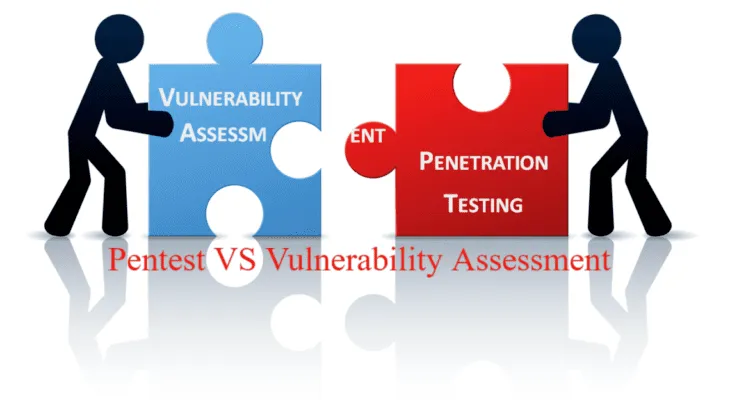
- Periodic Vulnerability Assessment and Penetration Test – Implement detailed scans and simulated attacks every quarter to identify weak spots that are not observed.
- Monitoring & Logging Systems – Logs should be scrutinized at all times to identify suspicious activity before it can do any harm.
- Risk Assessment Framework – Rank vulnerabilities according to the accepted framework, depending on their riskiness.
- Employee Security Awareness Training – Educate the employees about the fundamentals of phishing and safe practices in IT infrastructure security. The errors can be reduced to 60 percent through training.
Best Plans to Resolve IT Weaknesses in Infrastructures
You must take proactive, scheduled action—combining both technology and people—to repair weak aspects. The fixes made should be reactive, and companies need to continue enhancing every component of their systems.
1. Patching and System Upgrades
The most risky one is unpatched systems, a threat to the IT infrastructure. Install automatic patch applications, which automatically update and install. An effective update plan ensures that the operating systems and third-party software receive updates promptly and eliminates holes before hackers can exploit them.
2. Zero Trust Implementation and Network Segmentation
Divide your IT into different areas. Rules and monitoring are customized in every zone to prevent the mobility of attackers. Zero Trust implies the verification of users and devices on a regular basis, without blindly trusting. These cooperate to protect IT.
3. Disaster Recovery Planning Backup
Good backup and recovery plans ensure that your business does not go down whenever you encounter a ransom attempt or failures. Backups should be encrypted, tested frequently, and stored in safe places in more than one location. Urban practice recovery plans to ensure that you can recover within a short period of time and maintain low downtimes. What makes weaknesses strong points is strategic healing.
4. Sustainable Security Supervision and Reaction to Incidents
SIEM tools identify early warnings on a real-time basis. Detection of suspicious behavior using AI. Stable incident plan with well well-defined action plan, escalation, and communication. Incidents that are met with fast and informed decisions minimize damage.
5. Cultural Awareness and Employee Security Training
Approximately 60% of the breaches are caused by individuals. Every training forms a security culture that assists personnel in identifying phishing, suspicious activities, and dangerous practices. A highly educated workforce provides a good line of defence.
Learn Why Infrastructure Penetration Testing Matters and How It Protects You.
Get a Sample Pen Testing Report
The Way Qualysec Technologies Helps in Infrastructure Security
About
Qualysec Technologies offers the best security testing. Our process is proven, detailed, and ensures that no weakness is overlooked.
Services
Penetration testing, vulnerability testing, cloud security audit testing, compliance security audit, and training.
Special Mentions
Our process-based testing consistently delivers measurable fixes and proves its effectiveness every time.
IT security and infrastructure are not a checklist at Qualysec Technologies. We begin with a written plan where the results are checked at each stage of the process, starting with the information collection and ending with the attack and recommendations of corrective measures. Our tested model of process-based testing guarantees that –
- All elements of your IT, like networks, cloud work, servers, IoT, and endpoints, are researched in detail.
- We identify weaknesses and prioritize them in the real world in terms of risks.
- We rigorously test your systems of encryption and logging in.
- When you use attacks, we test them on real usage to ensure that they do not cause downtime.
- There are instant fixes for our clients, and we also do long-term protection. As we can test both internally and externally, we are well-positioned to identify new threats.
- We ensure all your IT is secure, inspecting both cloud misconfigurations and insider threats. We do not have a singular scan but continue to test, correct, and test until we become completely compliant and strong.
- We combine training employees and technical repairs in a way that we do not lose anything, be it people or software.
Contact Qualysec to work with them today to build a stronger aspect of your IT before the attackers exploit it!
Conclusion
IT infrastructure security is not only a tech requirement to make your IT security strong, but a survival plan in business. Violations damage finances, confidence, and regulations, and attackers are becoming sharper. Test, fix, and keep on testing, creating no loopholes so that attackers do not get through. It would be cheaper than repairing a breach in 2025 with the increased threat characteristics. The strength of your company is based on a reliable partner whose techniques have been tested. Qualysec provides that no-holds-barred testing to your special arrangement.
Protect your future – start with Qualysec and have a targeted plan of IT protection that suits your business!
Secure your IT infrastructure before attacks, talk to Qualysec experts now.

FAQs
1. What is the IT infrastructure security, and why is it necessary?
IT infrastructure security provides security over networks, servers, cloud systems, and devices against cyberattacks. It maintains the running of your business, protects confidential information, and complies with the legal regulations. Without it, the companies may lose money, cease functioning, and ruin their image. An excellent security program prevents issues before they can be exploited by malicious individuals.
2. How can I know the weak points in my IT infrastructure?
Look into weak points by conducting regular penetration tests, constant vulnerability assessments, and watchful logship. Rank the problems based on their severity of the problems with a concise risk framework. Combine those technical tests with staff education to reduce human error and identify both internal and external threats, and eliminate them before they multiply.
3. What are the vulnerabilities that are the most prevalent in IT infrastructure?
The weak points that are common include old operating systems, not up-to-date software, improperly configured firewalls, and excessive permissions. There are also cloud errors, such as open storage and poor PKI IT security – Public key infrastructure configurations, which occur frequently. Patches on these early versions decrease the possibility of attacks and ensure that your IT is secure.
4. What can I do to correct these loopholes?
Identify solutions to them, which include prioritizing risks, fixing quickly, and implementing a combination of strict access controls alongside a zero-trust model. Fix erroneous cloud setup, enhance encryption via robust PKI IT security – Public key infrastructure strategies, and maintain surveillance. Policies should also be checked regularly, and trained personnel to remain robust and vigilant.
5. What is the frequency of the vulnerability assessment of my IT infrastructure?
Periodically (at least once in five quarters), verify weaknesses and post a large system update, network modification, or new application introduction. Regular reviews maintain the changing threats. Combine them with live penetration tests in such a way that they can find problems and close them to ensure that resilience remains high.


























































































































0 Comments