






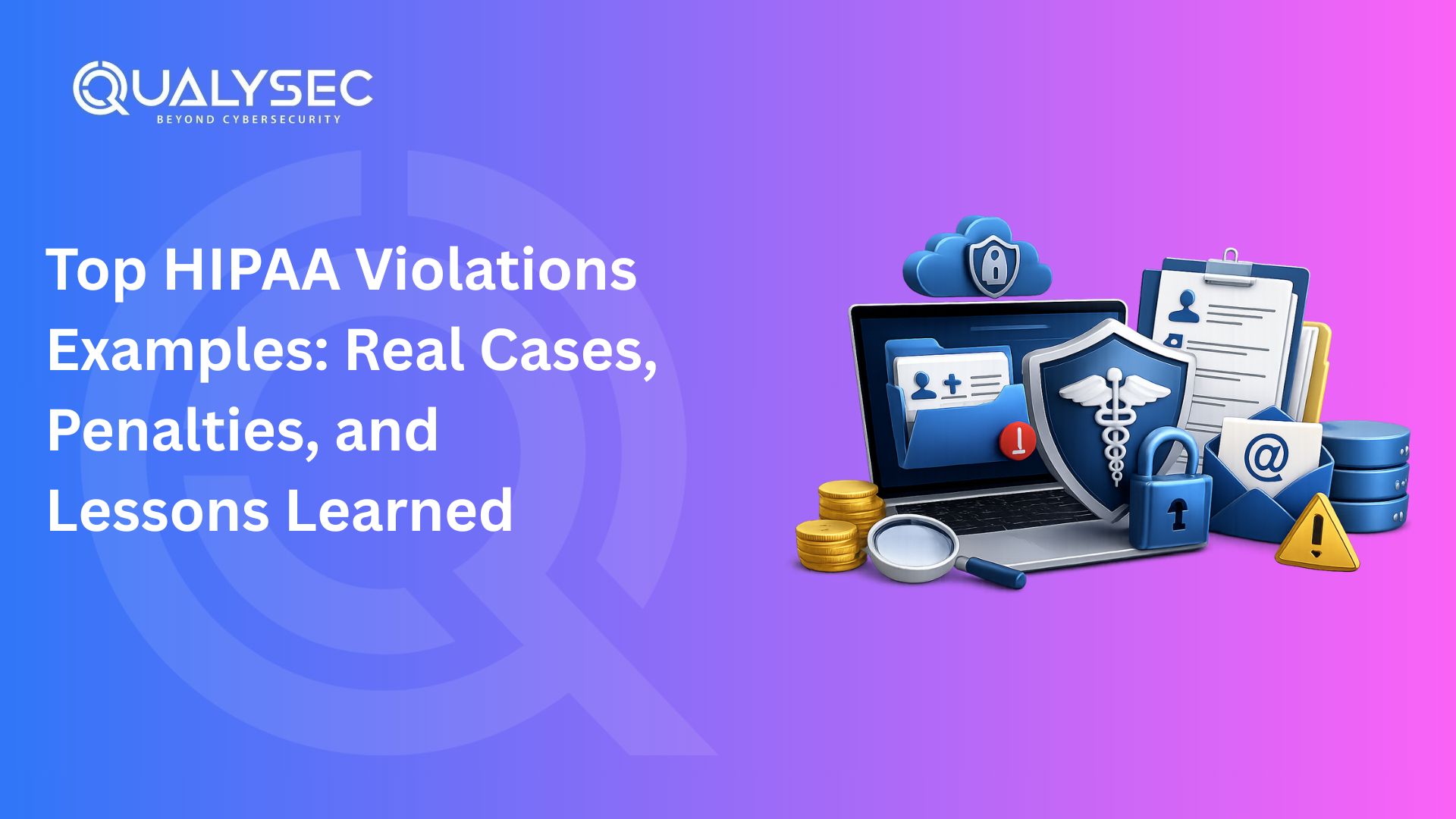
Cyber attacks are continuing to focus on one of the largest sectors – the healthcare industry, which accounted for nearly three-quarters of all reported hacking incidents when statistics were provided by the Department of Health and Human Services (HHS) in the first quarter of this year. More so, the Office for Civil Rights (OCR) indicates that the overall number of breaches has marginally decreased compared to the 2024 peak, but the exposure is more focused – a total of around 1.4 million people had their protected health information (PHI) accessed in January 2026 alone. HIPAA violations are now an example of patient confidence and stability of operation in a risky digital environment.
Real HIPAA Violation Cases, Penalties and Lessons Learned
HIPAA breaches are not limited to administrative errors. Most enforcement cases in 2026 are due to cybersecurity issues, inadequate risk management, inadequate internal controls by employees, or delayed responses to breaches. The Office for Civil Rights plans to take more action to ensure healthcare providers, insurers and business associates who do not handle protected health information properly are considered examples of HIPAA violations.
Here are some of the biggest HIPAA violation examples to show you how HIPAA compliance failures can turn into financial, legal and reputational nightmares in the real world.
1. Warby Parker, Inc. – Weak Access Controls and Risk Analysis Failures
There’s been a lot of talk about HIPAA enforcement actions lately, and one of those involved Warby Parker. A $1.5 million civil penalty was agreed upon due to deficiencies in the company’s security monitoring and lack of risk analysis procedures identified by OCR investigations.
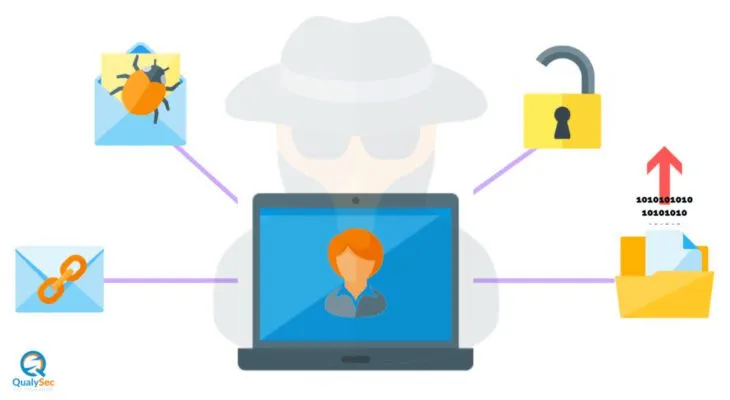
The hackers were able to compromise customer accounts through credential stuffing attacks with credentials stolen in unrelated data breaches. The attackers were able to gain access to electronic PHI stored within customer systems, which included health care-sensitive patient information related to prescription services.
What Went Wrong?
- Lack of an enterprise-wide comprehensive risk analysis
- Lack of adequate monitoring of logon failures and discrepancies
- Weak authentication practices
- Poor documentation of risks and uncertainty.
Penalty
- $1.5 million OCR settlement
- A corrective action plan must be followed.
- Long-term federal monitoring
Key Lesson
Healthcare systems need to do more than just rely on perimeter security. HIPAA compliance is no longer a checkbox exercise, but involves continuous monitoring, implementation of MFA, and risk analysis.
2. Medicare Coverage – Complex Claims Service (CCS)
L.A. Care Health Plan was another big HIPAA violation case in which OCR looked into complaints about the delay in providing medical records to patients.
What Went Wrong?
- Substandard internal request process and management.
- Lack of employee accountability.
- The compliance escalation process is not working well.
- Not prioritizing the rights of patients.
Penalty
- A financial settlement with OCR is also possible
- Mandatory compliance retraining
- Corrective process implementation
Key Lesson
HIPAA compliance doesn’t only pertain to cybersecurity. The number of OCR enforcement actions stemming from administrative failures, primarily in the area of patient rights, is one of the fastest-growing areas.
3. Montefiore Medical Center – Employee Snooping Incident
Montefiore Medical Center has been plagued with serious concerns regarding compliance when it comes to patient records.;
Investigations found that personnel have viewed medical records of acquaintances and public figures for no reason related to the treatment. OCR found that there were inadequate access controls and monitoring mechanisms in place to promptly identify unusual employee behaviour.
What Went Wrong?
- Limited access control function based on roles.
- Poor audit Monitoring.
- Likely poor insider threat detection
- Poor staff privacy education
Consequences
- Regulatory investigation
- Significant reputational damage
- Internal disciplinary action
- Expensive remediation costs
Key Lesson
Not all violations of HIPAA are by external hackers. Inside threats continue to be one of the top causes of exposure to PHI. Employee activity needs to be monitored at all times, and the principle of least privilege access should be applied.
4. One of the Largest Healthcare Data Breaches Ever – Anthem Data Breach
One of the largest healthcare data breaches in the history of the United States, the Anthem Inc. cyberattack has changed the priorities of HIPAA enforcement today.
The attackers used phishing and credential compromise methods to gain access to Anthem’s systems, and were able to obtain almost 79 million records of names, Social Security numbers, addresses, and medical identifiers.
What Went Wrong?
- Ungrounded electrical wiring
- The weak phishing resistance measures were confirmed to be effective.
- Delayed threat detection
- Insufficient security monitoring
Penalty
- $16 million HIPAA settlement
- Multiple litigation and the cost of lawsuits
- Massive reputational harm
Key Lesson
HIPAA compliance and cybersecurity preparedness today go hand-in-hand. More and more, an organization’s ability to prevent phishing attacks, detect lateral movement, and secure privileged accounts is under the microscope of OCR.
5. N.C. State University – Unencrypted Devices
The University of Rochester Medical Center had to deal with an enforcement action due to the loss of unencrypted mobile devices with PHI.
This was a known security problem inside the organization, as the device encryption was already identified as a known risk, but the organization didn’t take corrective actions in time.
What Went Wrong?
- Not encrypting portable devices.
- Failing to address vulnerabilities noted in the past
- Lack of device management policies
- Incomplete risk mitigation
Penalty
- $3 million-dollar settlement
- Corrective action requirements
- Increased compliance oversight
Key Lesson
It is not sufficient to have only risk analysis. HIPAA mandates that organizations make an effort to fix vulnerabilities identified. If the actions are not taken on existing risks, then the penalties are likely to be greater.
Read Our Case Studies and Contact Qualysec for a Free Security Consultation Today.
Reduce Compliance Costs with Qualysec.
Common Themes of HIPAA Violations
All of these are ongoing issues and demonstrate that HIPAA violations are not one-time events. Most are the consequence of multiple security and compliance issues that have built on top of each other over the years.
| Common Failure | Resulting Risk |
| No enterprise-wide risk analysis | Hidden vulnerabilities remain unresolved |
| Weak employee training | Insider mistakes and phishing success |
| Lack of MFA | Credential theft and unauthorized access |
| Delayed breach reporting | Larger OCR penalties |
| Poor vendor oversight | Third-party PHI exposure |
| Weak access controls | Unauthorized record access |
| Unencrypted devices | Data exposure after theft or loss |
Lessons Healthcare Organizations Need to Learn in 2026
Written policies tucked in a binder are not sufficient if you are looking to be compliant in today’s business environment. In addition, the OCR now expects organizations to demonstrate ongoing healthcare security management activities as part of a proactive and continuously maintained security program.
The five key areas that the best healthcare businesses concentrate on are:
- Continuous Risk Analysis – Assessments must be done on an annual basis. Risk analysis should be ongoing and flexible against changing cyber risks.
- Custom ERP Solutions for SMBs – Enforcement of multi-factor authentication, restricted privileges, and monitoring of session access are now a must-have protection.
- Workforce Training – Staff continue to be a major threat to security. Regular phishing exercises and HIPAA awareness drills make a world of difference in decreasing phishing incidents.
- Oversight of Vendors and Business Associates – The third-party service providers responsible for handling the PHI should adhere to strict compliance measures and accept signed Business Associate Agreements (BAAs).
- Incident Response Readiness – It is recommended that organizations be ready for breaches even before they actually occur. Processing of containment, documentation and notification is quick; penalties and damage to the operation are minimal.
Qualysec Technologies – One of the Outstanding Solutions
What is Qualysec? It is a human-led, AI-driven penetration testing company, providing validated process-based testing of healthcare compliance. The difference between Qualysec Technologies and other companies is the Three Layered Defence System, a continuous funnel that makes sure that no vulnerabilities escape without being noticed. The next-generation cybersecurity company is a full-scale provider of a defence system, which is a combination of optimal speed and essential human skill that has a future-oriented protection.
The Three Layered Defence System is a system of increasingly strong defences:
| Breach Timeline | Action Missed | Consequence |
| Day 0: Phishing | No MFA prompt | Credentials stolen |
| Day 30: Discovery | No patient notice | $600K fine |
| Post-Investigation | No risk analysis | 2-year monitoring |
You do not need to decide on the speed or accuracy – Qualysec provides both. Layers 1 and 2 provide worldwide speed and liberate Layer 3 humans to work on high-impact tasks. Customers can see a live dashboard to follow the progress of their project and visualize all the layers to achieve trust and transparency.
This helps to end-to-end validate fixes, unlike single-layer tools. In the case of USA healthcare, it can help you with OCR requirements too – Risk analysis through Layer 1 scans, access tests through Layer 2, and innovative wanderings through Layer 3.
Now is the time to strengthen your defences – book a free consultative HIPAA pentest at Qualysec Technologies today to avoid being one of the HIPAA violations examples!
Conclusion
The price of non-compliance is higher than ever before, as seen in the HIPAA violations examples, especially as the healthcare industry progresses into 2026. Recent HIPAA violation cases show that organizations must combine technical safeguards, such as encryption, with strong administrative controls and ongoing employee training to effectively protect sensitive healthcare data.
In the end, not only the absence of multi-million dollar fines but also strong HIPAA compliance of clinics and hospitals is a matter of the integrity of the patient-provider relationship in the ever more vulnerable digital era. Be alert, carry out your risk evaluation frequently, and make sure that your group is ready to face the threats of the new age to avoid being on the list of HIPAA violations examples.
Strengthen your HIPAA compliance today with Qualysec’s expert-led penetration testing and continuous security validation!
Consult with our cybersecurity experts
Discuss your unique security requirements and discover how we can help your business.
FAQs
Q. What constitutes HIPAA violations?
A covered entity, such as a doctor’s office or hospital, or a business associate commits a HIPAA violation when it fails to comply with the requirements of the HIPAA Privacy Rule, Security Rule, or Breach Notification Rule. The most common HIPAA violations examples are unauthorized access or disclosure of PHI, not doing a required risk analysis and losing or stealing unencrypted devices containing patient data. These violations can be accidental, such as a staff member accidentally sending a report to the wrong person, or intentionally, such as an employee sneaking around and looking at someone’s personal medical information, whom he or she knows.
Q. Which 10 HIPAA violations are the greatest?
The highest number of violations resulting in audits and penalties in 2026 was:
- If an organization does not perform an enterprise risk analysis
- Access/disclosure of PHI inappropriately (snooping)
- Reliability of technical security is poor, leading to hacking and IT incidents
- Lack of signing a Business Associate Agreement (BAA)
- Denying patients their medical records (Right of Access)
- Organizations fail to encrypt portable devices and laptops.
- Failure to notify of the breaches on time (more than 60 days)
- Failure to protect PHI (e.g., putting paper records in a trash can)
- No access controls to ePHI (shared passwords/logins)
- Employees leak PHI on social media.
Q. Which is a real-life example of a HIPAA violation?
The biggest HIPAA violations from the past year include a fine of 1.5 million in civil money on the part of Warby Parker, Inc. The breach revolved around the breaches in the HIPAA Security Rule that focused on the risk analysis and the management of monitoring activity in the information systems that hold electronic PHI. The case is a stark warning about the huge fines that can be levied on a large tech-literate organization that fails to implement an ongoing risk management process.
Q. Is it possible to personally hold an employee accountable for a HIPAA violation?
Yes. While most HIPAA penalties apply to healthcare organizations, individuals can also face criminal charges for knowingly obtaining, accessing, or disclosing Protected Health Information (PHI) without authorization. Employees convicted of improper disclosure may face fines of up to $250,000 and imprisonment of up to 10 years, depending on the nature of the violation and whether the disclosure was made for personal gain, malicious intent, or other unlawful purposes.
Q. What methods does the OCR use to find HIPAA violations?
The OCR typically identifies HIPAA compliance violations through three primary channels: organizations self-reporting data breaches affecting 500 or more individuals, patients submitting complaints through the HHS portal, and federal regulators conducting random compliance audits to verify adherence to current security standards.






























































0 Comments