








Understanding the true consequences of non-compliance with global regulations means looking far beyond the headlines of billion-dollar fines. For every organization — whether a growing company building investor-ready governance or an enterprise managing multi-jurisdictional requirements — regulatory violations trigger a chain reaction that threatens finances, corporate reputation, day-to-day operations, and even personal freedom. If you are still looking at data protection and operational framework requirements as a simple checkbox exercise, you are running your business on borrowed time.
The global corporate environment has radically shifted. The modern business landscape is heavily fragmented, and the cost of regulatory non compliance has never been steeper as international data protection authorities move away from gentle warnings to active, multi-million dollar enforcement. Treating validation as an afterthought has evolved from a minor legal headache into an existential financial disaster for scaling organizations. Recent industry risk metrics show that legal and compliance leaders now rate the volatility of the global risk environment at an unprecedented 7.9 out of 10, with digital infrastructure and cloud liabilities cited as the single greatest threat to business continuity.
When you break down the actual hard data, the financial realities of leaving your infrastructure exposed prove that the risk of non compliance is vastly more expensive than the investment required to build a proactive, structurally sound security posture.
Executive Summary: What Are the Consequences of Non-Compliance?
While headline-grabbing statutory fines are the most visible threat to a business, a breakdown in regulatory alignment triggers a destructive chain reaction across an entire enterprise. Structurally, these fallout vectors consolidate into four critical corporate crises: immediate financial penalties, personal criminal liability for directors, long-term reputational bleed, and total operational disruption.
Below, we break down the hard global data, compliance debt math, and structural impacts behind each vector.
The Compounding Math of Compliance Debt
To understand how risky this game of regulatory roulette really is, we have to look past the anecdotal warnings and look straight at the macroeconomic data.
According to global benchmark research compiled by the Ponemon Institute and GlobalSCAPE, the average annual cost for an organization to maintain structural, proactive compliance across major global frameworks hovers around $5.47 million.
Conversely, look at what happens when a company cuts corners. The average annual cost of non-compliance—when you tally up the resulting regulatory penalties, emergency legal fees, remediation labor, and business disruption—balloons to a staggering $14.82 million.
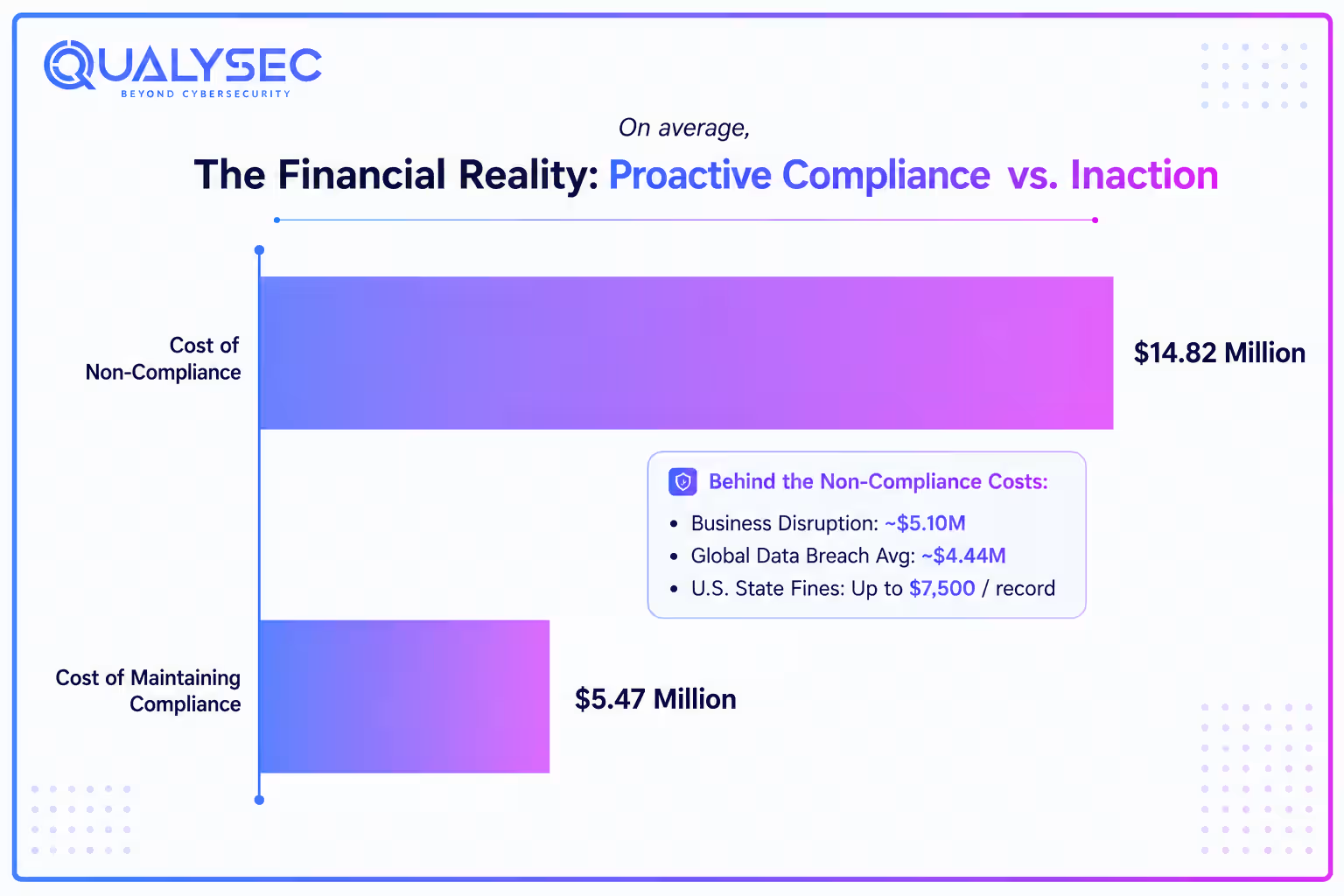
When you calculate the multiplier, running your business in a state of non-compliance costs your organization 2.71 times more than just doing the foundational work correctly from the start. In the risk consulting world, we call this “Compliance Debt,” and just like high-interest financial debt, the payments will eventually catch up to you.
Furthermore, if your infrastructure suffers a data breach, your compliance status serves as a financial dampener or a massive accelerator. IBM’s latest global metrics reveal that the average cost of a data breach sits at $4.44 million. However, if global regulators discover that your breach occurred because of systemic negligence or an unmapped data architecture, a massive financial premium is tacked onto the baseline incident cost before individual statutory fines are even levied.
The Big Four: Breaking Down the Structural Impacts
Regulatory shortfalls do not occur in a vacuum. When a control framework fails, the fallout cascades across four highly interconnected operational domains. Understanding these categories allows leadership teams to prioritize security investments where they matter most.
1. Financial Penalties and Fines
Financial penalties represent the most visible weapon in a regulator’s arsenal. Modern enforcement frameworks allow authorities to levy fines that can break the financial back of mid-market firms and severely disrupt the earnings of large enterprises.
The current statutory penalties for non compliance across major international frameworks are explicitly designed to penalize corporate negligence:
Regulation / Framework | Maximum Global Statutory Penalty | Operational Focus Area |
U.S. State Privacy Laws (CCPA, CPRA, etc.) | Up to $7,500 per intentional violation | Calculated per affected consumer record, driving combined U.S. state penalties to $3.42 billion recently in a single year. |
GDPR (European Union / Global Impact) | €20 Million or 4% of total global annual turnover | Whichever figure is higher, focusing heavily on cross-border data handlers and international platforms. |
HIPAA (U.S. Healthcare & HealthTech) | Up to a $2.13 Million annual cap per violation tier | Enforced by the HHS Office for Civil Rights targeting patient health information (PHI) exposures. |
SEC Cybersecurity Mandates (U.S. Public Markets) | Administrative sanctions, delisting risks, and civil actions | Enforced strictly regarding the mandated 4-day disclosure window for material cyber incidents. |
For organizations operating globally or handling data from U.S. residents, compliance fragmentation is a massive hurdle. With dozens of active laws, a single cross-border data exposure or an unsecure cloud environment can trigger simultaneous class-action lawsuits and multi-state attorney general investigations. Because these fines accumulate per compromised record, a mid-sized data breach can scale into millions of dollars within days.
2. Personal Criminal Liability and Imprisonment
One of the most significant shifts in modern regulatory strategy is the intentional move away from simply fining a corporate entity. Regulators are actively piercing the corporate veil to hold individual directors, CISOs, and board members personally accountable for systemic compliance failures.
If an organization willfully ignores structural vulnerabilities, the consequences transition quickly from civil fines to criminal indictments. Serious violations of anti-money laundering (AML) frameworks, fraud, or intentional misrepresentation of corporate health to public entities can result in imprisonment for up to 20 years per violation. Major data protection authorities have openly initiated investigations into holding corporate directors personally liable for data negligence if it is proven they ignored repeated internal whistleblowers or red flags.
When board members only receive surface-level data—such as looking at low numbers of internal security alerts without looking at the severity of those alerts—they leave themselves open to personal legal exposure.
3. Structural Reputational Damage (M&A Valuation Haircuts)
While a fine impacts a single quarter’s cash flow, structural reputational bleed can systematically destroy a company’s market share over a decade. Trust is a binary metric: it is either intact or it is gone.
When an organization undergoes a public enforcement action or suffers an unmitigated breach due to non-compliance, it sends an immediate signal to customers, enterprise partners, and institutional investors that the company does not operate with integrity. This reputational damage manifests in specific financial metrics:
- M&A Valuation Haircuts: According to institutional transaction data, buyers routinely apply an automatic 15% valuation haircut during corporate acquisitions if the target firm cannot prove clear compliance maturity or possesses an unmapped, vulnerable data architecture.
- Talent Attrition: Elite engineering and executive talent rapidly leave organizations associated with ethical or regulatory scandals, increasing recruitment costs and stalling product roadmaps.
4. Business and Operational Disruption
The immediate reality of operating with compliance gaps includes the literal halting of your business operations. Regulators have the explicit authority to revoke operational licenses, issue stop-work orders, or temporarily shut down digital platforms until independent remediation teams can verify that the underlying security controls are functional.
Furthermore, falling out of compliance automatically disqualifies businesses from participating in lucrative enterprise ecosystems. Modern B2B buyers mandate clear proof of frameworks like SOC 2, ISO 27001, or PCI DSS within vendor Master Service Agreements (MSAs). A single compliance failure can trigger immediate contract termination clauses, wiping out core recurring revenue streams.
Do You Have Hidden Compliance Debt?
Automated security tools are great for basic scans, but they completely miss the deep, logical security control flaws that real-world attackers exploit to trigger compliance failures. Stop guessing whether your infrastructure can survive an enterprise audit.
The Strategic Shields: Security Testing and Penetration Testing
To systematically eliminate the risk of non compliance, an enterprise must deploy two foundational defense mechanisms: comprehensive Security Testing and advanced Penetration Testing. While basic software tools can check if a port is open, they cannot verify if your overall business logic is sound.
- Security Testing: This is a broad, continuous operational practice aimed at identifying vulnerabilities, configuration errors, and governance gaps across your entire software ecosystem (Web, Mobile, Cloud, and API infrastructure). It acts as a comprehensive, preventative diagnostic health check for your technical environment.
- Penetration Testing (Pen Testing): This is a targeted, adversarial simulation where elite security experts actively mimic the tactics, techniques, and procedures (TTPs) of real-world cybercriminals. The goal is to safely exploit existing security gaps to prove exactly how far an attacker could breach your perimeter.
By identifying these weaknesses in a controlled manner, organizations can remediate technical flaws before they scale into severe non compliance consequences.
Conclusion: Real Validation Is Your Only Safe Path Forward
Relying on a superficial, automated checkbox mentality to survive an audit is no longer a viable business plan; it is a regulatory time bomb. Mitigating these compounding non compliance consequences requires shifting away from basic checkbox mentalities and adopting a continuous, human-led validation strategy to secure your technical perimeters.
This is exactly where Qualysec steps in. As a specialized, human-led penetration testing company, Qualysec helps startups, SMEs, and large enterprises map out their vulnerabilities and eliminate compliance debt before it hits the bottom line.
Running your company without expert, independent validation means you are letting your auditors—or worse, a malicious threat actor—be the first ones to test whether your security controls actually stand up to real-world pressure. Proactively identifying security control flaws through advanced engineering and aligning your infrastructure with global standards before an incident occurs is the only proven way to protect your revenue engine, secure your valuation, and keep your organization on the right side of the numbers.
Book Your Private Compliance & Security Assessment with Qualysec
Frequently Asked Questions (FAQs)
What are the most common consequences of regulatory non-compliance?
The most common consequences of non-compliance include multi-million dollar statutory fines, severe business and operational disruptions (such as license suspensions), deep reputational erosion that triggers customer churn, and personal criminal liability or imprisonment for corporate directors who exhibit systemic negligence.
What is the difference between Security Testing and Penetration Testing?
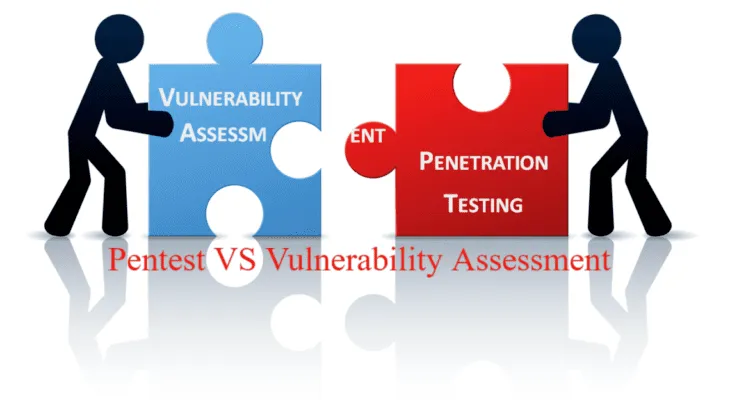
Security Testing is a broad, continuous operational process used to scan and identify vulnerabilities across an organization’s digital footprint. Penetration Testing, on the other hand, is a focused, ethical hacking simulation where specialists actively attempt to exploit those vulnerabilities to analyze how deep an attacker can penetrate your architecture. Both are critical for a valid compliance posture.
How can a specialized company like Qualysec help mitigate compliance risks?
Qualysec is a premier penetration testing firm that prioritizes a manual-first, human-led validation methodology over basic automated scanning. Qualysec closely mimics the real-world behaviors of sophisticated attackers to identify deep logical flaws, helping organizations patch vulnerabilities before global regulators or malicious actors discover them.
What industries face the highest risk of non-compliance?
While all companies handling consumer data face data privacy risks (like CCPA/GDPR), industries such as financial services, healthcare/healthtech, energy, and data-intensive SaaS providers face the highest risk of non compliance due to rigorous, overlapping international frameworks governing their day-to-day operations.
STOP GUESSING. START VALIDATING.
Don’t wait for a devastating regulatory fine or a collapsed acquisition deal to find out where your security architecture breaks. The data proves that leaving compliance to chance is the most expensive decision an executive can make.
Take control of your global risk profile today.
Book a Private Compliance Debt Assessment with Qualysec. Speak directly with a senior risk engineer about your specific operational footprint (SOC 2, ISO 27001, GDPR, HIPAA, or PCI DSS) and get a clear, actionable remediation plan.












































































































































0 Comments