






The ABS Penetration Testing Guidelines are guidance from the Association of Banks in Singapore, not a compliance rule, and many searchers confuse the two. Version 2.0 of the document is dated April 2024. A bank doesn’t have to follow it, but examiners, partner banks and vendors often use it as the common method for a test. This guide explains what the guidelines say, how they sit under MAS rules and how a bank vulnerability assessment turns them into a test with a report.
Quick answers:
- Mandatory? No. The document says it is “not intended to be a compliance document”.
- Who uses it? Financial institutions (FIs), ABS members, and their vendors and contractors.
- How often? The guidelines call yearly testing of internet-accessible systems “good practice”, plus testing after major changes.
- Phases? Five: planning, discovery, attack, reporting and retest.
- Red team exercises? Covered in a separate ABS document, with a minimum of once every 24 months.
What Are the ABS Penetration Testing Guidelines?
They’re a baseline framework for testing the effectiveness of Singapore’s financial services security testing. The full title is Penetration Testing Guidelines 2.0 for the Financial Industry in Singapore.
The text sets out the purpose in section 1. It says the document provides “a baseline penetration testing framework for FIs and members of the Association of Banks in Singapore”. It also reaches vendors and contractors who do the same work.
| Item | Detail |
| Document | Penetration Testing Guidelines 2.0 for the Financial Industry in Singapore |
| Date | April 2024 |
| Published by | Association of Banks in Singapore (ABS) |
| Status | Guidance, not a compliance document |
| Audience | FIs, ABS members, vendors and contractors |
| Regulatory reference | MAS Technology Risk Management (TRM) Guidelines |
The document also names other frameworks, including OWASP, NIST, PCI SSC and ISECOM.
Are the ABS Penetration Testing Guidelines Mandatory?
No. Section 3 says that FIs “may refer to this document as guidance for penetration testing approach but not for compliance”. Section 1 asks FIs to check the prevailing regulatory requirements.
Binding rules come from MAS. Think of a ladder, with the strongest instrument at the top.
| Instrument | Binding? | Testing content |
| MAS notices under the Financial Services and Markets Act 2022 (FSM-N05 for banks) | Yes, in force since 10 May 2024 | Operational duties on technology risk |
| MAS TRM Guidelines (January 2021) | Guidelines | 13.1.2 vulnerability assessment, 13.2 black and grey box testing, 13.3 scenario-based cyber exercises, 13.4.1 red team exercises, 13.6.1 remediation |
| ABS Penetration Testing Guidelines 2.0 (April 2024) | Guidance | Method for planning, running and reporting a test |
| ABS Red Team Guidelines (September 2026) | Guidance | Method for covert, objective-based exercises |
MAS TRM penetration testing guidance gives the regulatory reference, and the ABS text gives the working method. The TRM Guidelines don’t set a testing frequency.
Banks still use the ABS text for a practical reason. A shared method for bank vulnerability assessment gives bank teams and vendors the same words for scope, testing styles and severity. It also makes a report easier to compare from one test to the next.
The rules are also moving. According to Waystone, MAS consulted in 2026 on amended technology risk notices. Feedback closed on 31 July 2026, and a 12-month transition would follow once they’re final.
There’s wider context too. On 28 July 2026, MAS and ABS announced the AI-Driven Cyber and Technology Risk Taskforce, known as ACT.

Penetration Testing for Banks in Singapore: Styles and Types
Section 4 of the ABS text defines three testing styles. Each one gives the tester a different amount of information.
- Black box: “No internal knowledge of the target system is provided to the penetration tester.” This is the most realistic option for an outside attacker.
- Greybox: “Limited information is provided to the penetration tester, e.g., login credentials.” It shows what a normal user could gain, and it simulates an insider or a breached perimeter
- Whitebox: “All relevant information is provided to the penetration tester, including architecture documentation and source code.” It finds logic flaws, misconfigurations and missing defences
Section 5 lists the types of tests. The list is non-exhaustive:
- Network
- Web application
- Mobile application
- API
- Thick client
- Wireless
- Mainframe applications
- Hardware
- IoT
Most bank programmes combine styles. A web banking application security may get a black-box test from the internet and a grey-box test with a customer login.
What Are the Five Phases of Bank Penetration Testing?
Penetration testing for banks in Singapore follows five phases in section 7 of the guidelines. Each phase has its own inputs, actions and output.
Planning (7.1)
Planning sets the rules of engagement and gets “appropriate management approval, where necessary”. Scope covers internet-facing services and infrastructure within the FI’s direct control. Outsourced vendors “should also conduct annual penetration testing” for public internet-facing infrastructure.
The environment matters for financial services security testing. Section 6 says the report must state whether the test ran in production or in a non-production environment such as staging or UAT. Differences from production and the effect on findings should be assessed and documented.
Safeguards for production testing can be written into the rules of engagement:
- Notify monitoring teams and system owners
- Test under the FI’s monitoring
- Keep adequate backups and recovery ability
- Use network segmentation
- Use mock data where data may leave the network
- Don’t store production data
- Don’t allow tests that modify production data or disrupt transactions
- Clean up test artifacts and remove test credentials quickly
Discovery (7.2)
Testers gather information and plan an attack strategy. Passive reconnaissance uses public sources. Active reconnaissance involves direct interaction with the target.
Attack (7.3)
Testers scan for vulnerabilities and try to exploit them or prove them. The text says this phase “needs to be carefully controlled and monitored”. Testers clean up exploitation artifacts afterwards.
Reporting (7.4)
The report should give “clear and concise information” to technical teams, senior management and business owners. Severity can be rated using CVSS or the FI’s preferred method.
Retest (7.5)
The FI formalises a timeline to fix the issues, based on risk appetite, threat vectors and compensating controls. Fixes are checked through a retest.
How Often Should Banks Test? Bank Penetration Testing Frequency and ABS Red Team Guidelines
Banking penetration testing frequency is a risk decision, but the ABS text gives a starting point. Section 1 says it’s “a good practice” to test internet-accessible systems at least once every year, and after major changes or updates. The cadence depends on system criticality and cyber risk exposure.
Three more points on frequency:
- The TRM Guidelines don’t set a frequency
- Section 7.1 says outsourced vendors should test public internet-facing infrastructure annually
- Nothing in the text sets a fixed remediation deadline
To set a cadence you can defend, record these for each system:
- How critical it is to the bank
- How exposed it is to the internet
- When it was last tested
- What changed since then
- The reason for the interval you chose
Red team exercises follow a different cycle. The ABS Red Team Adversarial Attack Simulation Exercises (AASE) Guidelines from September 2024 recommend them “once every 24 months minimally”. An FI can move to every 12 months if its risk assessment calls for it (section 6.4).
The ABS red team guidelines are guidance too. Section 5.1 says they “should not be inferred as a mandatory prerequisite”.
| Penetration test | Red team exercise (AASE) | |
| Awareness | Known to all stakeholders | Covert, with only the Exercise Working Group aware |
| Scope | Limited, to find as many vulnerabilities as possible | Open, objective-based |
| Targets | Technology | People, process and technology |
| Social engineering and physical security | Generally not included | May be included |
| Suggested frequency | At least yearly for internet-accessible systems | At least every 24 months |
An AASE has five phases: planning, attack preparation, attack execution, exercise closure and post-exercise actions.
How Do You Choose a Penetration Testing Provider?
Section 8 of the ABS Penetration Testing Guidelines sets out what to look for. It doesn’t set one required certification.
Criteria in the text:
- Technical expertise: years of relevant experience and public vulnerability advisories.
- Continuous learning: research, conference talks or community contributions.
- Provider assurance: policies on methodology, reporting and data handling, plus background checks on testers.
- Recognised certifications: CREST, GIAC, OffSec, (ISC)² and INE are named.
To avoid complacency, the text suggests rotating testers or running a separate bug bounty programme. The word “independence” isn’t used.
What Should a Penetration Test Report Include?
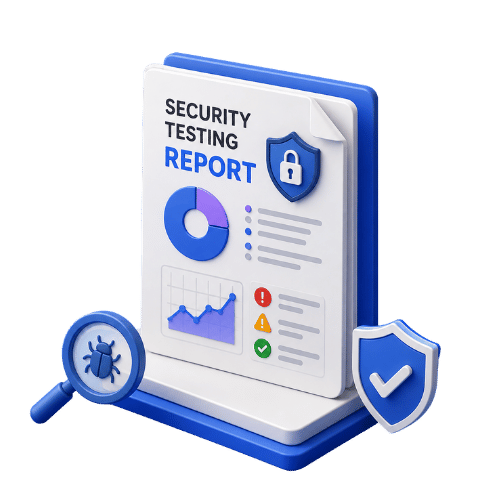
An ABS-style report names the tester, the owner, the scope and the findings. Table 3 of the guidelines gives a sample format:
- Executive summary
- Penetration tester name
- Application owner or custodian
- Project scope and timelines
- Reviewers’ names
- Methodology, covering the environment tested and the scope of the system tested
- Findings overview and a findings register.
Each finding carries a reference number, severity, title, optional CWE ID, proof of exploit, fix retest documentation, the CVSS vector and score, scope and a recommendation.
Severity follows the CVSS scale unless the FI uses another method.
| Rating | CVSS score |
| None | 0.0 |
| Low | 0.1 to 3.9 |
| Medium | 4.0 to 6.9 |
| High | 7.0 to 8.9 |
| Critical | 9.0 to 10.0 |
MAS TRM penetration testing reports follow the same logic. They need to show what was tested, what was found and what happened next. The ABS text doesn’t say who reports to whom.
How Qualysec Supports Penetration Testing for Banks in Singapore
Qualysec is a MAS TRM and CREST-focused penetration testing company providing security testing across web, API, cloud, network, and mobile environments in both black-box and grey-box modes.
Services that map to the ABS phases:
- Application and API testing: payment, transfer and customer endpoints tested for broken authorisation and injection
- Mobile, cloud and network testing: banking application security, cloud services and network segments tested as one chain
- Reporting: findings with severity ratings, reproduction steps and remediation guidance
- Retesting: each fix checked, so findings close on evidence
Testing doesn’t certify compliance. The duty to meet MAS requirements stays with the bank.

Conclusion
The ABS Penetration Testing Guidelines provide a common approach for banks but are not a mandate. MAS notices and the TRM Guidelines determine the binding and regulatory side.
Outline the test for the five phases. Choose the tempo based on the risk. Maintain reports that demonstrate scope, severity, fixes and retests.
Take the first step to scope your bank penetration test with Qualysec’s experts: Schedule a meeting!
FAQs ( Frequently Asked Questions)
1.Are the ABS Penetration Testing Guidelines mandatory?
According to the guidelines, they are “not intended to be a compliance document”, and FIs can use the guidelines as guidance, not for compliance. The binding obligations are related to MAS notices, for example, FSM-N05 for banks. The TRM Guidelines are the regulatory reference, so please first refer to the prevailing guidelines issued by the MAS. Treat the ABS Text as a method rather than a rule.
2.How often should banks be penetration tested?
MAS does not prescribe any specific time frame in the TRM Guidelines. It is good practice to test internet accessible systems at least annually, and following major changes or updates, ABS states. The frequency of banking penetration testing should be based on the criticality of the system and cyber risk exposure and documented. Note the date of each test, as the interval between tests should be clear.
3.What is the difference between penetration test and red team exercise?
All stakeholders are aware of a penetration test, which seeks out as many vulnerabilities as possible in a limited scope. A red team exercise conducted according to the ABS red team guidelines is objective-based, open-scoped and covert. It targets people, process & technology and can include social engineering and physical security. The two require different plans.
4.Is it possible to test a bank in production?
Yes. There are measures listed in Section 6, like notifying monitoring teams, making backups, network segmentation, and not storing production data. Tests should not change the production data or interfere with transactions. The report must include the environment, and non-production results must be specified as different from production. Consider that as a test record.
5.What credentials should a penetration tester have?
There is no stipulation that requires one certification. Section 8 identifies bodies that are recognised, including CREST, GIAC, OffSec, (ISC)² and INE. It also examines experience, ongoing education and policies for background checks on testers. Banks are advised to rotate testers to prevent complacency.
6.Are the ABS guidelines in place of the MAS TRM Guidelines?
The TRM Guidelines are used as a reference in the ABS text. “MAS TRM penetration testing guidance outlines regulatory expectations in paragraphs 13.1.2, 13.2, and 13.4.1, while the ABS document provides a working method for planning, conducting, and reporting a penetration test. Do both and retain the records.