

Your Finance Manager stores customer contact details in spreadsheets scattered across shared drives and email attachments, and nobody really knows exactly where everything sits or how long you’ve been keeping it. Your HR team maintains employee records in multiple places, some in payroll software and some in old email folders that nobody’s cleaned up. Then three months ago, your management team asked: “Are we compliant with POPIA?” and nobody had a confident answer.
A POPIA compliance checklist shows you exactly what you need to do and in what order. Instead of guessing what matters most, you get a clear list of steps your organization needs to take and how to verify you’ve done them properly.
What Is POPIA?
POPIA is South Africa’s data protection law. The main provisions came into force on 1 July 2020, with full compliance required from 1 July 2021. Basically, it’s the government’s way of telling businesses how to handle personal information about customers, employees, and anyone else whose details they collect or store.
Think of it like this: if you have someone’s name, phone number, email address, or banking information, POPIA compliance tells you what you’re allowed to do with it, how you need to protect it, and what happens when you get it wrong.
What POPIA covers:
- Customer names, addresses, phone numbers, and email addresses
- Employee salary information, work records, and personal details
- Financial information like bank account numbers and transaction history
- Health information and identification numbers
- Online behavior, purchase history, and location data
What your business actually needs to do:
- Collect personal information only when you have a legitimate business reason to collect it.
- Protect the information from hackers, theft, or employee misuse.
- Tell customers and employees exactly what you’re doing with their information and get their permission when the law requires it.
- Delete or return the information when someone asks you to.
- When a data breach happens, notify the people affected and tell the Information Regulator South Africa about it quickly, without unnecessary delay.
Why POPIA Compliance Matters
Financial consequences:
- Administrative fines up to R10 million for serious breaches
- Civil compensation claims from affected individuals
- Criminal penalties including imprisonment for willful violations
Operational disruption:
The Information Regulator South Africa issues a breach notification demand. Your team scrambles gathering records about which personal information was exposed. You don’t have clear logs. Investigation costs explode. Remediation drags on for months while regulators remain unsatisfied.
Reputational damage:
Customer discovers their information was exposed through your systems. News spreads through social media. Potential clients see you as unreliable. Existing customers question whether to continue doing business with you.
Business relationship consequences:
Large retailers, banks, and government agencies require suppliers to prove POPIA compliance before signing contracts. Without documented compliance, you lose significant business opportunities.
The Ultimate POPIA Compliance Checklist
A proper POPIA compliance checklist (also called POPI Act compliance steps) changes that by giving you one roadmap that guides your organization through implementation and then keeps guiding you through ongoing maintenance and updates as your business changes. Instead of treating compliance as something you complete one time and then forget about, you treat it as something that stays active and evolves with your organization.
1. Determine Whether POPIA Applies to Your Business
Smaller organizations often discover mid-way through their compliance work that they’ve actually been mishandling personal information for years without realizing it. This is exactly why this first step matters so much. If POPIA doesn’t apply to you, you can stop worrying about the rest. If it does apply, you need to know that clearly so you can move forward with confidence.
When POPIA applies:
- You collect, store, or process any personal information about South African residents, regardless of whether your servers and systems are physically located inside South Africa or somewhere else in the world
- You run a business operation in South Africa and collect any form of personal data from customers, employees, or anyone else
- You provide services or products to South African organizations, and they transfer their customer data to you as part of that service relationship
- You maintain employee records, salary information, or personal details for staff members who work in South Africa, even if your company headquarters is elsewhere
2. Appoint and Register an Information Officer
Every organization processing personal information needs someone responsible for POPIA compliance. This isn’t optional; it’s a legal requirement that regulators actually enforce, so you can’t just skip this step or pretend it doesn’t apply to you.
What the Information Officer does:
- Handles official complaints and inquiries that come through from the Information Regulator, which means they’re your primary contact point with regulators, and they need to know how to respond appropriately
- Responds to data access and deletion requests from customers and employees who ask to see their information or want you to delete it, and they have to do this within the legal timeframes, or you get in trouble
- Oversees privacy impact assessments for new business initiatives so that when your marketing team wants to launch a customer tracking program or your finance team wants to use a new vendor, someone actually checks whether POPIA compliance matters
- Develops and updates your privacy policies and notices to reflect what you’re actually doing with personal information, not what you wish you were doing
- Conducts staff training on data handling procedures so your employees understand the basic rules around protecting customer and employee information
- Coordinates your response when a data breach happens, which means they’re pulling together the incident response team and making sure notifications go out on time
- Maintains all your compliance documentation and evidence so that when regulators ask questions, you have records showing you took this seriously
3. Identify and Classify Personal Information
Before you can actually protect personal information, you need to know what you have sitting around in your systems right now. Most organizations discover personal data sitting in places they’d completely forgotten about because it accumulated gradually over years without anyone making a conscious decision to store it there.
Types of personal information your organization likely processes:
| Data Category | Examples | Risk Level |
| Contact Information | Names, addresses, phone numbers | Medium |
| Financial Data | Bank details, credit cards, transactions | High |
| Identification Numbers | ID numbers, passport numbers | High |
| Health Information | Medical history, biometric data | High |
| Employment Records | Salary, reviews, history | Medium |
| Behavioral Data | Website activity, purchase history | Medium |
| Special Personal Information | Race, religion, political affiliation | Very High |
4. Map Data Collection and Processing Activities
Most compliance failures happen because organizations don’t actually know where their data goes or who has access to it. You need to know why you’re collecting information, what you’re using it for, and who has access to it.
Questions to answer for each collection point:
- What specific personal information do we actually collect at this point and why does each piece matter
- What business purpose justifies collecting this information, and can we explain it to regulators
- Do we ask for consent before collecting this, and are we keeping records that we asked for
- How many people internally can access this information, and do all of them actually need to see it
- Which third parties or external vendors receive this data, and do we have agreements with them
- How long do we keep this information before we delete it, or is it sitting around indefinitely
- What happens to this information when the business relationship ends or when a customer stops buying from us
5. Establish a Lawful Basis for Processing
You can’t collect personal information just because you want it or because it might be useful someday. POPIA requires you to have a legitimate legal reason for processing every piece of personal information you collect. These are the six lawful processing conditions set out in section 11 of the Act.
The 6 lawful processing conditions:
| Condition | When It Applies | Example |
| Consent | The person (or a competent person if it is a child) actively agrees to the processing | Customer ticks a consent box on your website before sign-up |
| Contract | Processing is necessary to conclude or perform a contract with the person | Storing a delivery address to ship an order the customer has paid for |
| Legal Obligation | A law requires you to collect or keep the information | Employment and tax records required by SARS or the BCEA |
| Legitimate Interest of the Data Subject | Processing protects a legitimate interest of the person themselves | Sharing medical details with emergency services during a medical emergency |
| Public Law Duty | Necessary for a public body to perform its public law functions | Municipality maintaining property records for residents |
| Legitimate Interests | Necessary for the legitimate interests of your organisation or a third party receiving the information, provided those interests do not override the person’s rights | Fraud detection on financial transactions to protect your business and customers |
You must be able to point to at least one of these six grounds for every processing activity.
6. Update Privacy Notices and Obtain Valid Consent
People need to know what you’re doing with their personal information. Most organizations either don’t have a privacy notice at all or they have one that’s so buried in legal jargon that customers never actually read it.
Your privacy notice must disclose:
- Your organization’s name and contact details so people know who’s collecting their information
- Exactly what personal information you collect and why you’re collecting each specific piece
- How long you keep the information before deleting it
- Who you share the data with, including third parties and vendors
- People’s rights, including their ability to access their information and request deletion
- Your Information Officer’s contact details so they know who to reach if they have questions
- The complaint process if they’re unsatisfied with how you handled their information
- What lawful basis you’re using for processing their data
Common mistakes:
- Using pre-ticked consent boxes where customers have to uncheck things instead of actively choosing to consent, which regulators don’t accept as valid consent
- Burying privacy notices in unreadable legal documents full of jargon that customers won’t bother reading
- Collecting consent once and never updating it even when your business practices change significantly
- Not keeping records proving consent was obtained, so when regulators ask you can’t show when or how you got permission
- Asking for consent to everything rather than only where POPIA actually requires it, which makes people ignore the consent requests
7. Implement Technical and Organizational Security Measures
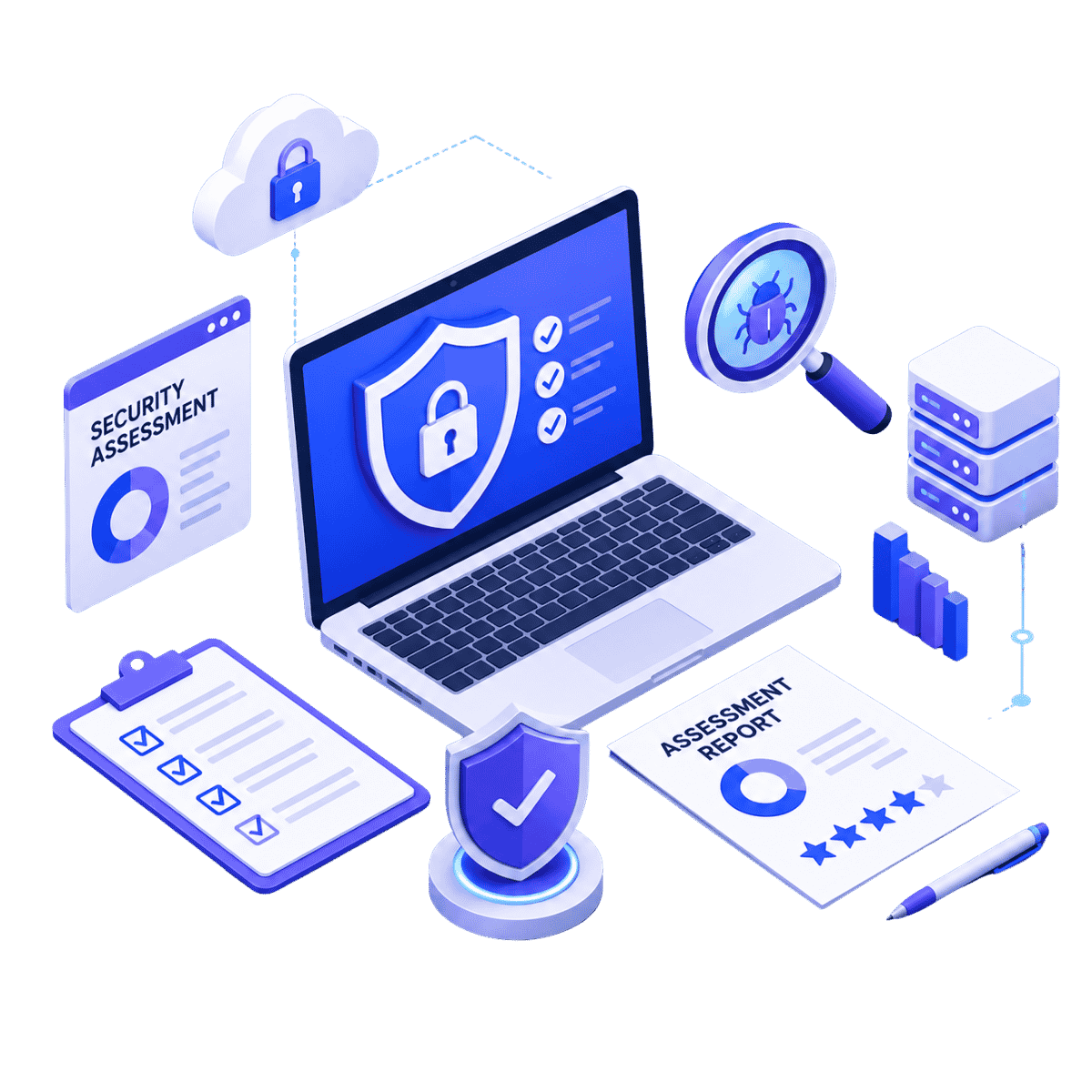
POPIA requires protecting personal information from unauthorized access, loss, or damage, which sounds straightforward, but most organizations don’t realize this means you need both technical security like encryption and organizational practices like staff training working together.
Technical security measures:
- Encryption at rest for stored data and encryption in transit for information being transmitted between systems so that if someone steals data, they can’t actually read it
- Access controls limiting who can see sensitive information so that only people who need to access customer or employee data actually have access
- Multi-factor authentication for accounts handling personal information so that hackers can’t just guess a password and gain access
- Firewalls and intrusion detection systems monitoring for unauthorized access attempts on your network
- Regular security patches and updates for all your systems because unpatched software is how most attackers get in
- Backup systems that actually work and that you’ve tested so you can recover data if systems fail or get hit by ransomware
Organizational security measures:
- Staff training before anyone accesses personal information so your employees understand the basic rules around protecting customer and employee data
- Confidentiality agreements with employees and contractors making clear they can’t share information outside the organization
- Visitor policies restricting access to areas where data is stored because you don’t want random contractors walking past filing cabinets with sensitive information
- Document handling procedures for secure disposal of printed records containing personal data so they don’t end up in regular trash bins
- Incident response team identified in advance so when a breach happens you know immediately who to contact and what to do
- Regular security assessments identifying vulnerabilities before attackers find them and exploit them
8. Secure Third-Party Vendors and Operators
POPIA holds you responsible for how third parties treat personal information even though you don’t control their systems or their staff. Your vendors include cloud Security providers, email platforms, payment processors, accounting software, HR systems, and any other service that touches your customer or employee data.
Due diligence before engaging vendors:
- Request their privacy and security policies in writing so you have evidence of what they promised and can refer back to it later if problems emerge
- Understand where they actually store your data geographically and how they protect it from unauthorized access or theft
- Confirm in writing that they only process data according to your specific instructions and not for their own purposes
- Verify they have appropriate security measures like encryption, access controls, and regular security assessments matching your requirements
- Establish data processing agreements that clearly outline both parties’ responsibilities and what happens if something goes wrong
- Get their commitment in writing that they’ll notify you immediately if a data breach affects your information
- Confirm they’ll cooperate with POPIA compliance requests and audits from regulators if investigations happen
9. Develop a Data Breach Response Plan
When personal information gets exposed, you need a coordinated response because organizations without advance plans make reactive decisions on the fly that escalate regulatory consequences. When stress is high and everyone’s panicking, you make mistakes like delaying notification, destroying evidence, or making promises to regulators you can’t keep.
Your breach response plan should address:
- Who to notify immediately, including your management team, legal counsel, insurance provider, and internal security team, so that the right people know what happened at the same time
- How to assess the scope and nature of the breach so you know exactly what personal information was exposed and who had access to it
- How to assess the nature and possible consequences of the compromise so you can notify the Information Regulator and affected individuals as soon as reasonably possible, and so you can decide what protective steps to recommend to those individuals
- Internal investigation procedures that preserve evidence and document how the breach occurred so you can explain it to regulators
- Communication templates for affected individuals so you’re not scrambling to write notifications while in crisis mode
- The notification process to the Information Regulator, including what information you need to provide and what timeframe you’re working within
- Media response procedures so that if news breaks publicly, you have consistent messaging rather than making things up as you go
- Remediation steps that actually prevent similar breaches from happening again instead of just fixing this one incident
10. Create Data Retention and Secure Disposal Policies
Keeping personal information longer than necessary violates POPIA principles because you’re creating unnecessary risk by holding data you don’t need. Secure disposal ensures information doesn’t get lost, stolen, or leaked after you’re finished with it.
Retention periods by data type:
| Data Type | Typical Retention | Legal Basis |
| Customer contact info (active) | Duration plus 3 years | Contractual/Legal |
| Employee records | 7-10 years after employment ends | Tax/Labor law |
| Financial transactions | 7-10 years | SARS requirements |
| Website analytics | 12-26 months | No specific requirement |
| Job applications (rejected) | 12 months | Recruitment finished |
Disposal procedures to follow:
- Digital deletion using secure methods that overwrite data rather than just marking it deleted
- Paper destruction through shredding or incineration for documents containing personal information
- Device disposal by removing hard drives from computers before selling or donating equipment
- Backup deletion ensuring data removed from primary systems also gets removed from backup copies
- Third-party disposal confirmation that vendors destroying data on your behalf use secure methods
- Keep records documenting when and how data was disposed so you can prove compliance
11. Enable Data Subject Rights Requests
POPIA gives individuals rights over their personal information, and you have to respond when they exercise those rights, even if responding is inconvenient or requires pulling data from multiple systems. Ignoring a valid data subject request is a regulatory violation.
Rights individuals can exercise under POPIA:
- Access: Confirm whether you hold personal information about them and request a record or description of that information (including who has had access to it)
- Correct or delete: Ask you to correct or delete information that is inaccurate, irrelevant, excessive, out of date, incomplete, misleading or obtained unlawfully, or to destroy a record you are no longer authorised to retain
- Object: Object, on reasonable grounds, to certain types of processing (including processing based on legitimate interests or public-law duties, and direct marketing)
Process requirements:
- Establish a clear channel for receiving requests (specific email address, web form, or physical address) so people know how to contact you
- Verify the requester’s identity before releasing any personal information
- Respond within a reasonable time (most organisations aim for 30 days as a practical target)
- Provide the information in a reasonable manner and format that is generally understandable
- Do not charge unreasonable fees
- Keep detailed records of how you handled each request, including dates and what action was taken
12. Conduct Regular Compliance Reviews and Security Assessments
POPIA compliance isn’t something you complete once because business processes change, technology evolves, and threats develop constantly. An organization that was compliant two years ago might not be compliant today if you’ve added new data collection or new vendors without updating your compliance framework.
An annual compliance review should assess:
- Whether your privacy notices remain accurate and reflect what you’re actually doing with personal information
- If new processing activities were added without authorization or proper POPIA compliance checks
- Whether your data retention periods still make sense given your current business model
- How well your staff are actually complying with data handling procedures in practice
- Whether your third-party vendor agreements are still effective and vendors are meeting their obligations
- Changes in security threats or vulnerabilities that affect how you protect personal information
Security assessment activities:
- Vulnerability scanning of systems storing personal information to find weaknesses before attackers discover them
- Penetration testing that simulates actual attacks so you know whether your security measures actually work
- Access control review confirming appropriate people have access, and nobody has unnecessary permissions
- Encryption verification ensuring sensitive data is actually protected if systems get breached
- Backup testing confirming you can actually recover data if systems fail
The Role of Cybersecurity in POPIA Compliance
POPIA compliance without cybersecurity doesn’t actually protect anything because strong policies mean nothing if your systems have obvious vulnerabilities that hackers can exploit. Cybersecurity creates the technical foundation that makes POPIA compliance checklist requirements work in practice.
How cybersecurity supports POPIA:
- Encryption protects personal information if hackers breach your systems
- Access controls ensure only the right staff see sensitive data
- Security monitoring detects unauthorized access attempts before damage happens
- Penetration testing finds vulnerabilities before attackers discover them
- Incident response capabilities enable quick breach response when incidents occur
- Security training prevents employees from accidentally exposing information
Common POPIA Compliance Mistakes
- Assuming POPIA only applies to large organizations when it actually applies to any business processing South African residents’ personal information
- Treating POPIA as only IT’s responsibility when HR, Finance, Marketing, Sales, and Management all need to be involved
- Collecting consent without documenting it, so you can’t prove you asked permission when regulators investigate
- Never testing your incident response plan, which means when a real breach happens you’ll discover your plan doesn’t actually work
- Over-collecting personal information just in case you need it later, which violates POPIA principles and creates unnecessary risk
POPIA Compliance Best Practices
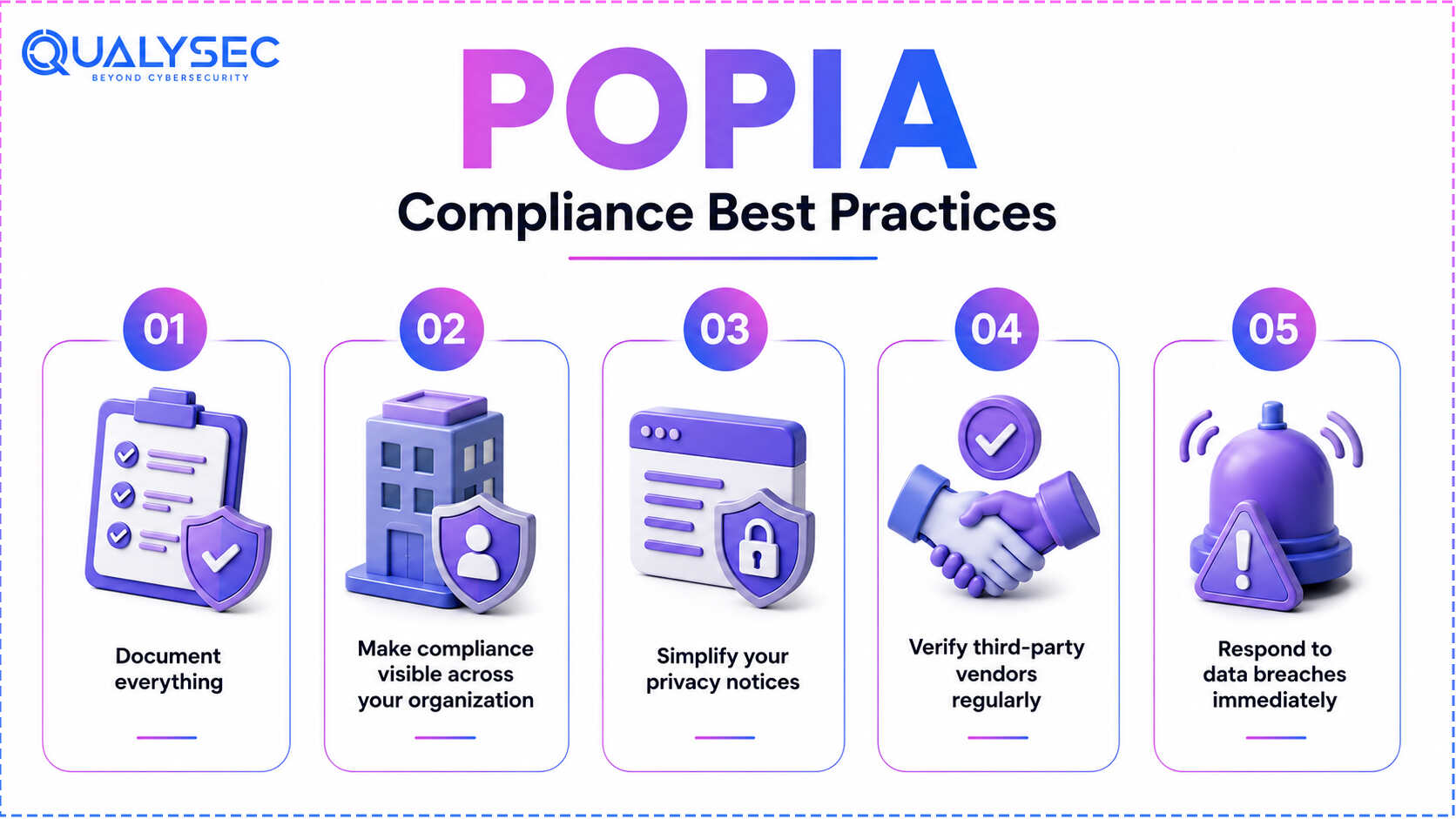
- Document everything so you have written evidence of your decisions about data collection, processing, consent, retention, and disposal, which shows careful consideration when regulators ask about POPIA compliance checklist adherence rather than looking like you’re making things up as you go
- Make compliance visible across your organization by ensuring every department understands their role in protecting personal information, because compliance becomes sustainable when it’s part of normal work rather than sitting in an IT department project that everyone ignores
- Simplify your privacy notices using clear language that customers actually understand instead of burying obligations in legal jargon that nobody reads, because most people won’t wade through twenty pages of formal language
- Verify third-party vendors regularly by conducting checks that they’re actually using encryption and limiting access as promised, because vendor security claims mean nothing without verification and vendors often change their practices over time
- Respond to data breaches immediately by following the data breach notification POPIA rules and notifying the Information Regulator quickly, which demonstrates responsibility and significantly limits regulatory consequences compared to organizations that delay notification for weeks while investigating
How Qualysec Helps Businesses Achieve POPIA Compliance
| What You Need | What Qualysec Does |
| Clarity on compliance | Comprehensive assessment identifying exactly which POPIA requirements you’re meeting and which ones you’re missing |
| Actionable roadmap | Customized POPIA compliance checklist aligned with your specific business processes, not a generic template |
| Security foundation | Security assessments and penetration testing to find vulnerabilities before attackers discover them |
| Team alignment | Staff training relevant to different departments so Finance knows what they need to do, Marketing knows their responsibilities, and HR understands their role |
| Documentation | Privacy notices, data retention policies, breach response plans, and vendor agreements aligned with POPIA requirements |
| Ongoing protection | Continuous compliance monitoring ensuring your POPIA program evolves as your business changes and new threats emerge |

Conclusion
A POPIA compliance checklist turns confusing regulation into real steps your organization can take. Without one, compliance stays unclear and reactive. With one, it becomes clear and proactive.
Organizations that take compliance seriously survive investigations. They document decisions, test security, train staff, and check vendors carefully. When regulators investigate, these organizations have proof they tried to comply properly.
Your POPIA compliance checklist is simple: know what personal information you have, assign someone to manage it, document your practices, protect the information, and respond when breaches happen. These POPI Act compliance steps lower your risk.
FAQs
1. Who must comply with POPIA in South Africa?
Any public or private body that processes personal information and is either domiciled in South Africa or uses means in South Africa to process that information must comply. This includes small businesses, nonprofits, and many international companies that process personal information in or through South Africa.
2. How does penetration testing support POPIA compliance?
Penetration testing finds security weaknesses before attackers do. POPIA requires you to protect personal information, so testing verifies your security actually works when someone tries to break in and find vulnerabilities you didn’t know existed.
3. What are the 8 conditions for lawful processing under POPIA?
The eight conditions for lawful processing under POPIA are Accountability, Processing limitation, Purpose specification, Further processing limitation, Information quality, Openness, Security safeguards, and Data subject participation.
4. What are the penalties for failing to comply with POPIA?
Fines up to R10 million, civil lawsuits from affected individuals, criminal prosecution with possible imprisonment, reputation damage, and customer loss. Beyond money, investigations and remediation drain resources and disrupt operations for months.
5. Does POPIA apply to international companies operating in South Africa?
Yes, if the company is domiciled in South Africa or uses automated or non-automated means in South Africa to process personal information (unless those means are used only to forward the information through the country). The obligation is triggered by the location of the processing activity, not solely by the location of the company’s headquarters.