
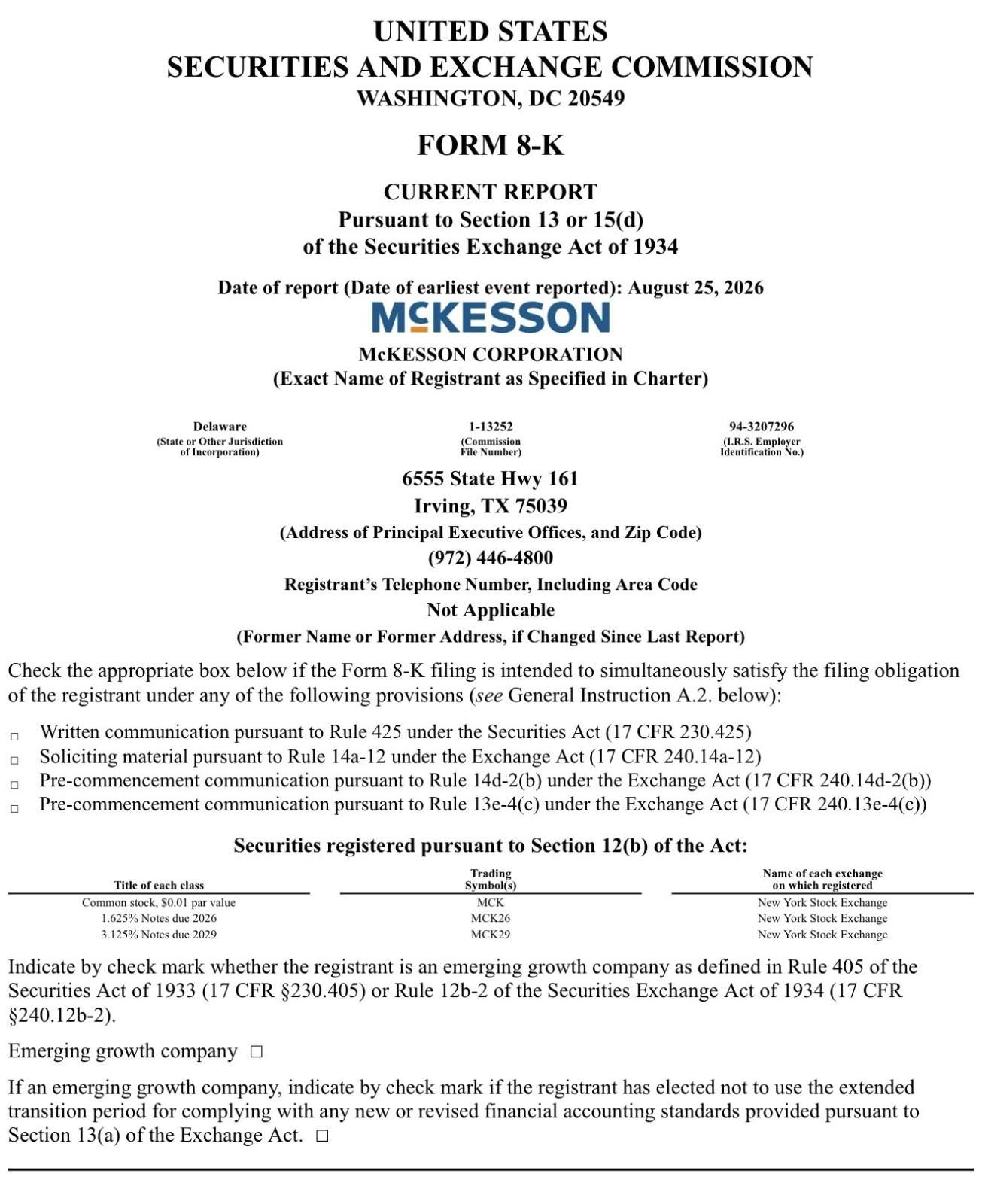
On August 25, 2026, McKesson detected unauthorized activity within its third-party software applications and subsequently filed a Form 8-K disclosure with the U.S. Securities and Exchange Commission (SEC). Initial findings confirm data exfiltration affecting business divisions such as Oncology & Multispecialty and Medical-Surgical operations.
The intrusion was reportedly carried out by ShinyHunters, an extortion group that exfiltrated 1 Terabyte (TB) of data on the internal system, including some 284 million raw database records, and demanded a $55.2 million ransom. McKesson refused to negotiate, limited unauthorized access, and continued regular activities in the pharmaceutical supply chain.
The Alleged Attack Path: From Vishing to Cloud Data Access
The reported attack path is significant because it does not depend on a conventional malware infection or a newly discovered software vulnerability. Instead, it focuses on identity compromise.

The threat actor claims that it:
- Spoofed a real support employee to gain access to McKesson employees, using a voice phishing (vishing) scheme.
- Retrieved employee credentials from an identity and single sign-on platform called Okta.
- Accessed connected Salesforce and Snowflake environments as the same user.
- Browsed and retrieved a huge amount of data from the cloud platforms.
One of the biggest problems with vishing is that the attacker takes advantage of the victim’s trust instead of a technical vulnerability. After obtaining valid credentials, legitimate activity may look like malicious activity.
The alleged use of SSO also raises the possibility of the blast radius. When organizations do not implement strong authentication, granular permissions and additional verification of sensitive actions, a single compromised identity can give access to multiple connected applications.
McKesson has confirmed that some third-party applications accessed their information and data, which were stolen, but it hasn’t officially confirmed the exact attack mechanism, access to Okta, Salesforce, or Snowflake, or the entire sequence of attacks.
Government reports McKesson Data breach:
Scope of the Compromised Information
While 284 million database records represent individual lines of structured data rather than unique patient counts, the exfiltrated dataset contains extensive sensitive records:
- Personally Identifiable Information (PII): Full patient/full employee names, physical addresses, dates of birth, phone numbers, and Social Security numbers.
- Protected Health Information (PHI): Medical record numbers (MRNs), Medicaid IDs, clinical diagnoses, allergy lists, active prescriptions, and medication delivery logs.
- Corporate Data: Invoices, internal customer service records, and files of clinics and healthcare providers connected to McKesson’s network.
McKesson Responded that the Operations will Continue
McKesson has confirmed that its distribution centres continue to operate and customers can continue to utilise its systems and services.
The company has also indicated that at this time it has reasonable assurance that there is no continuing unauthorized activity in its systems as it continues to monitor and investigate the incident.
What This Reveals About Healthcare Security
This attack is part of a growing trend in the healthcare sector, as threat actors are turning to human deception to attack Software‑as‑a‑Service (SaaS) and cloud databases. If the organization heavily depends on cloud integrations, a single compromised SSO credential can result in unfiltered access to millions of sensitive patient entries.
- Scale and sensitivity: If even a fraction of the claimed records are accurate, the exposure includes highly sensitive health and identity data at a national scale.
- Operational resilience: McKesson was able to keep going, but other healthcare events have caused issues with clinical processes, logistics, and device monitoring.
- Regulatory exposure: If patient information is leaked, covered entities and business associates will be required to notify patients and regulators under HIPAA and applicable state laws.
Detection and Response Priorities (Actionable Guidance)
The McKesson breach is a reminder of the risks of central cloud-based identity systems. The following controls help minimize risk and enhance detection:
- Implement Phishing-Resistant MFA: Use hardware security keys (FIDO2 / WebAuthn) instead of SMS codes and push notifications to block credential harvesting in vishing attacks.
- Identity and access hardening: Implement phishing-resistant multi-factor authentication (MFA), limit admin privileges, and grant access only as needed (JIT). Monitor and alert for unusual sign-in and privilege escalation.
- SaaS and data-warehouse monitoring: Take advantage of detailed audit logs in Snowflake and Salesforce. Identify unusual query volumes, bulk exports, new API keys, and unusual admin activities.
- Third-party risk management: Identify and validate all SaaS and API integrations; describe data flows and assign least privilege access. Check out vendor incident response assurances and notification SLAs.
- Anti‑vishing program: Conduct directed drills that mimic voicephishing, provide staff with guidance on how to validate requests in all‑of‑band communications, and escalate suspicious calls.
- Incident response readiness: Develop customer and regulatory notifications in advance, establish incident support channels, and work out the details with the legal and compliance teams before making public announcements.
- Implement Continuous Cloud VAPT: Conduct regular Vulnerability Assessments and Penetration Testing (VAPT) for all identity management paths, API integrations, and SaaS permissions to ensure a strict ‘least privilege’ architecture is in place.


