

Many companies undergo penetration testing for cyber insurance, expecting it to reduce their cyber insurance premium. It is not that simple.
Cyber policies are highly customised, and insurers assess much more than one security test when deciding terms and pricing.
A pentest provides evidence. It can show where an attacker may get in, which weaknesses matter most, and whether those issues were fixed after testing. NIST recognises penetration testing as a way to uncover exploitable weaknesses through controlled attack techniques.
For a CISO, that evidence can be far more useful than focusing on a promised discount. The real job is to present security findings in a way that supports the insurance discussion without making claims the test cannot prove.
Does Penetration Testing Lower Cyber Insurance Premiums?
It can improve your position during underwriting, but there is no standard discount for completing a penetration test. Cyber policies are customised, and pricing can change with market conditions, claims experience, coverage limits, retention, business exposure, and the insurer’s appetite for risk.
For CISOs, the better measure is the overall renewal result. Look at insurer participation, available limits, retention, sublimits, exclusions, and policy wording rather than attributing every premium reduction to the test alone.
What Cyber Insurers Actually Look for During Underwriting
Cyber insurers look at the wider security posture, not one penetration test. The key question is whether important controls are present, properly applied, and working across the systems that matter.
Common areas include:
- MFA coverage
- Endpoint detection
- Privileged access
- Backups and recovery
- Patching and vulnerability management
- Email security
- Incident response
- Network segmentation
- Third party exposure
- Independent security testing
MFA is a good example. Saying it is enabled is not enough if email, VPN access, administrator accounts, or critical systems remain outside its coverage. CISA recommends phishing resistant MFA particularly for email, VPNs, and accounts that access critical systems.
Before setting the scope for penetration testing for cyber insurance, review the current insurance application and supporting questionnaires. This helps your team identify which security statements need technical evidence.
What Should CISOs Include in an Insurance-Oriented Penetration Test?
There is no single scope that every insurer expects. Your test should match what the organisation is insuring, the security statements made during underwriting, and the incidents that could cause the greatest loss.
Depending on the business, that may include external infrastructure, internal networks, identity systems, applications, APIs, cloud access, VPNs, privileged accounts, segmentation, backups, Microsoft 365, Google Workspace, and important third-party connections.
The scope should follow likely business impact, not simply the easiest systems to test.
Test the Attack Paths Behind the Loss, Not Just Individual Vulnerabilities
A list of vulnerabilities does not tell you what an attacker could actually achieve. For ransomware, testing should look at the full route:
- Can an attacker enter through an exposed service?
- Can they obtain credentials?
- Can they gain greater privileges?
- Can they move to other systems?
- Can they reach domain or cloud administration?
- Can they interfere with security controls?
- Can they reach backup systems?
- Can they disrupt critical operations?
Current government data supports this approach. The Australian Signals Directorate found that, in incidents involving data encryption during 2024 to 2025, the most common initial access methods were compromised accounts and external remote services.
The same report recorded more than 120 attacks involving edge devices, with 96% succeeding. ASD identifies routers, firewalls, and VPN products as common edge systems that attackers may exploit to gain an initial foothold.
Scope should still depend on the business. A SaaS company may need more attention on APIs and tenant separation. A financial institution may need closer testing of privileged access and transaction systems.
Include Social Engineering Where the Risk Profile Justifies It
Technical testing will not cover every route that could lead to a costly claim. Fraud through email, stolen credentials, or manipulated support processes may matter just as much for some organisations.
Controlled phishing, credential theft, or help desk impersonation may be worth testing when you have:
- Frequent payment approvals by email
- Privileged users with valuable access
- A large remote workforce
- Support teams that reset passwords or accounts
- Significant exposure to account takeover or payment fraud
These exercises should only be included when the business risk justifies them and when the rules, permissions, and boundaries are agreed in advance.
A standard pentest may also leave some questions unanswered. Backup recovery exercises, incident response simulations, identity checks, or endpoint validation may be needed when you want evidence about recovery or operational readiness. Guidance on cyber recovery also stresses the value of realistic testing rather than relying only on written plans.
The Insurance Driven CISO Framework
This framework helps you turn pentest findings into evidence that is useful during underwriting. Each phase connects technical testing with the risks, controls, and statements that matter to the insurer.
Phase 1: Test the Material Attack Paths
Start with the incidents that could cause the largest loss, such as ransomware, business interruption, data theft, account takeover, financial fraud, cloud compromise, or vendor failure. Then identify the systems and access paths behind them.
Your cyber risk assessment for insurance should also be checked against the answers already provided in the application. If compromising a system would materially change how the insurer sees your exposure, it belongs higher on the testing list.
This approach keeps scope tied to business impact rather than whatever assets are easiest to test.
Phase 2: Translate Findings Into Business Loss Scenarios
A label such as “critical privilege escalation” tells an underwriter very little about what could actually happen.
Instead, describe the consequence:
- Administrator accounts could be taken over
- Ransomware could reach production
- Customer services could become unavailable
- Regulated data could be exposed
- Backups could be compromised
- Fraudulent transactions could be carried out
Where relevant, connect those outcomes to areas such as business interruption, data restoration, incident response, privacy liability, or cyber extortion. NAIC lists these among common cyber insurance coverages.
Avoid attaching a financial loss figure unless the organisation already has credible loss modelling.
Phase 3: Prioritize Remediation Based on Insurable Risk
Do not rank remediation by CVSS alone. CISA’s SSVC model also considers factors such as exploitation status, technical impact, and mission impact when deciding what needs attention first.
For each material finding, review:
- How easy it is to exploit
- What access an attacker gains
- Which systems become reachable
- Possible disruption or data exposure
- Existing compensating controls
- The related insurance loss scenario
A medium severity weakness can deserve faster action than an isolated high severity issue if it creates a realistic path to domain compromise.
This is especially important when reviewing cyber insurance security requirements. Assign an owner and target date to every material issue. If a full fix must wait, document the temporary controls being used to reduce the risk.
Phase 4: Retest Material Findings to Prove Remediation Success
After a serious issue is fixed, test it again under the same conditions that exposed it in the first place. The aim is to confirm that the weakness can no longer be exploited and that the wider attack route has also been closed. A patch alone does not prove that.
For each retest, keep enough evidence to show what changed, when it was checked, what the result was, and whether any exposure remains.
The difference is important during underwriting. “Ten serious issues were found” raises questions. “Nine were fixed and independently verified, while one remains under documented mitigation” gives the insurer a much clearer picture of the current risk.
Phase 5: Build the Ultimate Underwriting Evidence Package
Brokers and underwriters need more than a pentest certificate. The evidence should show what exposure existed, what changed, whether the change was independently checked, and what risk remains. This gives them a clearer view of the organisation’s current position.
A VAPT certificate can supplement the assessment documentation, but insurers may also require the detailed findings, remediation status, and retest evidence.
For example, if testing found a route from remote access to privileged domain access, explain what was changed and whether the same route worked during retesting. Keep the explanation focused on the change in exposure rather than filling the submission with raw technical detail.
Security, risk, legal, finance, and the broker should review the evidence before it is submitted. This helps keep the technical findings, business impact, and insurance statements aligned. Any remaining exposure should also be stated clearly rather than hidden behind a generic completion certificate.
What Should an Insurance-Ready Pentest Evidence Pack Contain?
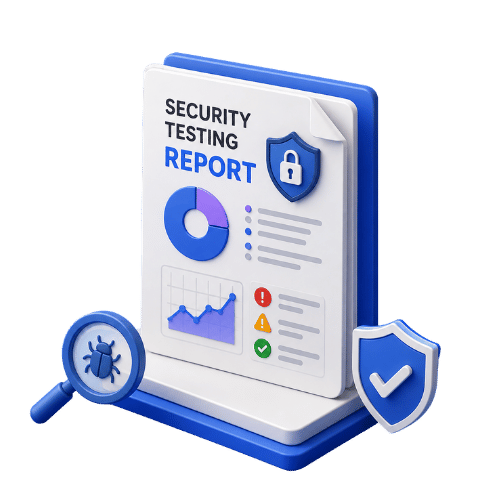
The evidence pack should give the insurer enough information to judge the quality of the assessment, understand the main findings, and see what happened afterwards. It does not need to expose every technical detail from the original report.
For cyber insurance penetration testing, include:
- Scope: Systems, applications, identities, networks, and environments that were assessed
- Exclusions: Anything intentionally left outside testing
- Testing dates: When the assessment took place
- Methodology: How the work was carried out and whether manual exploitation formed part of it
- Tester details: Whether the work was internal or independent, along with relevant qualifications or accreditation
- Executive summary: The main security issues and their business relevance
- Findings: Severity, exploitability, attack chaining, and likely consequences
- Current status: Whether each material issue is open, mitigated, fixed, or accepted
- Accountability: Who owns unresolved issues and when action is due
- Retest evidence: Whether corrective work stopped the original attack route
- Residual risk: Any material exposure management has chosen to retain
You should not automatically send the complete raw pentest report. It may contain credentials, internal architecture, IP addresses, screenshots, configuration details, or enough information to reproduce an attack.
What you share should depend on what the insurer actually asks for. In some cases, an executive summary, sanitised report, remediation summary, retest letter, or attestation may be enough. A full technical report should be provided only when there is a clear need for it.
When selecting a testing provider, consider whether CREST-accredited penetration testing is appropriate for your assurance requirements and whether the provider’s qualifications and methodology are clearly documented.
The Hidden Insurance Risk of Unresolved Pentest Findings
Finding vulnerabilities is not unusual. The concern is how the organisation handles serious issues once they are known.
From an underwriting perspective, unresolved findings can create problems when they conflict with statements made in the insurance application. If a control was described as fully effective but testing later shows an exploitable weakness, that difference should be reviewed before renewal.
Not all open findings mean the same thing:
- Untracked and still exposed
- Under active remediation
- Temporarily protected by compensating controls
- Fixed and independently verified
- Formally accepted as residual risk
NIST guidance supports tracking corrective actions and the status of known weaknesses rather than treating discovery as the end of the process.
CISOs should make sure insurance statements match the current technical evidence. Significant unresolved issues may also need review with security leadership, risk, legal counsel, and the broker before renewal.
Prevent Cyber Insurance Application Answers From Becoming a Coverage Risk
A cyber insurance application is not just an administrative form. It contains statements about the organisation’s security posture, and those statements may be relied on during underwriting.
CISOs should make sure technical answers are:
- Based on the current environment
- Limited to what can actually be supported
- Clear about material exceptions
- Reviewed after major security changes
- Checked by people who understand how the controls are implemented
The main risk comes from answering too broadly. If a questionnaire asks whether a control is in place, the response should reflect its real scope rather than assume that partial deployment counts as full coverage.
A useful internal check is to ask three questions:
- Presence: Is the control actually deployed?
• Coverage: Does it apply across the systems included in the answer?
• Effectiveness: Is there evidence that it works as described?
Before submission, security should review the relevant answers with risk, legal, and the broker. The aim is to make sure the application reflects the organisation’s actual security position, not an ideal version of it.
How CISOs Can Use Pentest Results to Maximise Cyber Insurance Coverage
Renewal should not be judged only by whether the premium went down. The policy also needs to reflect the losses the business could realistically face. Cyber insurance is highly customised, so limits, exclusions, sublimits, waiting periods, and covered costs can vary significantly between policies.
When recent testing shows that important exposures have been reduced, CISOs can take that evidence into discussions about:
Overall Policy Limits
Check whether the current limit still matches the organisation’s largest credible loss scenarios. If the business has improved controls around material exposures, that may support a conversation about additional capacity, although the insurer will still decide what it is willing to offer.
Retention or Deductible
Review how much loss the organisation must absorb before the policy responds. A stronger security position can form part of the discussion around retention, but it does not guarantee that the insurer will reduce it.
Ransomware Coverage
Look closely at ransom sublimits, coinsurance, notification requirements, and any security conditions attached to the cover. Some cyber policies restrict ransomware protection or require certain controls to be maintained.
Business Interruption and Third Party Outages
Check the waiting period, the events that trigger cover, and how long lost income can be claimed. If the business depends heavily on cloud platforms, SaaS providers, or other technology partners, confirm whether an outage at one of those providers is covered as contingent business interruption.
Data Restoration and Incident Response
Read what the policy will pay for after an incident. Cyber cover can include costs linked to restoring data, investigating an attack, obtaining legal advice, notifying affected people, and responding to extortion.
Also check whether the insurer requires specific response firms to be used before those costs qualify for reimbursement.
Financial Fraud and Privacy Exposure
Payment fraud and impersonation losses may fall under cyber insurance, crime insurance, or separate coverage depending on the wording. Privacy-related cover should also be checked for defence costs, investigations, notifications, settlements, and regulatory expenses where legally insurable.
Systemic and State-Backed Events
War and state-backed cyber wording deserves separate attention. Lloyd’s requires relevant standalone cyber policies written by its syndicates to address these exposures explicitly, so definitions and exclusions can materially affect what remains covered after a large-scale event.
When renewal discussions begin, present the security changes that are relevant to the term being negotiated rather than simply saying an annual pentest was completed. Better evidence can support the discussion, but no individual test guarantees higher limits, lower retention, or broader wording.
Strengthen Your Cyber Insurance Readiness With Qualysec’s Penetration Testing
Cyber insurance renewal is easier to prepare for when testing starts well before the deadline. That gives your team enough time to fix important issues and complete a retest before the insurer asks for supporting evidence.
Qualysec can test web applications, mobile applications, APIs, cloud environments, external networks, and IoT systems based on what is actually relevant to your environment. The work combines manual testing with automated techniques, so the assessment is not limited to scanner results.
You also get clear findings, reproduction steps, remediation guidance, an executive summary, and retesting support. This makes it easier for security and risk teams to show what was tested and what was fixed.
If you have an upcoming renewal, Qualysec can help you plan the scope around your systems, key attack paths, and available timeline.

Conclusion
A pentest is most useful when it changes what the organisation can confidently say about its own risk.
The real value comes from removing uncertainty before renewal. Security teams know which weaknesses matter, management knows what still needs attention, and the insurance submission reflects the current environment rather than an outdated assumption.
For CISOs, that creates a stronger basis for renewal discussions without overstating what testing can deliver. The aim is not to present a perfect security posture. It is to present one that is current, supportable, and backed by evidence.
FAQS
Does cyber insurance require penetration testing?
Not in every case. Requirements vary by insurer, business profile, sector, requested limits, and the questions in the application. Check the actual policy documents and confirm expectations with your broker or underwriter before assuming testing is mandatory.
Will penetration testing lower cyber insurance premiums?
It may support a stronger underwriting position, but there is no fixed discount for completing a test. Pricing also reflects claims history, exposure, limits, industry risk, insurer appetite, and wider market conditions.
How often should you conduct penetration testing for cyber insurance?
There is no single testing frequency for every policy. Follow any requirement stated in the application, contract, regulation, or security standard, and consider additional testing after major system or infrastructure changes.