
Cybersecurity News Analysis | 19 November 2026
A cluster of technology disruptions between November 13 and 17 affected Microsoft services, U.S. air travel, United Airlines, and major banking institutions, including JPMorgan Chase. The November 16 banking disruption also triggered transaction delays involving other financial institutions and Zelle payments. While the timing raised concerns about possible coordinated cyber incidents, available evidence has not established a connection between these outages and malicious cyber activity. Separately, FBI advisories point to active and evolving threats targeting enterprise systems and critical infrastructure.
Recent U.S. Outages Raise Questions About Infrastructure Resilience
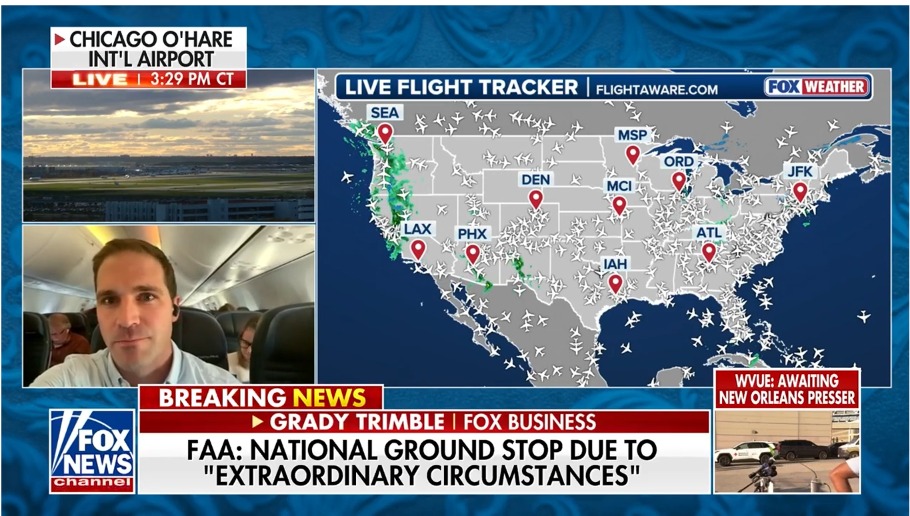
The Department of Homeland Security said that the recent issues are due to aging systems and technology upgrades. The FAA’s nearly five-hour ground stop was connected to a remote facility in Arkansas that was installing a router. United said it suffered from a computer issue, JPMorgan Chase said it had a software bug that impacted transaction processing and Microsoft said that it had encountered problems with its servers, but not any malicious activity. These events must be considered as a service disruption rather than a confirmed intrusion/deterioration.
Banking Disruptions Affect Major U.S. Financial Institutions
On November 16, thousands of customers reported online banking difficulties involving JPMorgan Chase, Bank of America, U.S. Bank and Wells Fargo, with additional reports involving PNC, Citigroup, Capital One and Zelle.
JPMorgan Chase attributed the disruption to a software bug affecting its on-premises hardware systems, which slowed transaction processing. The bank reported no evidence of a cyberattack. U.S. Bank also clarified that its systems remained operational, although some Zelle transactions involving other institutions experienced delays.
The incident highlights the operational dependencies between financial institutions and the need for reliable transaction processing, infrastructure redundancy, third-party risk management and business continuity planning.

FBI Warns of AI-Assisted Cyber Intrusions Through ARTEX
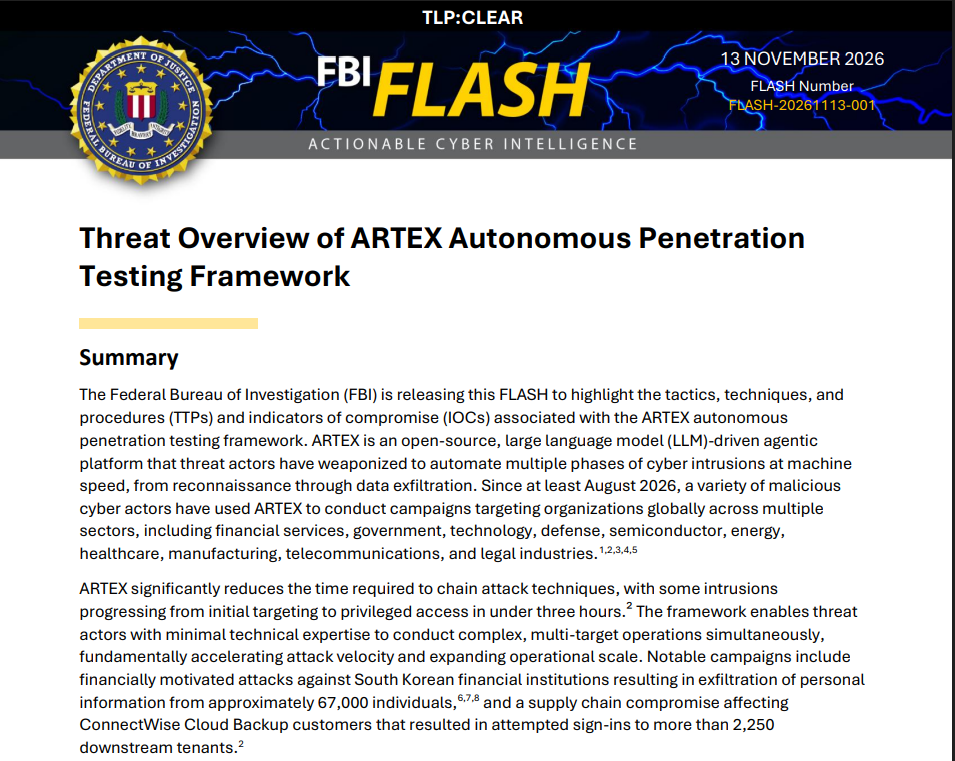
The FBI issued an advisory on Nov. 13 alerting to threat actors exploiting an open-source, large language model (LLM) framework called ARTEX to automate portions of cyber intrusions. Since at least August 2026, the agency said it has been the target of financial services, government, technology, defence, energy and healthcare organisations in campaigns leveraging ARTEX.
ARTEX can handle the following tasks: reconnaissance, exploitation, privilege escalation and data collection. Some breaches went from initial targeting to gaining privileged access within two hours, the FBI said. The issue is how quickly agentic workflows can combine existing techniques and tools, and how they can enable multi-target operations and minimize manual labor. The FBI added that another compromise that occurred in the ConnectWise Cloud Backup supply chain uncovered over 2,250 downstream tenants.
Gootloader Campaign Exposes Risks in Compromised Websites
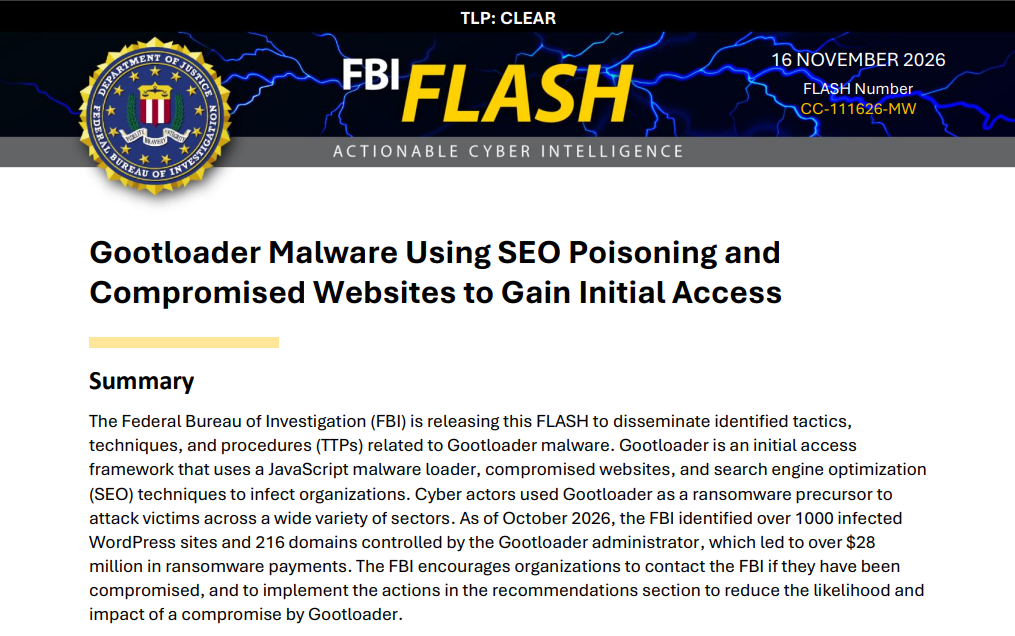
Initial access is also a key vulnerability. The FBI issued an alert on November 16 outlining how Gootloader was utilizing search-engine optimization (SEO) poisoning and compromised WordPress sites to release JavaScript-based malware. Fundamentally, threat actors relied on search results to lead victims to malicious pages, exploited compromised site logins and vulnerable plugins or themes, and exploited WordPress XML-RPC and REST routes. Traffic-distribution systems sorted traffic based on location, referrer, cookie or IP address.
By October 2026, the FBI had identified over 1,000 WordPress sites that have been infected and 216 domains that have been linked to Gootloader. The U.S. Department of Justice on November 12 announced an international operation, which took down over 100 servers and seized the domains responsible for the delivery and control of malware. Gootloader was responsible for infecting at least 25,000 computers around the world since 2018 and has been employed in ransomware attacks on at least 44 U.S. victims that resulted in losses of some $28.8 million, according to the DOJ.
Critical Infrastructure Remains Exposed to Direct Cyberattacks
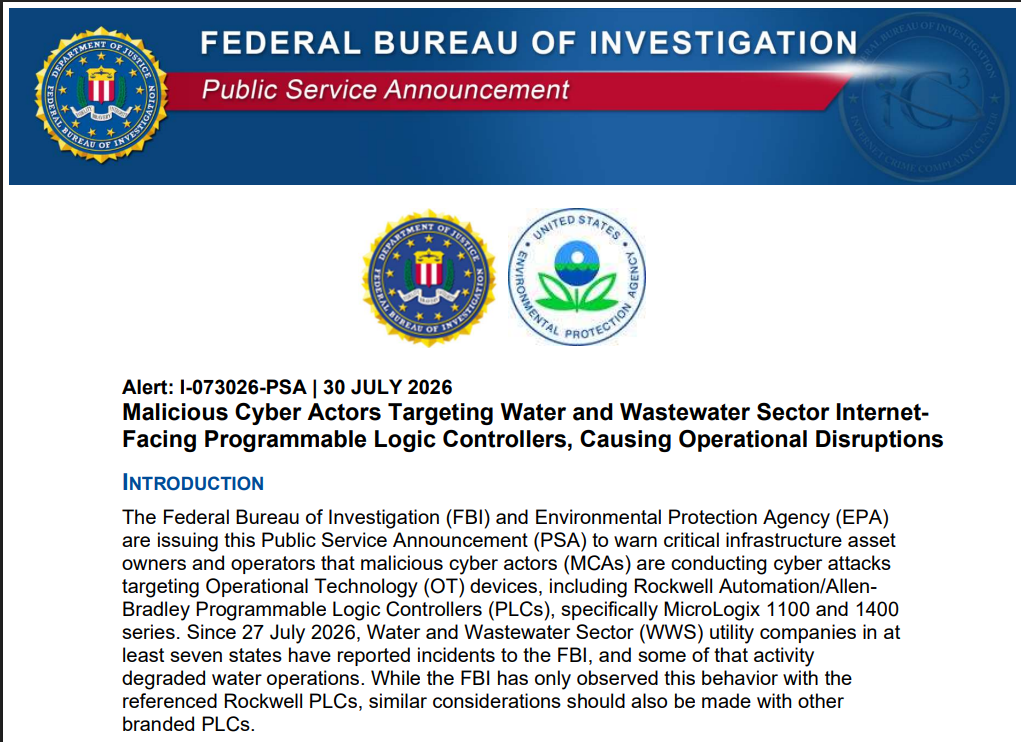
Critical infrastructure is also exposed. The July 30th FBI/EPA alert included attacks targeting water and wastewater utilities that are using internet-connected Rockwell Automation/Allen-Bradley MicroLogix 1100 and 1400 programmable logic controllers (PLCs). At least seven states have seen incidents since July 27. Attacks were made to change IP addresses and passwords, disrupting monitoring and control, and discrepancies in PLC ladder logic were reported in one organisation. The effects reported were loss of water pressure and flooding. The agencies suggested eliminating the direct exposure of PLCs to the internet, deploying secure gateways and firewalls, and implementing access control lists and unique passwords for device communication.
AI Security Concerns Extend Beyond Automated Attacks
Security issues surrounding AI are also being heard in the policy debate. U.S. Senators Maria Cantwell and Mike Rounds appealed to the White House to take a more coordinated and proactive approach to bolster the cybersecurity of autonomous AI agents, while also setting security standards for the technology. They listed AI-powered vulnerability discovery and reports of unauthorised access to bank accounts by AI agents. These concerns reflect the evolving threat landscape, but do not create a connection with the recent outage spate.
What These Developments Mean for Enterprise Security
For enterprises, the response should begin with an accurate inventory of internet-facing applications, cloud assets, APIs, remote-access services, and supplier connections. Restrict administrative interfaces, protect credentials and secrets, and monitor suspicious identity activity, lateral movement, and unusual outbound data transfers. AI agents require clear identities, limited permissions, logging and controls over access to sensitive systems. OT environments need network segmentation, secure remote access, validated controller backups, and tested manual operating procedures.
Resilience also depends on staged patch deployment, rollback plans, dependency mapping, and recovery exercises. Vulnerability scanning identifies known weaknesses; controlled penetration testing and configuration reviews help determine whether weaknesses can be chained into exploitable paths.
The recent outages are not proof of a coordinated attack. They do show how dependent essential services are on complex technology. Alongside confirmed intrusion campaigns and faster AI-assisted operations, they reinforce the need for continuous security validation, effective remediation, and tested recovery capabilities.
About Qualysec Technology: Qualysec Technology is a cybersecurity company specializing in continuous penetration testing and vulnerability assessments built for the modern world. It helps enterprises to recognise and organisations to identify vulnerabilities, validate security controls and strengthen their security posture across digital environments.


