

“
Qualysec did a great job identifying vulnerabilities in our web and cloud applications and gave us clear steps to fix them. They stuck to deadlines, handled re-tests, and supported well.
Kenny Kim
Product Manager

Strengthen autonomous AI environments through targeted AI Agent Penetration Testing built to uncover unsafe behaviors and security gaps.
Talk to an Expert















DEFINITION
Identify how autonomous AI systems respond under real attack conditions before threats impact your business.
AI Agent Penetration Testing helps you understand whether your AI agents can be tricked, misused, or pushed into doing something they should not do. Security testers check how the agent responds to harmful prompts, risky inputs, external tools, and access requests. This gives you a clearer picture of the security gaps that could put your data, users, or internal systems at risk.
Vulnerabilities
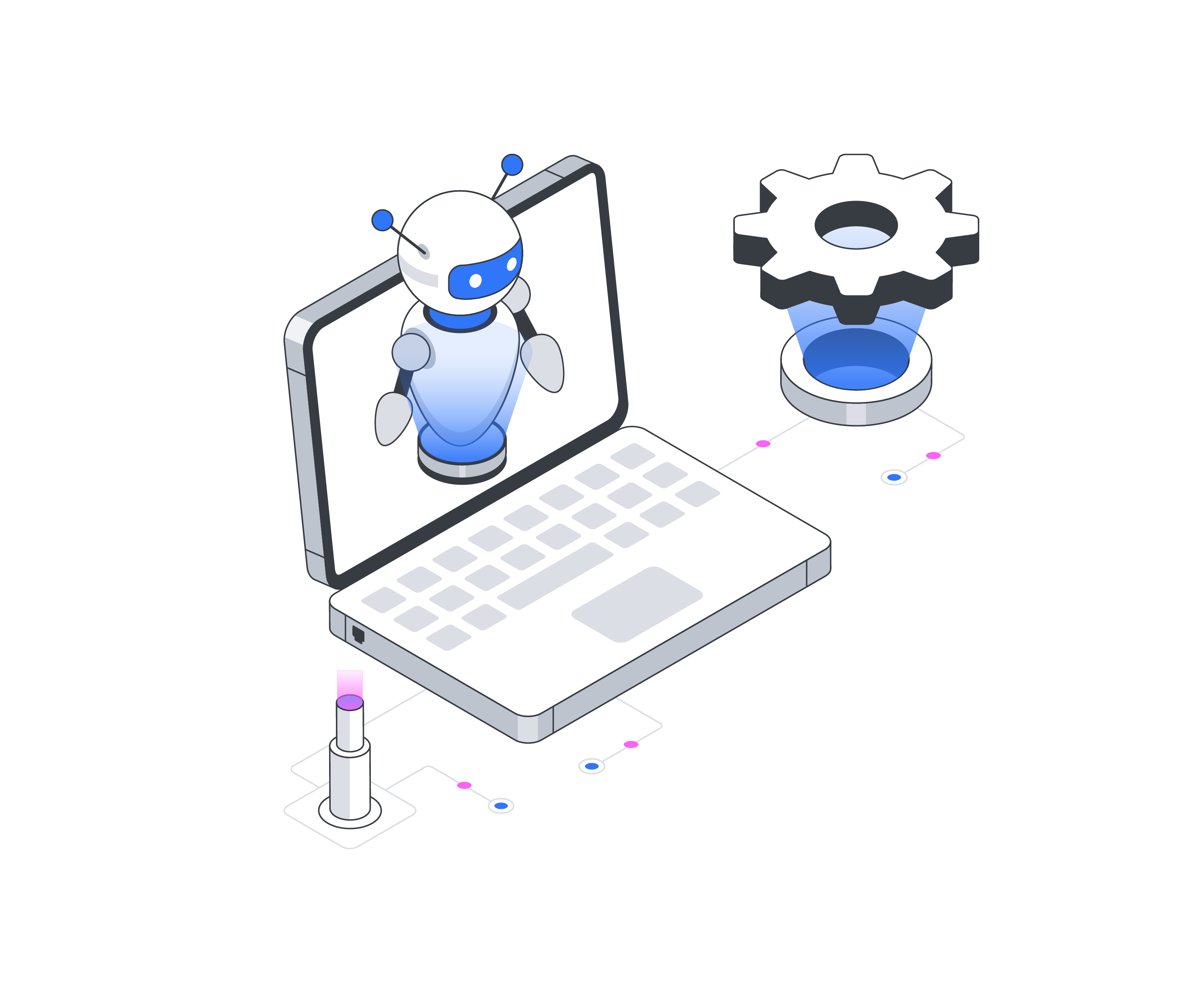
Detect unsafe agent actions before they create larger security issues.
Process
Qualysec follows a structured testing process to evaluate your AI systems, identify real risks, and help you secure critical components with clarity and control
We define the scope based on your AI models, data flows, integrations, and real usage scenarios to ensure complete coverage of critical components.
"Don't compromise between depth and speed. Own both. Connect with Swagat, Your trusted penetration testing advisor."

Head Of Business Development
Testimonials
Read what our clients say about our services. See how Qualysec has helped several businesses to keep their digital assets safe!
Qualysec did a great job identifying vulnerabilities in our web and cloud applications and gave us clear steps to fix them. They stuck to deadlines, handled re-tests, and supported well.
Product Manager
Key Benefits
Here is how security testing helps your AI agents operate more safely, reliably, and securely across business environments.
Testing reveals where attackers can interfere with agent behavior, manipulate instructions, or misuse connected functions to gain unintended control over operations.
Your organization can better protect confidential information by identifying unsafe outputs, exposed records, and weak data handling practices within agent interactions.
Security assessments help confirm that automated workflows behave as expected, even when someone attempts to alter instructions or disrupt normal execution paths.
Early detection of misuse scenarios reduces the chances of unauthorized actions, harmful automation, and operational disruptions caused by malicious user inputs.
Regular AI security testing supports compliance requirements related to privacy, governance, data handling, and security standards across regulated industries
Well tested AI systems create greater confidence among users, stakeholders, and customers who depend on accurate, secure, and reliable automated experiences.
Other Types
Qualysec uses different testing approaches to assess your AI Agent systems from multiple angles and uncover issues that may not be visible in a single method.

We simulate real attackers with no internal access. This helps us understand how your AI Agent system behaves from the outside and whether it can be manipulated through inputs or exposed endpoints.

Our team review the system with full access. This helps us examine code, logic, configurations, and data flow closely to identify deeper security gaps that are not visible externally.

We test with limited system knowledge. This allows us to combine partial access with external testing to find issues that may exist between user access and internal system behavior.
Free Downloads
Access practical resources from Qualysec to understand how AI Agent Penetration Testing works and what to expect during a real assessment.
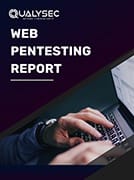
See how findings are presented, including identified risks, impact levels, and clear recommendations based on actual AI API application testing scenarios.
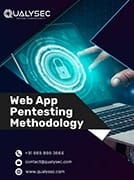
Understand the approach used to assess AI API systems, covering how inputs, outputs, models, and integrations are tested for security issues
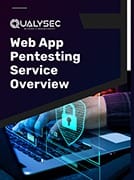
Get a clear view of what the service includes, how testing is performed, and how your team can prepare for the engagement.
Process To Start Assessment
Key steps to start protecting your web application from cyber threats.
Reach out to us and our friendly team will listen to your concerns and understand your unique security needs. Whether you prefer a call, email, or chat, we're ready to start your journey towards a more secure web app.
We send you a simple pre-assessment form to fill up with the appropriate information. This helps us understand your app's architecture, current security measures, and specific concerns.
After we review our findings from the pre-assessment and outline our proposed approach, we discuss security strategy and answer any questions you may have through either online or face-to-face meetings.
We get a clear Non-Disclosure Agreement signed by you to protect your sensitive information. We finalize our service agreement after you are completely satisfied. This helps us both know exactly what to expect from our partnership.
We provide our clients with a checklist of everything we need to begin testing, such as access credentials and documentation. Our team assists and ensures a smooth start to your app's security enhancement journey.
Get a Quote
One overlooked weakness inside an AI agent can expose sensitive data, misuse connected systems, or disrupt important workflows. Qualysec helps you uncover those risks through focused security testing built for modern AI environments. Give your team clearer visibility into how your AI agents behave before attackers get the chance to test them first.

Total No. Of Vulnerabilities

Years in Business

Assessment Completed

Trusted Clients

Countries Served
FAQ
Request a tailored quote from Qualysec and understand how advanced security testing can help protect your APIs from unauthorized access and evolving attack techniques.
Yes. A carefully written input or command can sometimes push the system into behaving in ways it was not designed to handle safely.
Without proper restrictions, it may expose private records, interact with internal platforms unexpectedly, or carry out actions that create operational problems for your team.
They often look for weak instructions, unsafe stored context, or poorly protected integrations that can be influenced to change system behavior over time.
These systems continuously process inputs, respond differently across situations, and connect with multiple services, which creates risks beyond regular software environments.
Fixing security problems early is far easier than dealing with exposed data, service disruption, or unexpected behavior after the system becomes widely used.